


Babri Masjid demolition case judgment ‘raises more questions than answers’: Indian media
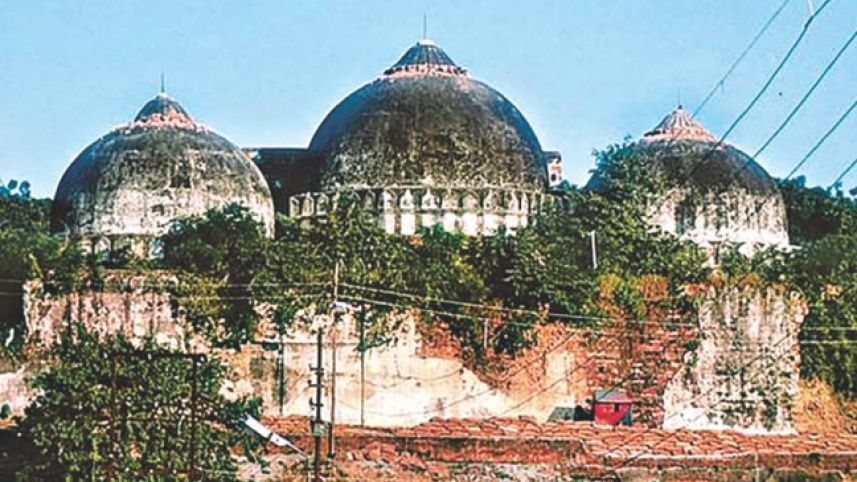
Leading Indian newspapers today editorially commented on the special court's acquittal of all the 32 accused in Babri Mosque demolition case, saying "it raises more questions than answers" and questions the quality of evidence put forward by the prosecution agency the Central Bureau of Investigation.
Special judge SK Yadav "pointed towards insufficient evidence and possible tampering of video and audio proof and blamed anti-social elements for the razing of the structure. Despite coming after nearly three decades, the judgment raises more questions than it answers," said Hindustan Times in its editorial, reports our New Delhi correspondent.

"Even the Supreme Court, in its verdict last year that paved the way for the construction of the Ram temple, called the demolition a criminal act and awarded the Muslim parties five acres of land at an alternative site," it said.
"The CBI court verdict raises pertinent questions about the nature and quality of the probe," it commented adding "the verdict found that the tapes were tampered with and the documents could not be relied on. This is a further indictment of India's creaky criminal justice system."
It also said the conclusions of the special court "appear to contradict the findings of a judicial commission in 1992 that blamed senior political leaders for the event.
"…….doubts about the criminal investigation, the lack of criminal and political accountability for those who brought the structure down and the precedent set are worrying," the editorial said.
The Indian Express editorial said that in sharp contrast to the Justice Liberhan Commission's conclusion that the evidence underlined the mobilisation of the kar sevaks (Hindu volunteers) was "neither spontaneous and voluntary… was orchestrated and planned" and despite "the gravity of the crime was acknowledged by the Supreme Court in November last year," the special court "holds no one accountable or punishable as it shifts the entire blame to the faceless kar sevak…."
The Times of India in its editorial commented that the special verdict "raises some pertinent questions."
"The demolition of the Babri Masjid was a dark day for Indian democracy. It took place in front of news cameras. The Supreme Court had acknowledged it as a crime that shook the secular fabric of India. It now appears that Indian democracy, law enforcement agencies and the judicial system are powerless to enforce rule of law in the face of brute majoritarianism," it opined.
"It is precisely because the Indian legal system has time and again failed to comprehensively prosecute mob violence that riots keep recurring under a culture of impunity…..The Babri verdict once again forces the Indian police-judicial system to take a hard look at itself," according to the editorial.
The Hindu in its editorial termed as "unconscionable" the special court judgement "throwing to the wind" the Supreme Court's observation that the demolition was illegal.
The trial court's "conclusions are drastic and defy logic and fact," it added.
BJP veterans LK Advani, Murli Joshi and Uma Bharti are among the 32 accused acquitted by the special court in its ruling in Lucknow yesterday.
 For all latest news, follow The Daily Star's Google News channel.
Comments