How the US naval blockade can accelerate multipolar global order

Contrary to analyses by some Western media, the US naval blockade of the Strait of Hormuz might achieve the precise opposite of its stated aims of submission of the Iranian regime, by empowering Tehran as a defiant power, and accelerating the very multipolar realignment Washington has long sought to contain. The main beneficiaries are already in Beijing and Moscow, watching the US lose itself, with quiet satisfaction.
Washington fails to recognise that Tehran did not close the Strait of Hormuz out of desperation. Iran weaponised the Strait deliberately transforming a geographic advantage into a coercive instrument, to respond to US aggression, which they’ve been preparing for. By restricting and conditioning commercial passage, charging tolls exceeding $2 million per vessel, and selectively permitting or denying transit, Iran gained from a military confrontation in which the United States and Israel hold overwhelming conventional military superiority. The new supreme leader, Ayatollah Mojtaba Khamenei, declared explicitly that the Strait’s leverage “must undoubtedly continue to be used” not as a last resort, but as a deliberate strategy refined over decades.
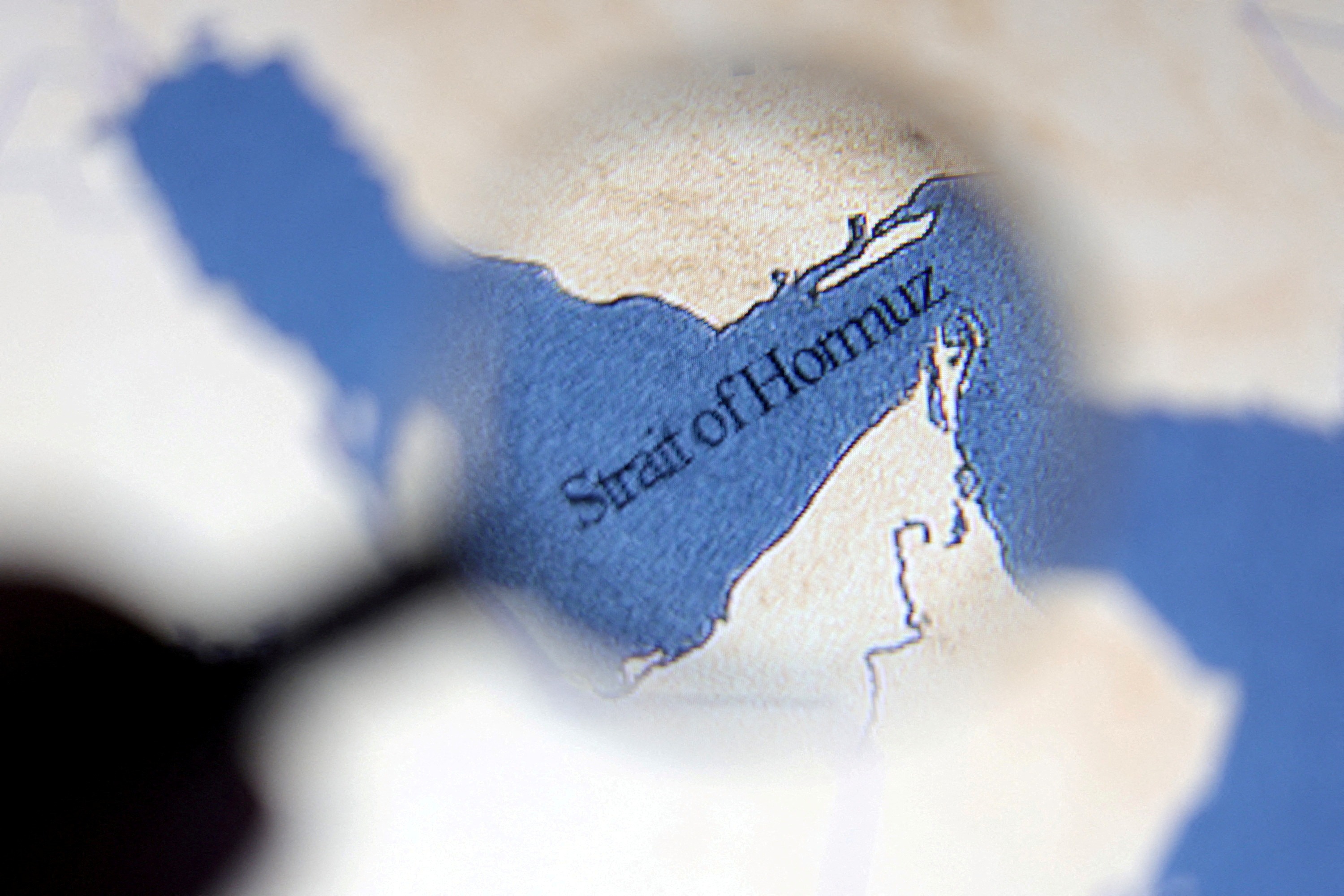
The US administration’s logic for the blockade seems straightforward: deny Iran the economic benefit of its chokepoint control. Stop the toll revenues. Interdict ships that have paid them. Force Tehran to choose between accepting US’ terms or watching its economy implode. The logic has coherence. But its strategic flaw is equally coherent: it validates the Strait as the primary theatre of the conflict, and fails to account for the geopolitical repercussions that can arise from it.
Prior to the US blockade, Iran’s stranglehold on the Strait already proved economically costly and diplomatically embarrassing for Washington. Now, the Strait is a contested chokepoint, a battleground, that Iran can credibly present to Beijing, Moscow, and the broader Global South as a reverberating message: the US will not only launch costly wars that spill across the world, but the US will also weaponise the arteries of the global economy. Chinese President Xi Jinping warned that “we must not allow the world to revert to the law of the jungle.” By unilaterally obstructing Iranian ports, the Trump administration’s messaging could hand China a clear precedent: national security overtakes international laws. It’s a dangerous precedent, one that could lead China to ignore the application of the United Nations Convention on the Law of the Sea (UNCLOS) in the South China Sea and Taiwan Strait.
Washington has also handed Iran, and the IRGC, a “global propaganda amplifier” in a war where narratives play increasingly important roles. Iran has already called the blockade “piracy” — a framing that will resonate in every capital that imports energy through that corridor. Washington’s adversaries, mainly China, will take notes and frame their own agenda against the US, as standing up against a troublemaking superpower.
The Gulf of Oman is not a controlled theatre; it is a compressed geography where a single miscalculation — a misidentified vessel, such as the US attacking a China-owned vessel will be detrimental for Washington. Each day of enforcement is a day Iran accumulates grievance, along with its allies.
US strategists tend to reach for the naval playbook as though historical precedents validate the tactic regardless of the current context. The Cuban Missile Crisis is invariably invoked as the template. But that confrontation had a precise and credible off-ramp: Soviet ships would turn back, missiles would be removed, and both superpowers had overwhelming incentives to de-escalate within days. The endgame was visible from the opening move.
A victory that hastens the erosion of structural US hegemony is not a strategic success. It is a pyrrhic one. Every non-Western government will have absorbed a lesson: the US is willing to impose a global energy shock to enforce its geopolitical preferences. That lesson will accelerate the diversification away from dollar-denominated systems and US-controlled maritime corridors to shift to diversify to non-Western powers, who have been waiting for this opportunity.
No such clarity exists in the current war today. The IRGC — especially the empowered young leadership from the decapitation of its leadership — has domestic political incentives to continue to show defiance rather than accept humiliation. There is no nuclear symmetry to force Iran into giving up. What remains is an open-ended siege with no stipulated terminus.
The parallel with Venezuela is more damning. From 2019 onward, the United States imposed sweeping sanctions and later naval pressure on the Maduro government, pursuing the same logic now applied to Iran: economic pain would produce political capitulation. It failed entirely. Maduro consolidated power, Russia and China undercut US leverage at every turn, and Washington’s pressure campaign directly catalysed the adversarial alignment it sought to prevent. Iran, with its deeper institutional roots, its larger population, its revolutionary identity, and its incomparably greater strategic position, presents an even less favourable canvass for the same brush.
The US naval blockade is an outdated instrument that now injures US allies, destabilises emerging-market economies. Proponents argue that Iran suffers more. But Washington suffers the global reputational damage of corroding the international world order, as many have already called out. While that may seem merely political, economic globalisation is increasingly dictated by geopolitics.
A realignment of the global order is already happening. Russian Foreign Minister Lavrov arrived in Beijing on April 14 — the day after the blockade took effect for high-level consultations. Beijing called the blockade “dangerous and irresponsible,” and both Russia and China vetoed a UN Security Council resolution aimed at protecting commercial shipping. These form coordinated acts of diplomatic solidarity signalling the formation of a coherent anti-Western bloc crystallising around the Iranian crisis.
China imports approximately a third of its oil through the Strait of Hormuz. By demonstrating that Washington will close vital sea lanes to enforce political objectives, the blockade has handed Beijing a compelling strategic incentive to accelerate overland pipeline infrastructure through Central Asia and Russia, permanently reducing Chinese exposure to US maritime leverage. And China has been preparing for this. For some 25 years, China has been buying and building ports across the Indian Ocean and Persian Gulf and around the world. Russia, meanwhile, benefits from elevated oil prices that cushion its sanctioned economy while it consolidates a non-Western energy and security architecture, whose appetite, Washington’s own actions are feeding.
Now to play devil’s advocate, one might ask: can the blockade actually dislodge the Iranian regime?
If the blockade succeeds — meaning if Iran accepts terms and Washington declares victory — the costs are still notable. Every non-Western government will have absorbed a lesson: the US is willing to impose a global energy shock to enforce its geopolitical preferences. That lesson will accelerate the diversification away from dollar-denominated systems and US-controlled maritime corridors to shift to diversify to non-Western powers, who have been waiting for this opportunity. A victory that hastens the erosion of structural US hegemony is not a strategic success. It is a pyrrhic one.
Tehran not capitulating is the more probable outcome, given every historical precedent for external pressure on revolutionary states have already led analysts to draw comparisons to the 1970s oil crisis, when an Arab producers’ embargo quadrupled prices and prompted fuel rationing across major economies. In this scenario, the US blockade becomes a sustained state of military and economic attrition, with Iran demonstrating to the world that it cannot be coerced by a carrier strike — a precedent that empowers every revisionist actor watching from the sidelines.
Neither scenario produces an outcome that does not denigrate US global credibility. The multipolar order being assembled in Beijing and Moscow does not need to defeat the US in the Strait of Hormuz. It only needs to wait for Washington to defeat itself, even as its President keeps claiming “victory” on television to cast a veil of his own reality onto a world that is now able to see right through it.
Arman Ahmed is a research analyst at the Nicholas Spykman International Center for Geopolitical Analysis in Paris, France.
Send your articles for Slow Reads to slowreads@thedailystar.net. Check out our submission guidelines for details.
Shared rivers, shared responsibilities: The case for water treaties
Bihar wants Delhi to not renew Ganges treaty. What does it mean for Dhaka?
Bangladesh and the United States: Beyond the tariff bargain
From the Carter Doctrine to the Mecca Pact: A changing Gulf security order
More capability, less autonomy? Bangladesh’s emerging security dilemma
An anti-West network is emerging: How should Bangladesh respond?
The Mecca Pact: Deterrence, Israel, and the new Gulf security equation

What Nepal’s flood devastation means for Bangladesh, India and China
Five reasons why Bangladesh shouldn’t join the Mecca Pact