


Bangladesh introduces national protocol to detect, treat kidney disease early
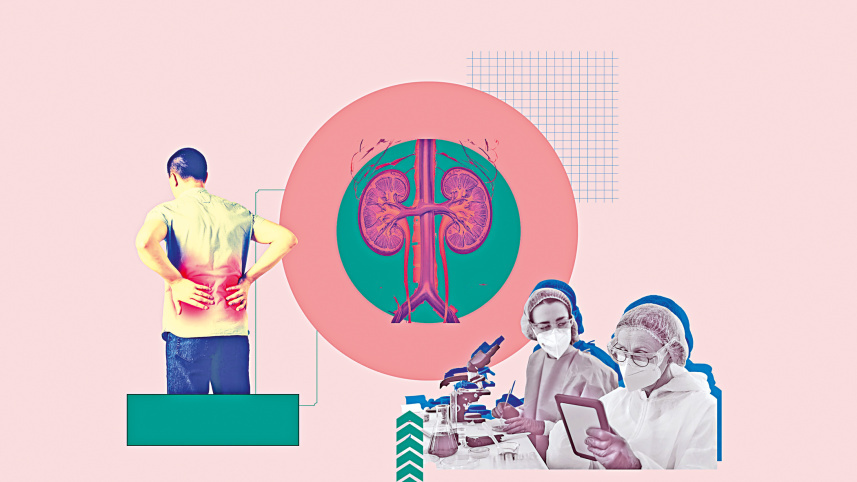
Bangladesh has launched a national treatment protocol for chronic kidney disease (CKD) in primary healthcare settings, introducing a standardised approach to the early detection, diagnosis, and management of kidney disease across the country.
The protocol was disseminated by the Non-Communicable Disease Control (NCDC) of Directorate General of Health Services (DGHS) on the occasion of World Kidney Day-2026 at the DGHS headquarters today.
 For all latest news, follow The Daily Star's Google News channel.
 The protocol was jointly developed by NCDC and icddr,b in consultation with Scientific Working Group, says an icddr, b press release.
Chronic kidney disease is emerging as a growing public health concern in Bangladesh and often goes unnoticed until advanced stages.
In a published paper titled "Prevalence of chronic kidney disease in Bangladesh: a systematic review and meta-analysis" in August 2020 estimated that nearly one in four people is suffering from kidney disease in Bangladesh, which is higher than the global average.
Each year, around 35,000 to 40,000 people progress to kidney failure, placing significant pressure on the country’s limited dialysis and transplant facilities.
The disease often progresses silently, leaving many patients undiagnosed until late stages. Individuals with diabetes, hypertension, cardiovascular disease, or a family history of kidney disease are at higher risk. Environmental factors such as water salinity, heat stress, and declining water quality are also increasingly recognised as contributing risks, particularly in coastal regions.
The new protocol aims to address these challenges by integrating kidney disease screening and management into primary healthcare services.
Under the framework, Community Health Care Providers (CHCPs) at Community Clinics will conduct screening for kidney disease, hypertension, and diabetes and refer suspected cases. At upazila health complexes, doctors will follow standardised guidance for diagnosis, risk stratification, and management of kidney disease and its major associated conditions.
The protocol is expected to be rolled out across primary healthcare facilities nationwide, supported by training for healthcare workers and monitoring systems to track implementation.
“This protocol marks a turning point in how Bangladesh approaches kidney disease,” said Prof Sheikh Sayidul Haque, additional director general (planning and development) at DGHS.
“By bringing early detection and management to the community and upazila levels, we can prevent thousands of people from reaching end-stage disease,” he said.
“Our health statistics from MIS [management information system] suggest that the number of kidney patients is increasing, which indicates that we are not adequately controlling the disease,” said Prof Syed Zakir Hossain, former line director of NCDC.
“It is therefore important to involve primary care facilities in screening and diagnosis. I hope the chronic kidney disease treatment protocol will support primary healthcare providers in screening, managing and monitoring the kidney disease patients,” he added.
Aliya Naheed, senior scientist at icddr,b and principal investigator of the project, said early intervention at the primary care level can save lives and reduce treatment costs.
Comments