


Remembering Alauddin Ali, the architect of Bangla film music

Legendary music composer Alauddin Ali was not merely a successful composer; he introduced a distinct musical sensibility and fundamentally reshaped the expressive language of Bangla film songs.
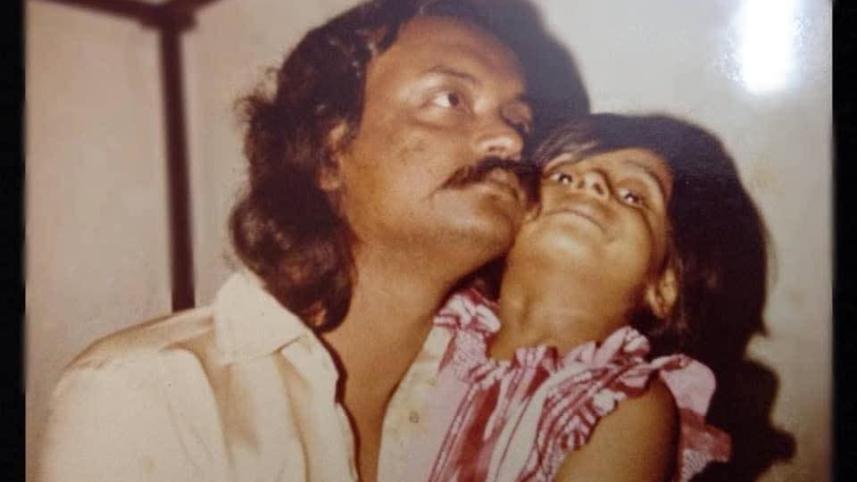
That is where his true distinction lies. Today marks his birth anniversary. Born on December 24, 1952 in the village of Banshbari in Tongibari, Munshiganj, Alauddin Ali was immersed in music from birth.

His father, Ustad Jadob Ali, and his mother, Johra Khatun, were both deeply rooted in musical practice, as were many members of the extended family. Growing up in such an environment, music was never distant from him, it was part of his everyday life.
From an early age, he received training in classical music under family mentors, absorbing discipline and technique through years of dedicated practice, sharpened further by his own extraordinary talent and perseverance.
One of Alauddin Ali's defining traits was his refusal to treat film songs as mere accessories to cinema. To him, a song was an independent, complete art form. Even when composed to complement a specific scene, his melodies possessed the strength to exist beyond the screen. This is precisely why many of his compositions transcended their films and became enduring works of art in their own right.
He worked during a time when songs were central to the commercial success of Bengali cinema.
Yet, within that commercial framework, Alauddin Ali introduced depth, restraint and emotional refinement. By blending elements of classical and folk traditions with a modern musical sensibility, he created a signature style—one that is instantly recognisable even today.
His contribution to patriotic songs remains unparalleled. Tracks including "O Amar Bangla Ma, Tor Akul Kora Ruper Shudhay", "Shurjodoye Tumi" and "Prothom Bangladesh, Amar Shesh Bangladesh" are not merely expressions of nationalism. They evoke a deeper emotional landscape where the idea of the country expands beyond geography to encompass mother, nature, memory and identity.
In songs of sorrow, Alauddin Ali was equally exceptional. "Amay Gethe Dao Na Mago Ekta Polash Phuler Mala" is not simply a lament; it captures a collective sense of loss and historical trauma. His genius lay in composing melodies that did not rely on overt melodrama—there are no cries, yet the heart feels unbearably heavy. This subtlety set him apart.
His love songs, too, spoke a language of quiet intensity. Tracks like "Jetuku Shomoy Tumi Thako Kachhe", "Ekbar Jodi Keu Bhalobashto",and "Je Chhilo Drishtir Shimanay" portray love not as spectacle, but as an intimate, deeply personal emotion. Alauddin Ali approached romance from a place of sensitivity rather than excess.
Another vital aspect of his legacy is his role as a mentor and musical architect of voices. He did not restrict himself to established singers. Artistes such as Kanak Chapa, Maksud, Mitali Mukherjee, Kumar Bishwajit, Samina Chowdhury, Tapan Chowdhury, Ayub Bachchu and Hasan began their journeys in film music under his guidance. His confidence in new voices reflected both courage and foresight.
Over the course of his career, Alauddin Ali composed nearly five thousand songs for cinema, radio and television. Yet, it is not the volume that defines his greatness—it is the enduring quality. His songs have not aged; they continue to resonate with newer generations, a testament to their emotional and artistic integrity.
Songs like "Ei Duniya Ekhon To Ar Shei Duniya Nai", "Achhen Amar Moktar, Achen Amar Barrister", "Prothom Bangladesh, Amar Shesh Bangladesh", "Shoto Jonomer Shopno Tumi", "Bhalobasha Joto Boro, Jibon Toto Boro Noy", "Chokher Nozor Emoni Koira", "Bondhu Tin Din Tor Barite Gelam", "Jonmo Theke Jolchi Mago", "Sukhe Thako O Amar Nondini," and "Eka Eka Keno Bhalo Lage Na" have collectively elevated him to an unparalleled height in Bangla music.
Lyricist Gazi Mazharul Anwar once remarked that Alauddin Ali had composed so many outstanding songs that listing them all would take days. For a period, Bangla film music itself seemed synonymous with his name. He won the National Film Award multiple times, both as a music director and as a lyricist. In his own words, barring legends like Lata Mangeshkar and Asha Bhosle, there was hardly any major singer in the subcontinent who had not sung his compositions.
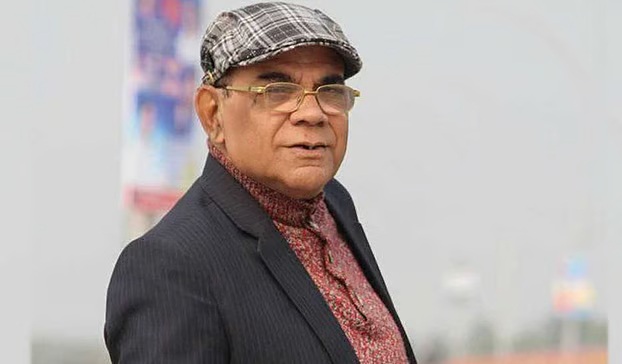
Sabina Yasmin described him as one of the greatest music directors of the Indian subcontinent, stating that artists of his calibre do not appear in every generation. Singer Syed Abdul Hadi likened Alauddin Ali's compositions to paintings drawn with melodic colours—whether expressing the awe of nature and homeland or the grief of personal loss, each song felt like a visual landscape translated into sound.
Throughout the 1970s, he dominated the musical landscape with his spellbinding melodies. He continued working until the very end of his life, holding listeners captive in his musical world. Behind this success lay tireless effort, discipline and an unwavering commitment to artistic integrity.
His journey, however, did not begin with immediate success. Alauddin Ali made his debut as a film composer in 1974 with Shandhikkhon, directed by Mir Mohammad Halim, released in 1976. The film did not fare well commercially, but he remained undeterred. In 1978, everything changed with Amjad Hossain's "Golapi Ekhon Traine". The song "Achen Amar Moktar," written by Gazi Mazharul Anwar and sung by Syed Abdul Hadi, became a sensation, followed closely by "Hai Re Kopal Mondho, Chokh Thakite Ondho". These songs propelled him into the spotlight.
That same year, Fakir Majnu Shah further cemented his reputation with songs like "Premer Agune", "Shobai Bole Boyosh Bare", and "Chokher Nozor Emoni Koira". Reflecting on this period, Alauddin Ali once said that while his first film did not bring him recognition, "Golapi Ekhon Traine" felt like boarding a train of success—one that never stopped thereafter.
 For all latest news, follow The Daily Star's Google News channel.
 Trained by his father Ustad Jadob Ali and uncle Ustad Sadek Ali, Alauddin Ali was also an accomplished violinist, winning awards in his childhood, including at the All Pakistan Children's Competition. He played violin with the Dhaka Orchestra, which brought him into close contact with legendary figures such as Subal Das, Ali Hossain, Shahid Altaf Mahmud, Khan Ataur Rahman, Khandaker Nurul Alam, Satya Saha and Anwar Parvez, the latter with whom he also worked as an assistant.
A private man by nature, Alauddin Ali avoided publicity. Music was his chosen language.
Though he passed away in 2020 after a prolonged illness, his melodies remain alive. His songs have stood the test of time, resisting erosion by changing tastes and trends.
On his birth anniversary, what is owed to Alauddin Ali goes beyond remembrance, it calls for recognition. He did far more than create melodies; he refined sensibilities, defined benchmarks, and raised Bangla film music to a realm of grace and emotional richness. In the story of Bangla music, he is not simply a passing chapter, but the very groundwork upon which much of it stands.
Comments