


Gender Responsive Climate Governance in Bangladesh: Strengthening Policy, Institution and Sectoral Action
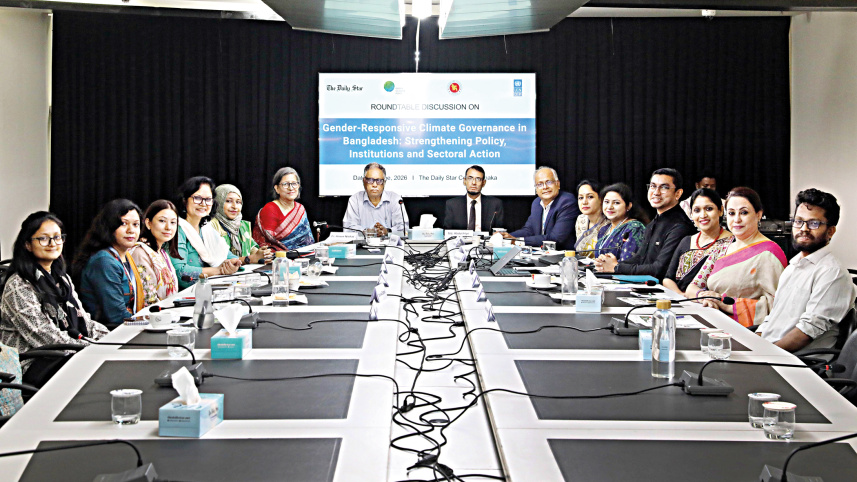
The Daily Star and UNDP Bangladesh jointly held a roundtable on 21 June 2026. The discussion brought together government officials, development partners, climate experts, researchers, civil society stakeholders, and gender advocates to explore how climate policies, including NAP, NDC, and Climate Change Gender Action Plan, can drive real changes for women, adolescent girls, and vulnerable communities. Recognising the disproportionate impact of the climate crisis on vulnerable populations, particularly regarding water scarcity, health, security, and livelihoods, participants explored practical recommendations on how existing policies, budgets, and inter-ministerial systems can better reflect the distinct needs, leadership, and capabilities of women while advancing climate justice and sustainable development.
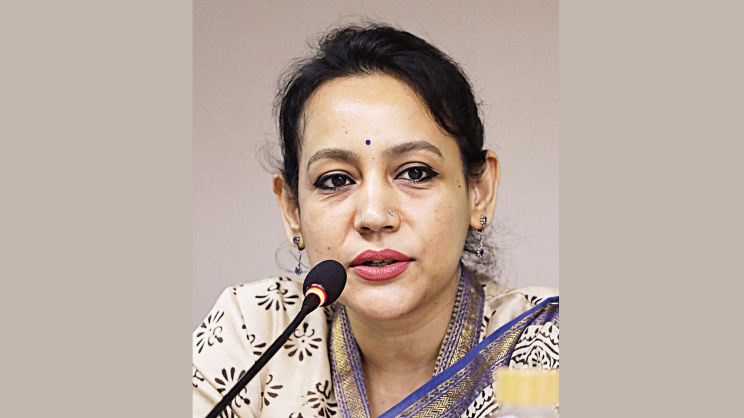
Sharmin Islam
Gender Team Leader
UNDP Bangladesh

The impacts of climate change are evolving and affecting different groups in different ways, with women often facing greater challenges from heatwaves, water scarcity, and other climate-related stresses. Therefore, climate interventions should go beyond addressing vulnerability alone and focus on empowering women as active participants and decision-makers. Experiences from projects in Khulna, Satkhira, and the Chittagong Hill Tracts show the importance of including women’s voices in planning and implementation. Although allocations for women’s development have increased in recent years, greater attention is needed to ensure effective distribution, measurable impact, and sustainable strategies for leadership and resilience.
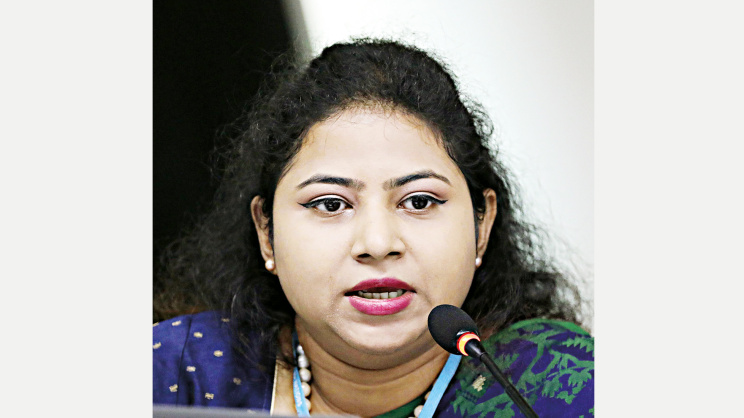
Sumaiya Siddiqui
Gender Analyst
UNDP Bangladesh
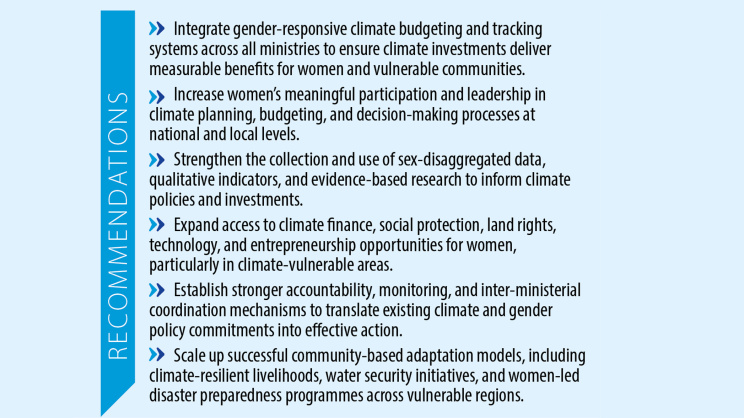
Bangladesh has established a strong policy foundation for gender equality and climate action. The immediate challenge is not developing new frameworks, but strengthening governance systems to connect existing commitments to national implementation, particularly within the FY 2026-27 budget cycle. Currently, 85% of gender visibility in climate spending remains untracked. Field evidence from coastal upazilas reveals that women walk 10–12 kilometres daily for safe water, female-headed households spend 30% more on adaptation than male-headed ones, and 85–95% of community consultation participants are male. To bridge this gap, gender budget sub-tags must be integrated with the climate fiscal framework within the iBAS tracking system, transforming gender-responsive budgeting into a whole-of-government responsibility, broadening programme 0106 beyond capacity building, and embedding gender screening into DPP, PEC, and ECNEC approval processes. With FY26–27 presenting a critical window, connecting policy commitments to operational instruments is now essential.
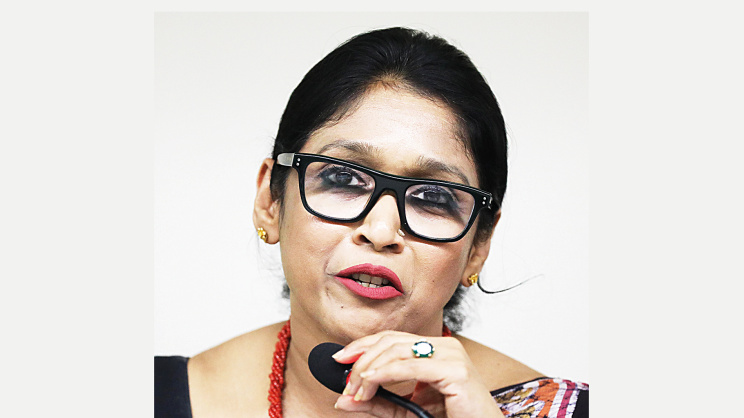
Tania Haque
Professor
Department of Women & Gender Studies
University of Dhaka
Climate justice is fundamentally a governance issue, requiring a shift from viewing women as victims to recognising them as active agents of adaptation. Although strong frameworks exist, effective implementation remains the main challenge in addressing intersectional inequalities, unpaid care work, and socio-cultural impacts, and the different realities of rural and urban communities. Strengthening inter-ministerial coordination, producing sex-disaggregated data, and increasing women’s participation in decision-making are therefore essential. A target of 30–40% representation of women in executive and decision-making spaces could help ensure more inclusive governance. In addition, innovative tools such as a time-poverty index, AI-supported risk assessment, regular monitoring, and an independent accountability mechanism could help bridge the gap between commitments and implementation.
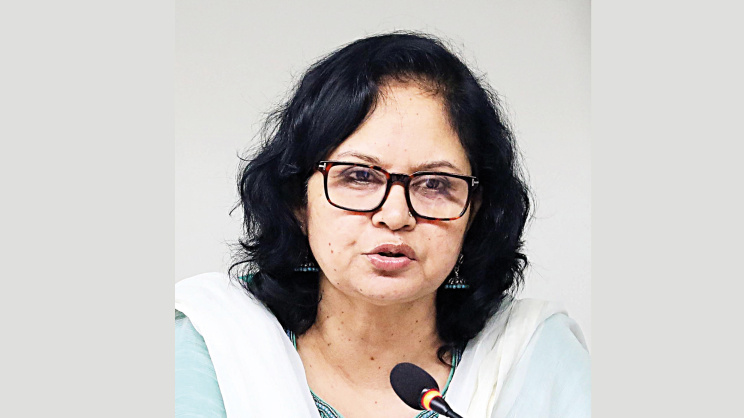
Sharmind Neelormi
Professor
Department of Economics
Jahangirnagar University
Gender-responsive climate action and its governance must be linked to long-term sustainable development. Climate adaptation is context-specific, and therefore, solutions should address not only climate impacts but also infrastructure, water management, and human-induced factors. Effective budgeting and climate finance require clear attribution of these drivers and stronger use of scientific evidence and disaggregated data. Furthermore, adaptation projects should aim to support women’s progress over the next 15–25 years rather than focus only on short-term project outcomes. More than 75% of women still lack access to safe cooking energy, highlighting the need for gender-responsive energy investments and policies. While the Family Card program constructively recognises women as household heads, vertically integrating this social security with climate hotspots will accelerate family graduation. In addition, climate-responsive infrastructure, measurable performance indicators, community-based entrepreneurship such as solar irrigation, and stronger coordination across sectors can help ensure that climate investments create lasting benefits for women and climate-vulnerable communities.
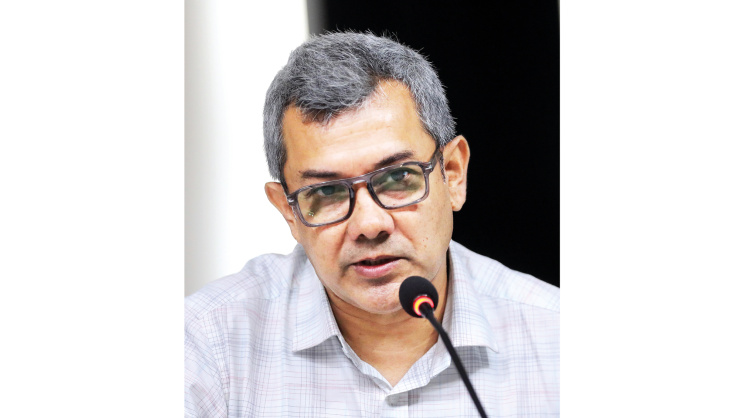
Md. Shamsodoha
Chief Executive
Centre for Participatory Research and Development
Gender-differentiated climate impacts are currently understood too narrowly — focused almost exclusively on drinking water in coastal areas. However, a recent study reveals that the primary reproductive health risk for women in saline-prone regions is not water consumption but prolonged physical exposure to saline conditions. This distinction matters enormously for designing effective solutions. Furthermore, equal participation does not guarantee effective participation. Since 2018, women’s representation in global climate negotiations has actually declined. Meanwhile, Bangladesh’s Climate Change Gender Action Plan lacks institutional ownership, leaving it unimplemented across ministries. Simply mentioning gender in policy documents is insufficient. Without proper financing, a designated authority, and genuine capacity building for women, gender-responsive planning will remain confined to paper.
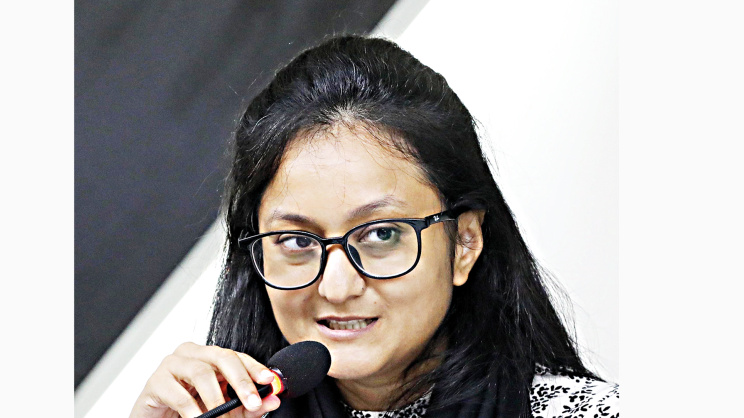
Shakila Sattar
Founder
The Earth
Climate policies consistently define what and why, but rarely how. Targeting 3.5 million green jobs by 2041, for instance, lacks any implementation framework, leaving grassroots actors, particularly women entrepreneurs, without clear pathways to engage local government or amplify their voices nationally. Furthermore, green innovation carries unexamined risks. Emerging reports suggest that EV battery disposal sites are linked to rising cancer rates among women in surrounding communities. Just as plastic once seemed transformative before becoming an environmental crisis, renewable energy transitions therefore require rigorous, gender-disaggregated research before scaling. Consequently, research institutions must be embedded within green economy planning, across solar, blue economy, and just transition initiatives, to ensure solutions do not inadvertently deepen vulnerabilities for women.
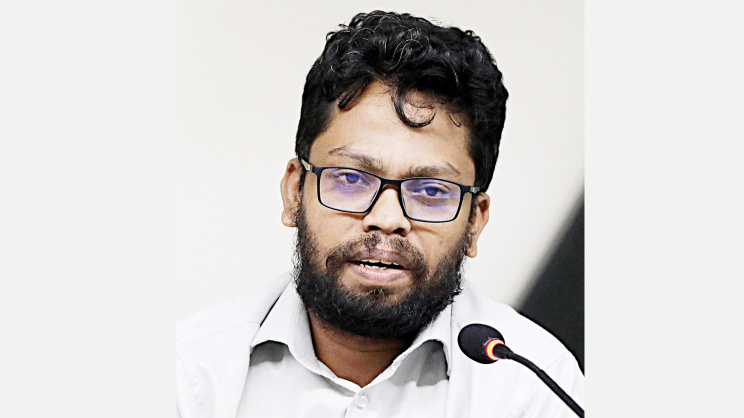
Sohanur Rahman
Executive Coordinator
YouthNet Global
For climate governance to be truly effective, it must move beyond infrastructure support and create space for women’s leadership in local adaptation planning, budgeting, and decision-making. While climate-related allocations have increased by 26% compared to the previous budget, the key challenge is ensuring that resources and social protection measures reach the most vulnerable communities. Experiences from the Sundarbans highlight how climate impacts are reshaping lives and livelihoods, particularly for women facing social and economic hardship. Furthermore, stronger attention is needed to unpaid care work, health, child marriage, and the prevention of violence against women within climate action frameworks. Engaging men and boys as partners in gender equality is equally important. Finally, gender analysis should move beyond project annexes and become a core part of climate policies, plans, and implementation processes.
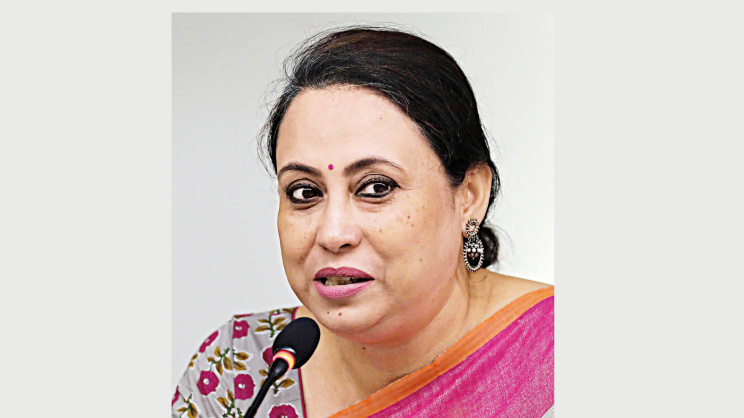
Farhana Hafiz
Gender Expert - National Resilience Programme
UN Women
Climate governance requires stronger accountability, deeper gender analysis, and more effective integration of the Climate Change Gender Action Plan into sectoral planning. Although climate-related challenges faced by women have been discussed since 2009, similar concerns around water access, livelihoods, and vulnerability continue to emerge across different ecological zones, including coastal and haor areas. Furthermore, recent research highlights links between rising temperatures and gender-based violence, underscoring the need for a broader understanding of climate impacts on women’s health, education, and wellbeing. Efforts are underway to mainstream the CCGAP across seven ministries and strengthen accountability mechanisms. However, meaningful progress depends on recognising women as agents of change, developing qualitative indicators beyond participation numbers, and building the technical capacity needed to achieve gender-transformative climate action.
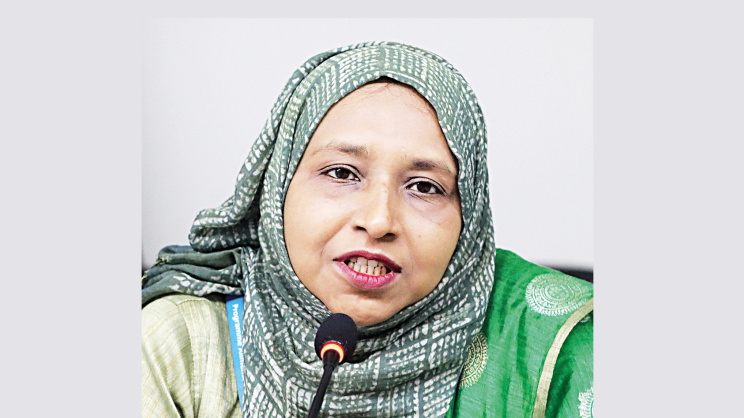
Foyzun Nahar
Programme Policy Officer (Gender, Protection, Inclusion & PSEA)
World Food Programme
Climate change is reshaping livelihoods and driving internal migration from vulnerable coastal areas to urban settlements, creating new social and economic challenges, while many people continue to stay because of livelihood dependencies. Vulnerable groups, including mowals, tiger widows, who rely heavily on the forest, and labourers engaged in the growing soft-shell crab industry, remain on the frontline of climate impacts. Insights gathered from discussions with nearly 200 women, men, and adolescent girls in Satkhira and Khulna highlighted the diverse realities across climate-affected communities and the need for more localised responses. Furthermore, concerns around water scarcity, safety, cultural insecurity, food systems, and access to information are becoming increasingly important. Therefore, expanding social protection programmes, including the Shock-responsive and Vulnerable Women Benefit, strengthening accountability mechanisms, improving public awareness, and enhancing data sharing among ministries can help build resilience and ensure more effective support for vulnerable populations.
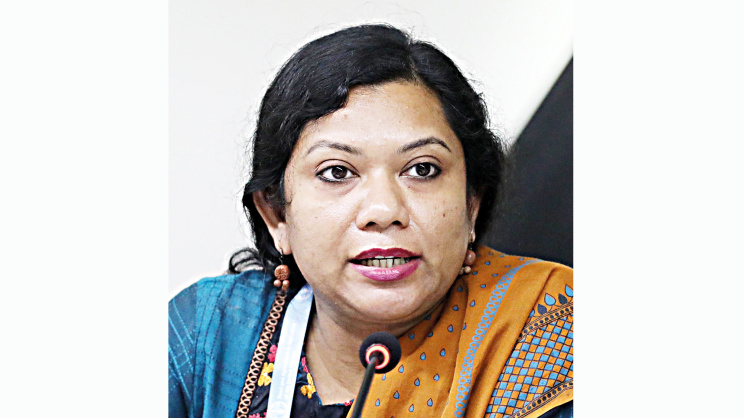
Tasnuva Zaman
Gender Focal Point
FAO Bangladesh
 For all latest news, follow The Daily Star's Google News channel.
 Women play a vital role in Bangladesh’s agriculture sector, comprising around 58% of the agricultural workforce, while 26% of women’s earnings come from agriculture. They contribute significantly to crop production, livestock rearing, fisheries, seed preservation, and post-harvest activities, while also carrying the primary responsibility for household food security. However, their participation in climate governance, decision-making, and climate investment remains limited. Furthermore, the Bangladesh Time Use Survey shows that women spend nearly seven times more time on unpaid care work than men, increasing their burden during climate crises. With only 12–13% of agricultural land under women’s individual or joint ownership, many female farmers lack access to credit, climate finance, insurance, and technology. Therefore, strengthening women’s leadership, recognition, access to information, and representation in local decision-making processes is essential for gender-responsive climate action.
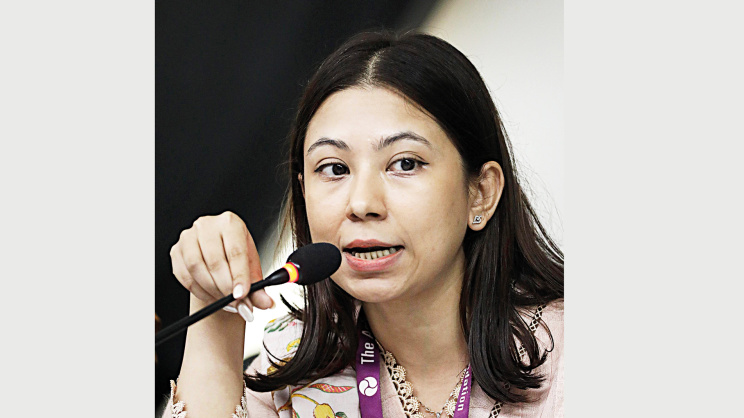
Samira Yasmin
Project Manager - Green Voices
The Asia Foundation
Climate and gender policies need to ensure that existing mechanisms and institutions translate the commitments into tangible outcomes. Experience from climate resilience work in Bangladesh Delta Plan hotspots points to three recurring gaps: an inclusion gap, where participation does not always lead to influence; a finance-to-implementation gap, where resources do not consistently reach those most affected; and a design-to-delivery gap, driven by limited accountability and fragmented coordination. Furthermore, climate finance discussions should focus not only on allocations but also on who ultimately benefits from those resources. Sustainable change can be achieved by strengthening gender considerations within existing systems rather than creating new structures. Therefore, women, youth, and structurally excluded communities should be recognised as leaders, innovators, and agents of change in climate action.
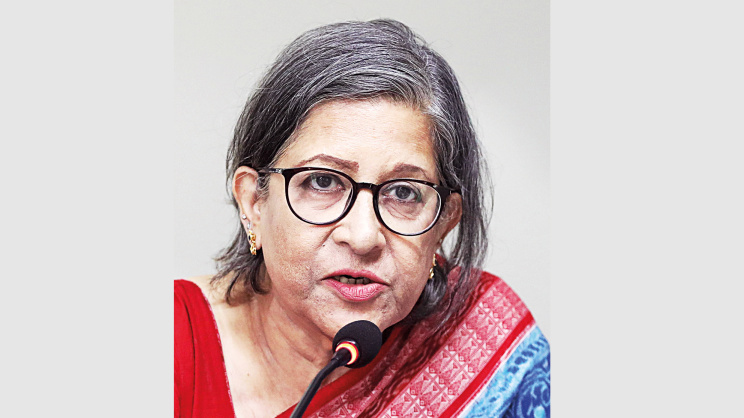
Farah Kabir
Country Director
ActionAid Bangladesh
A key challenge in climate governance is the weak conversion of climate finance into resilience outcomes, often due to gaps between planning and implementation, fragmented coordination, and limited accountability. Although women serve as frontline responders in coastal and char areas, structural accountability remains limited, particularly with less than 3% female representation in parliament. Therefore, transitioning from mere budget tagging to outcome-based tracking and decentralised local budgets is essential. Furthermore, addressing climate risks requires moving past ad-hoc approaches toward comprehensive planning that integrates the private sector and prioritises water security. This framework must also tackle intergenerational nutritional deficiencies, given that 51% of girls marry before age 18. Ultimately, achieving true resilience demands shifting focus from treating women as vulnerable groups to ensuring equitable, community-level resource distribution.
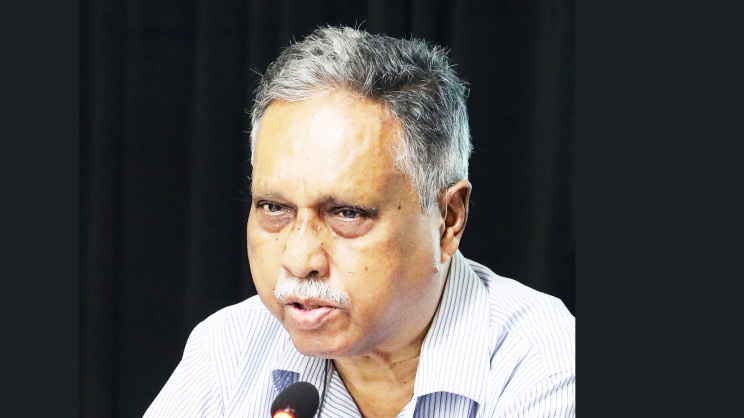
Dr. Ainun Nishat
Adviser
Centre for Climate Change & Environmental Research (C3ER)
BRAC University
Gender responsiveness is more than increasing women’s representation; it requires understanding the different challenges women face. Climate change is increasing the intensity and frequency of disasters, making women’s health, safety, and livelihoods more vulnerable. Therefore, policies and action plans must be based on meaningful consultations that create safe spaces for women to speak openly. Experience from consultations across Bangladesh, including rural communities, shows that many gender-related issues remain hidden unless the right approach is used. Although gender has been included in national and global climate policies for decades, implementation still depends on changing mindsets. Furthermore, stronger collaboration across sectors, better use of available climate finance, and community awareness are essential. Finally, ethical values and religious teachings can help promote respect for women and create safer, more inclusive communities.
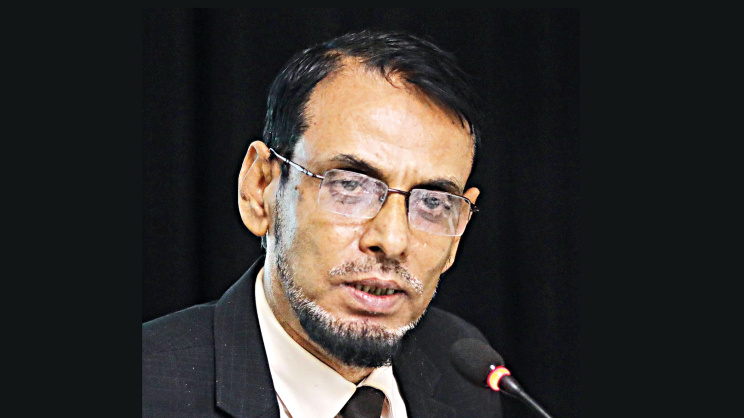
Md. Abdul Hye Al Mahmud
National Project Director (Additional Secretary)
Gender-Responsive Coastal Adaptation (GCA) Project
Our climate adaptation pilot project in salinity-prone coastal areas has demonstrated how integrated interventions can strengthen women’s resilience and empowerment. Supported by a USD 32.98 million fund, the initiative engaged 43,000 women across 101 wards in five upazilas through climate-resilient livelihoods, safe drinking water solutions, and capacity building. Furthermore, women received training in multiple livelihood options, while thousands of families gained access to rainwater harvesting systems and community-based water facilities. The project also trained 439 government officials and formed women-led rescue teams to strengthen local disaster preparedness. However, long-term success depends on stronger implementation, monitoring, accountability, and coordination among institutions. Therefore, successful pilot experiences should be scaled up nationwide, particularly in coastal, char, haor, hilly, and tea garden areas, while ensuring women remain active agents of change in climate resilience efforts.
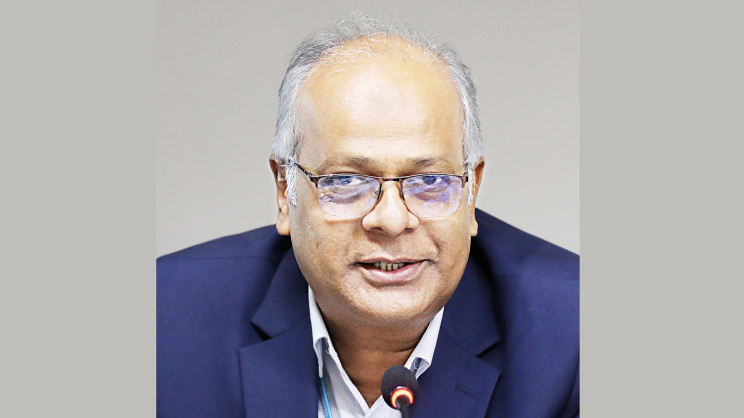
Sarder M Asaduzzaman
Assistant Resident Representative
Head, Resilience and Inclusive Growth Cluster
United Nations Development Programme (UNDP)
Several successful climate adaptation initiatives have been implemented by the Government, NGOs, and development partners, demonstrating practical and gender-responsive solutions in vulnerable communities. However, achieving long-term resilience requires moving beyond short-term projects toward sustained, programmatic interventions. Given the cross-sectoral nature of climate change, stronger coordination among ministries, local institutions, and other stakeholders is essential to maximise impact. Furthermore, Bangladesh has already developed effective adaptation models that have produced tangible results and valuable lessons. To expand these successes nationwide, greater access to climate finance, increased investment in scaling proven solutions, and continued institutional commitment are needed to ensure lasting resilience, inclusion, and sustainable development outcomes.
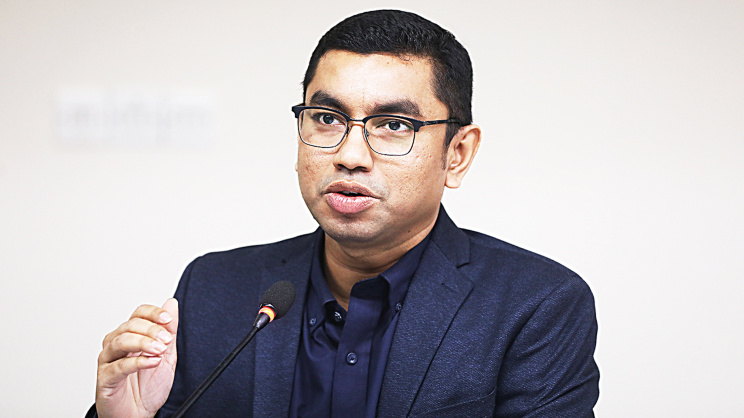
Tanjim Ferdous
Head of Strategic Partnerships
The Daily Star
Climate change disproportionately impacts women, adolescent girls, and marginalised communities in Bangladesh, transforming an environmental crisis into a profound challenge of development, equality, and justice. Daily struggles with water scarcity, health risks, and economic insecurity highlight the urgent need for action. While progressive frameworks such as the NAP, NDC, and Climate Change Gender Action Plan are established, translating these policies into grassroots reality requires embedding gender-responsive governance directly into existing national budgets and institutions. To bridge this gap, this roundtable aimed to identify practical pathways that integrate women’s perspectives, leadership, and priorities into current climate financing and coordination mechanisms.
Comments