


Then and Now: The Mohammadpur I grew up in
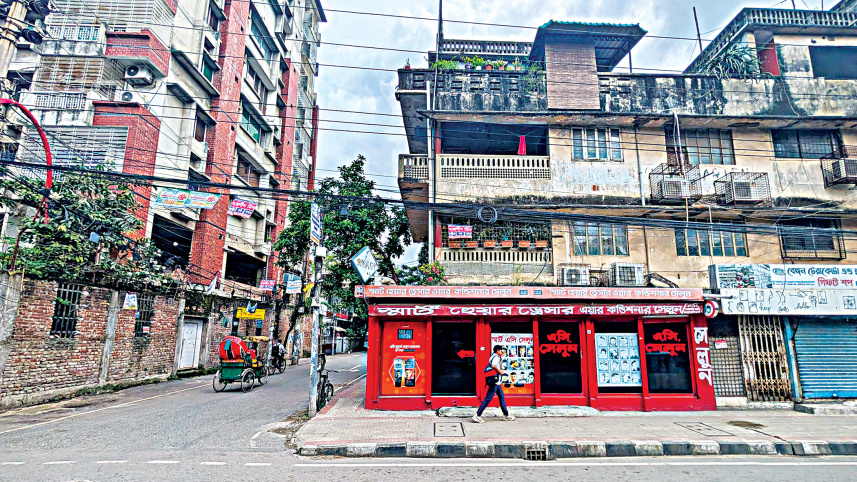
My earliest memories of Mohammadpur begin at Tajmahal Road, from a time when I was barely four, old enough to witness a world that felt steady and whole.
My mornings did not begin with alarms back then. Somewhere in the neighbourhood, someone practised sargam on a harmonium. The soft, unpolished notes would drift through the air, becoming part of the morning itself. Sparrows would sit on our window frames, chirping as if responding to the music.

Life in those years revolved around small, familiar markers. For me, one of the earliest was Rani General Store on Tajmahal Road. It was where my mother went for groceries, and where I always ended up crying, insisting on Mimi chocolates, a can of cola, or their pastry cake. I rarely left without one.
Not far from there was Sanjana Library, which still stands. It was the shop where I bought my first fancy Spider-Man pencil box to show off to my friends. Most of my childhood stationery came from here: books, copies, stickers, glowing stars, and even Batman comic books.
Transport had its own character then. The Mega City Paribahan buses were a constant presence, the counter was always crowded, and people formed lines to board the buses. Yet inside, there was space to sit comfortably and look out at a city that did not feel rushed.
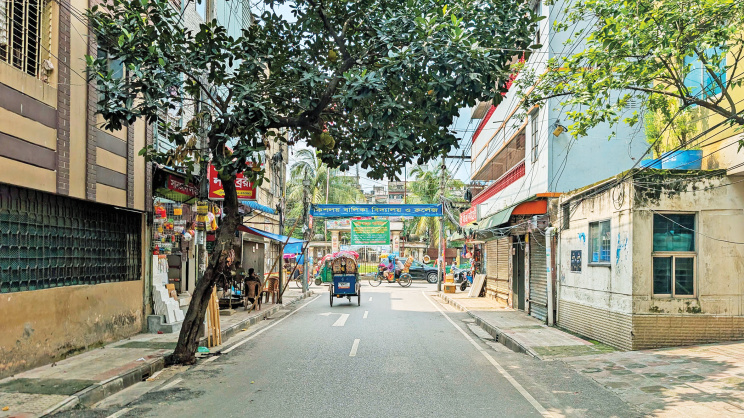
Over time, Mega City gave way to Sino Dipon, then Dipon Paribahan. Today, the old counter no longer exists, and with it, a certain rhythm of daily life has quietly disappeared.
Afternoons often led to Tajmahal Road park, the nearby playgrounds, or simply the streets. Every lane had children playing cricket or football. I played at the Mohammadpur Eidgah field and the Salimullah Road water tank field.
The change is not just in what was built, but in what faded. The sounds of children playing in every lane are no longer there. Technology has pushed playtime indoors. The streets have narrowed.
Roads that once felt open -- Tajmahal Road, Ring Road, Shekher Tek, and Adabor -- slowly filled with traffic that now feels relentless. I remember watching Tokyo Square rise, and almost in the blink of an eye, the road in front of it grew busier. The emptiness that once defined the area gave way to density and noise.
Salimullah Road tells a similar story. Today, the road is known for its street food, with Selim Kabab and countless other kebab and halim shops drawing crowds every evening. But growing up, it was just a single tin-shed Selim Kabab, with no sign of other street food shops.
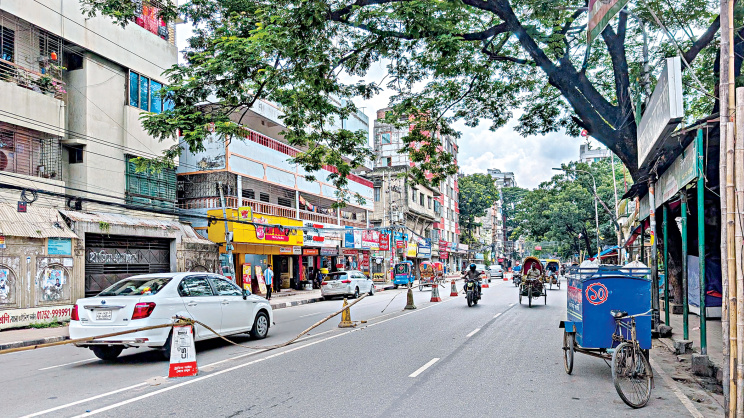
The most visible change, I think, came with the rise of apartments. I remember when new buildings were rare enough to count: one, then two, then a few more. But at some point, I lost count. In what felt like a flash, the skyline filled up, and with it came people, drawn by schools, markets, and the promise of a growing neighbourhood.
What hurts the most is Tajmahal Road itself. I remember it as a place with space, where movement was easy and the day did not feel rushed. Now it is crowded, restless, stuck in a near-permanent traffic jam. It is the same road, but it no longer feels like the same place.
In my mind, Mohammadpur still carries the sound of a distant harmonium in the morning, the sight of kites against an open sky, and the echo of children shouting across rooftops at sunset. The area did not change overnight. It transformed quietly at first, then all at once.
Looking back now, it feels like I’ve lived through two versions of the same place -- one that shaped me quietly, and another still evolving in ways I can’t quite decide are good or bad, long after that child has grown.
 For all latest news, follow The Daily Star's Google News channel.
Comments