Why Sheepstealer is House of the Dragon season 3’s best character

There is a rarity in the relatability of House of the Dragon, and it has wings. Season 3 just concluded, leaving behind the usual detritus of Targaryen tales.
And the best character of the season is a dragon that steals sheep, distrusts everyone and has absolutely no interest in the Iron Throne.

He was simply a solitary creature trying to survive in peace until he was dragged into a war that was never his to fight.
And therein lies the irony of season 3. In a saga crowded with people claiming to fight for family, honour and destiny, the creature who behaves most honourably is the one that understands none of those words.
The allure of the show, like that of its parent series Game of Thrones, has always lain partly in its ability to make fantasy feel tactile.
George RR Martin’s world may be populated by mythical beasts, ancient prophecies and improbable bloodlines, but the television adaptation gives these abstractions a verisimilitude.
The world of Westeros is furnished with perfidious politics and mordant anthropology of power, but the television adaptation has given those dragons something literature can only suggest -- physicality and behavioural signatures.
Dragons here are not merely visual effects with wings. They possess temperaments, histories, preferences, fears and peculiarities; in effect, they are characters without dialogue.
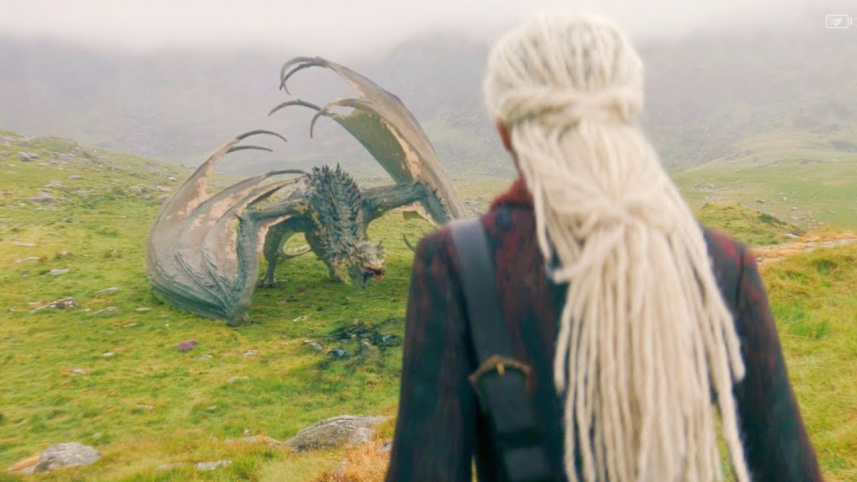
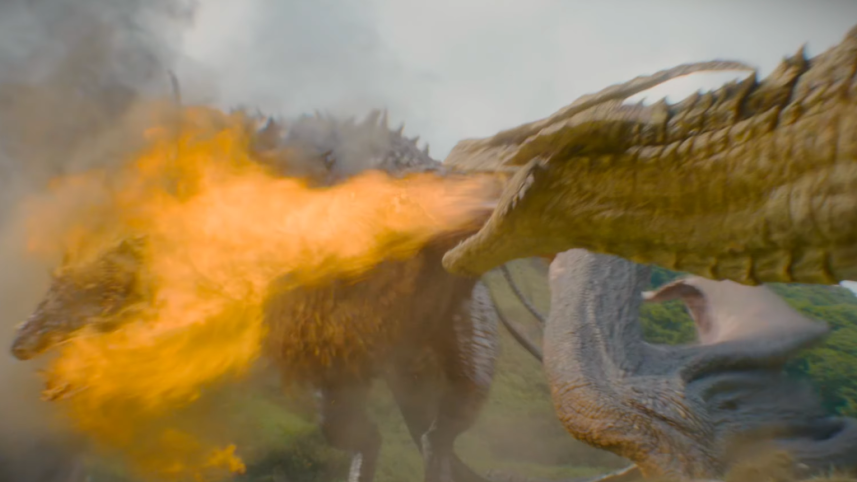
Mud-brown, truculent, weathered, ungainly and distinctly unregal, Sheepstealer looks almost deliberately antithetical to the Targaryen conception of draconic grandeur. His very name is an affront to aristocratic nomenclature -- not Balerion the Black Dread, not Vermithor the Bronze Fury, but Sheepstealer, a creature named for the most prosaic of appetites.
He is wild, territorial, irascible and governed by instinct.
Yet perhaps that is precisely why he has become the most characterful portrayal.
“Wild” -- that single adjective carries almost the entire philosophical weight of his character.
Two branches of one dynasty are prepared to annihilate one another over a chair of swords, and into this carnage wanders a beast whose political philosophy might be summarised as: Please leave me alone and perhaps stop taking my dinner.
His eventual bond with Rhaena is therefore more interesting than the conventional fantasy trope of “taming the beast”. She establishes a relationship with an animal that has spent its existence refusing human control. The wildness does not disappear merely because someone has climbed onto his back.
Sheepstealer’s most affecting quality is that he is perpetually misread.
When he behaves violently, humans interpret the violence through their own moral categories. Aggression becomes hostility. Instinct becomes betrayal. Resistance becomes insubordination. The dragon is judged according to standards he never agreed to observe.
And there is something deeply recognisable about this.
The misunderstood creature is one of literature's oldest figures, from Frankenstein's monster to King Kong, from Caliban to the countless beasts in folktales that become terrifying only after humans invade their habitats. The creature is frightening because it does not speak our language, and because we habitually mistake incomprehension for malice.
But House of the Dragon gives the trope an especially mordant twist -- the creature dragged into the consequences of civilisation's own madness.
 For all latest news, follow The Daily Star's Google News channel.
 This is what makes his treatment in Season 3 so resonant.
Great irony is that the supposedly civilised dragons are themselves being used to conduct an uncivilised war.
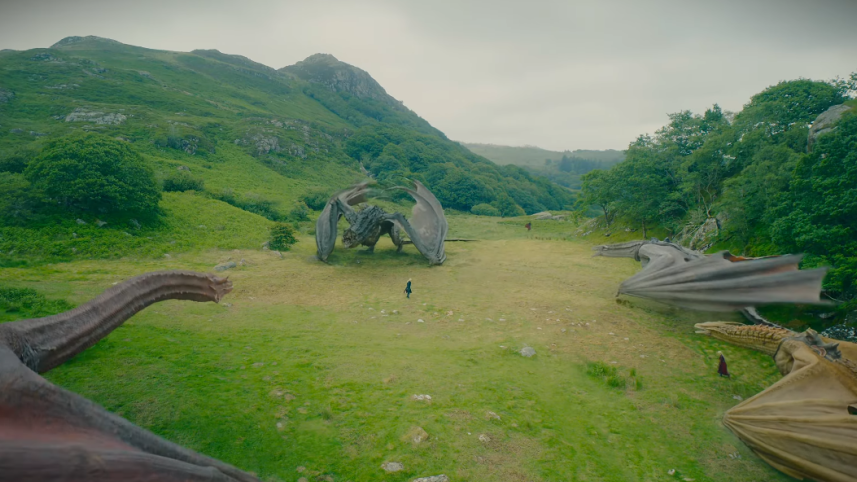
Confrontation of the season crystallises this when Syrax, Seasmoke and Caraxes close in, Sheepstealer is not participating in some carefully choreographed ideological contest between rival factions. The animal calculus is brutally elementary -- survival. And when he refuses to abandon Rhaena, that instinct becomes unexpectedly poignant.
The spectacle of a wild dragon defending his rider against three dragons from his own supposed side is powerful precisely because it strips away the political abstraction. There is no Black or Green in that moment. There is no dynastic rhetoric.
Three dragons attack, one fights back. That is an extraordinary achievement for a creature whose principal distinguishing characteristic is that he steals sheep.
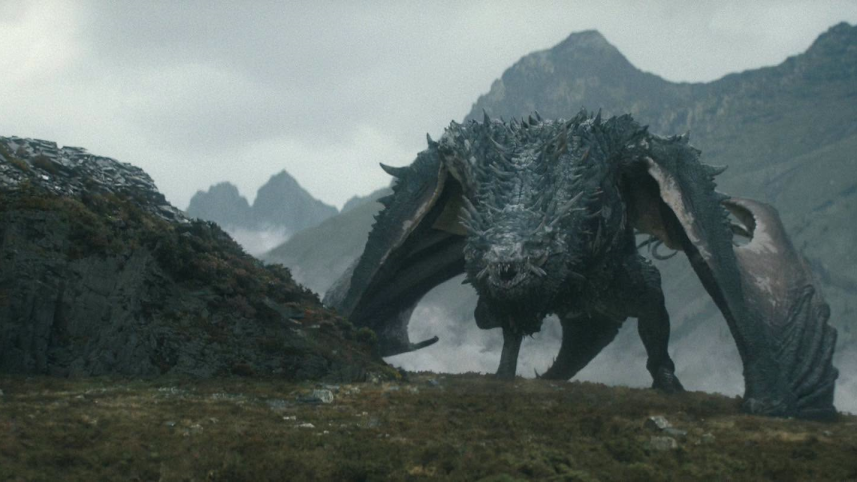
Sheepstealer's ungainly appearance becomes part of his appeal. Fantasy creatures are conventionally beautiful in the manner of heraldry -- massive and majestic. Sheepstealer is not. His earthy coloration, rough appearance and deformed jaw make him seem almost geological, as though he has emerged from the landscape.
There is even something almost existential about him.
He is a creature without a political identity forced into a political world. In other words, Sheepstealer undergoes the oldest tragedy of political life -- the moment an individual becomes useful to power, power ceases to permit that individual the “luxury” of remaining himself.
This is why the dragon's suffering resonates beyond fantasy.
Sheepstealer has the misfortune of living in a world where everyone wants to know whose side he is on. His answer, if he could give one, would presumably be – “Mine!”.
And that may be the most radical political statement in the entire series. Perhaps that is why he feels more human than many of the humans.
He is not human in temperament, of course. He is human in the way fictional animals often become mirrors for human dilemmas. His loneliness, defensiveness, territoriality and attachment are rendered legible to us because the show gives his behaviour emotional consequence.
Sheepstealer's tragedy is smaller, and therefore perhaps more universal.
In a saga about people destroying themselves because they cannot stop wanting to possess the world, there is something almost revolutionary about a dragon whose deepest desire seems to be to remain unpossessed.
Sheepstealer is pushed onto a battlefield without possessing the most elementary knowledge required of a participant -- who the enemy is. His behaviour is instinct. The show thus conveys its sharpest commentaries on war itself.
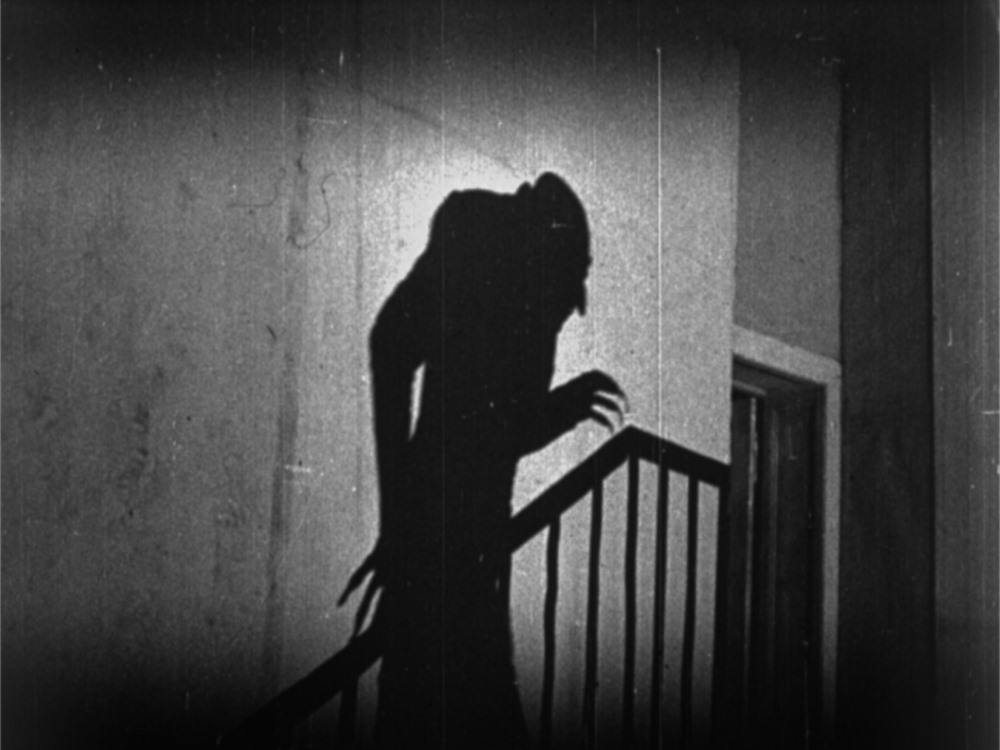
Such tragedy isn’t unfamiliar though. Imagine being dragged into a war because someone else has decided that your capabilities makes you strategically useful, while nobody has bothered to explain the rules.
Targaryens have turned dragons into an airborne extension of their entitlement. Sheepstealer is an inconvenient reminder that nature cannot be domesticated.
Everyone in Westeros is conscripted into somebody else's narrative -- children inherit wars they did not begin, soldiers die for monarchs they have never met, houses are compelled to choose sides and people become symbols before they have the opportunity to become themselves.
Sheepstealer experiences the same fate in its most elemental form.

Tribute / Nana Patekar: Rage was never the whole story
Nana Patekar helped 77 lakh farmers throughout his life

Raw, powerful, unmatched: Six unforgettable performances that defined Nana Patekar

Star Cineplex marks 22 years with buy-one-get-one-free ticket offer

Emmy Awards to end a 79-year tradition
Rowan Atkinson to revive ‘Mr Bean’, ‘Blackadder’ sketches on West End stage

How ‘Drishyam’ blurs the line between truth and illusion

Mosharraf Karim reminisces a life gone by
Mubin, de Matteis bring 12 films to New York’s first Muslim film festival