Nana Patekar: Rage was never the whole story

On October 4, four days before his death, Nana Patekar stood in Goa and spoke about mortality.
He did not know whether he would be alive the next day. He wondered whether he had done enough with the life he had been given, whether a man's world could reasonably end at his family and his front door, whether he had given anything back to the society around him.

He spoke about dissent, political disagreement, and the necessity of retaining basic decency even when one disagreed profoundly.
This morning, the thespian died at 75 after a cardiac arrest at his home in Dona Paula, Goa. Doctors reportedly tried to revive him for around 45 minutes. He could not be saved.
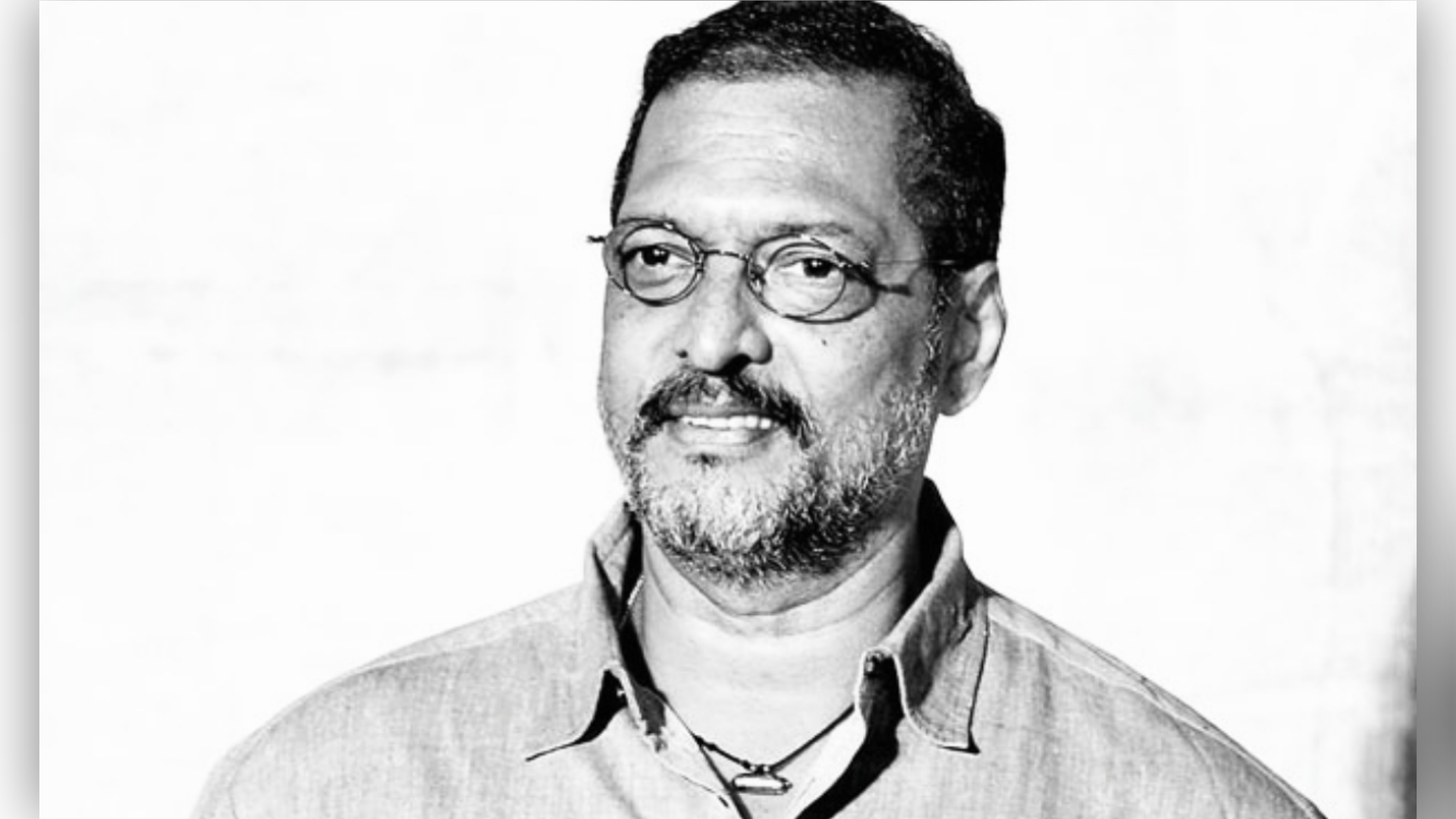
The coincidence is almost unbearably cinematic. Yet the most fitting tribute to Patekar may be that he had spent a lifetime contemplating precisely this territory -- what remains of a man when the performance is over, when anger subsides, when applause disappears, when one is left alone with the inconvenient question of whether one's life amounted to something.
Nana Patekar was never an actor of cosmetic emotions.
His performances always seemed to arrive with history attached to them. A glance could contain humiliation. A pause could suggest exhaustion. A raised voice could conceal fear. Even his laughter often seemed to have something wounded lurking behind it.
This is what made him so difficult to imitate.
Indian cinema has produced countless performers capable of shouting. Patekar made shouting psychological. His voice was not merely loud; it was textured by circumstance. When he erupted, there was generally a reason beneath the eruption, and beneath that reason another reason still. Rage, in his hands, was rarely the primary emotion. It was the visible crust over something more vulnerable.
Perhaps his understanding of humiliation came honestly.
Born Vishwanath Patekar in Maharashtra, he began working as a teenager after his family's financial difficulties. He painted film posters for money and food, walking considerable distances after school. He came to cinema through theatre, bringing with him neither the conventional glamour nor the cultivated smoothness of the Bombay star system.
That roughness became his aesthetic advantage.
When Patekar appeared on screen, one sensed a person rather than a personality. He could look tired, irritable, compromised, frightened or simply fed up. He had none of the reassuring perfection expected of a conventional leading man. His face had lived in it.
In Parinda, as the volatile gangster Anna, he created one of Hindi cinema's most unnerving portraits of violence. The character's menace was not merely physical. Anna seemed psychologically cornered by his own brutality, a man whose capacity for violence had become indistinguishable from his identity. The performance won Patekar the Indian National Film Award for Best Supporting Actor.
Then came Prahaar: The Final Attack, which Patekar directed as well as starred in, and Krantiveer, perhaps the performance most closely associated with his public persona. As Pratap Narayan Tilak, he embodied a combustible mixture of cynicism, rage and idealism, turning political disillusionment into something almost volcanic. That role earned him the National Film Award for Best Actor.
In Yeshwant (1997), Patekar gives one of his most visceral performances as Inspector Yeshwant Lohar, an upright but volatile policeman caught in the moral quicksand of a corrupt system. Patekar makes him bruised, impatient, and fiercely human, a man whose sense of justice is both his virtue and his undoing. His famous “Ek machhar…” outburst became larger than the film itself, but what lingers is the performance beneath the dialogue -- the rage of a decent man discovering that the system he serves has long ceased to be decent.
Patekar’s Ghulam-E-Musthafa is a quintessential showcase of the actor’s ability to make menace feel almost philosophical. As Mustafa, a hardened underworld enforcer caught between loyalty, violence and an instinctive moral compass, Patekar gives the character a startling interiority. He is brutal without being one-dimensional, vulnerable without sentimentality, and often unsettlingly quiet. The film may belong to the familiar grammar of 1990s Mumbai gangster cinema, but Patekar’s performance elevates it into something more -- a portrait of a man who has mastered violence yet remains incapable of entirely extinguishing his humanity.
 For all latest news, follow The Daily Star's Google News channel.
 But reducing Patekar to anger would be a critical injustice. His finest work often existed in the space between fury and tenderness.
Khamoshi: The Musical revealed an actor capable of enormous feeling without relying upon his customary verbal arsenal. Agni Sakshi brought another disturbing psychological complexity. Ab Tak Chhappan stripped away much of the theatricality and left behind a police officer whose professional relationship with killing was almost bureaucratic in its bleakness.
And then there was Natsamrat. For Marathi cinema, Patekar's portrayal of Ganpatrao Belwalkar was something closer to a reckoning than another performance. The ageing Shakespearean actor confronting the indignities of old age, family, memory and obsolescence gave Patekar a role that seemed almost metaphysical: an actor watching the world forget the actor.
Shakti: The Power found him in a darker register, as Narasimha, a brutal and possessive patriarch whose authority within the family is inseparable from fear. Patekar made the character's violence particularly disturbing because it was not played as a conventional villain's flamboyance. It was domestic, intimate and suffocating.
2006’s Taxi No. 9211 is a film that deserves more attention in any reckoning with Patekar's career. As Raghav Shastri, Patekar played a middle-aged taxi driver whose life has been worn down by debt, disappointment and the humiliations of ordinary existence. Opposite John Abraham's privileged, reckless Jai Mittal, Raghav became something more interesting than the conventional working-class foil. He was sardonic, opportunistic, resentful, funny and wounded, with a battered dignity that he guarded behind cynicism
Welcome demonstrated that the man who could make violence terrifying could also make vanity hilarious. His Uday Shetty was not simply comic relief. Patekar understood that comedy frequently begins where human dignity collides with absurdity. Uday's grandiose gangsterhood, his wounded pride, his theatrical exasperation and his desperate attempts to preserve the decorum of a criminal empire were funny precisely because Patekar played them with absolute seriousness.
Patekar knew that people can be ridiculous without knowing they are ridiculous, tragic without knowing they are tragic, and heroic for reasons that may look foolish from the outside.
Even when working in mainstream Hindi cinema, he retained something of the theatre actor's physicality and the regional performer's willingness to let a character be awkward, abrasive or unbeautiful.
He never seemed particularly interested in being polished.
The Hindi film industry has always been fascinated by surfaces -- faces, bodies, clothes, voices, star images. Patekar's appeal lay partly in his refusal to make surface sufficient. He made character more important than charisma.
He could walk into a frame and disturb its equilibrium.
Characters he played were men frequently running out of time -- to redeem themselves, to avenge themselves, to love, to forgive, to escape the consequences of their own choices. They were rarely at peace with themselves because Patekar seemed instinctively drawn to characters who had some unfinished quarrel with existence.
Nana Patekar brought to the screen the unpleasant knowledge that people are seldom what they appear to be, that rage is often grief wearing armour, that dignity can coexist with absurdity, and that beneath even the hardest face there may remain a frightened, lonely, tender human being asking to be understood.
Nana Patekar helped 77 lakh farmers throughout his life
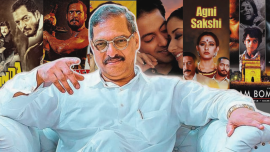
Raw, powerful, unmatched: Six unforgettable performances that defined Nana Patekar

Star Cineplex marks 22 years with buy-one-get-one-free ticket offer

Emmy Awards to end a 79-year tradition

Rowan Atkinson to revive ‘Mr Bean’, ‘Blackadder’ sketches on West End stage

How ‘Drishyam’ blurs the line between truth and illusion

Mosharraf Karim reminisces a life gone by

Mubin, de Matteis bring 12 films to New York’s first Muslim film festival

‘Tere Bin’ star Wahaj Ali spotted in Dhaka with Nusraat Faria