Watching Al Pacino grow older, and growing older with him

There are coincidences that feel frivolous, and others that acquire, with passing years, the gravity of a private metaphor. Sharing birthday with Al Pacino belongs to the latter.
It is, in itself, a trivial datum. And yet, as the years accumulate with their quiet insistence, it becomes less a coincidence than a mirror held at an oblique angle to one’s own life.

One does not, in younger days, inhabit such mirrors. One admires from a safe distance. Pacino’s portrayals were then an emblem of intensity, a study in volcanic will, a performer whose characters seemed to exist at a higher temperature than ordinary life.
But age has a peculiar way of dismantling that distance. It draws the viewer into complicity.
The screen ceases to be a surface and becomes instead a thin membrane between two lives unfolding in parallel registers of time.
Now, approaching what one might call the more deliberate years of existence, I find myself returning to his characters not as spectacles but as companions in a shared inquiry -- what becomes of ambition when it matures, what remains of identity when it is tested by consequence and what dignity, if any, survives the slow erosion of certainty.
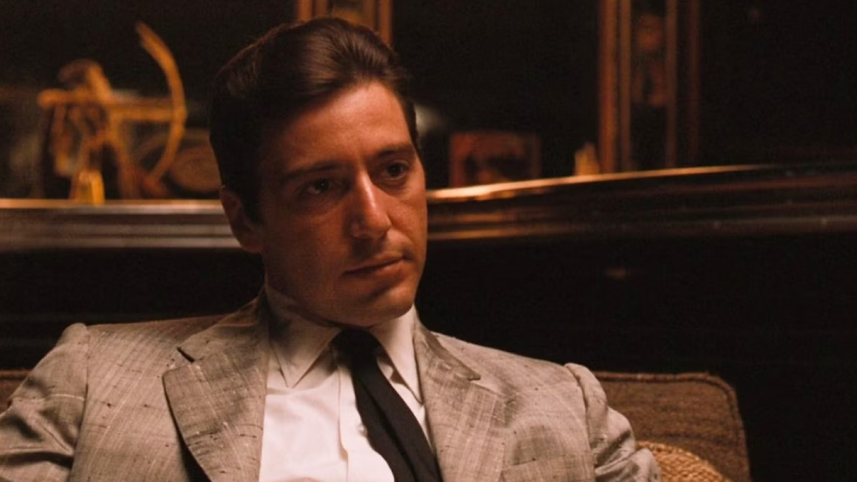
There is, first, Michael Corleone in The Godfather Part II. He is not yet old in that film, but he is already exhausted by the architecture of power he has constructed around himself.
What once appeared as mastery now reads as enclosure. One recognises, with disquieting clarity, the peculiar burden of having become what one once intended.
Michael is not undone by chaos but by order; not by defeat but by success fully realised. In him, one sees the first discreet lesson of age: that control is often just another form of captivity.
Then there is Carlito Brigante in Carlito's Way, whose tragedy is almost elegiac in its restraint.
Carlito has already lived the life that younger men romanticise and older men renounce. His desire is no longer conquest but exit.
And yet the past, that most implacable of companions, refuses to release him. There is something deeply intelligible in this struggle.
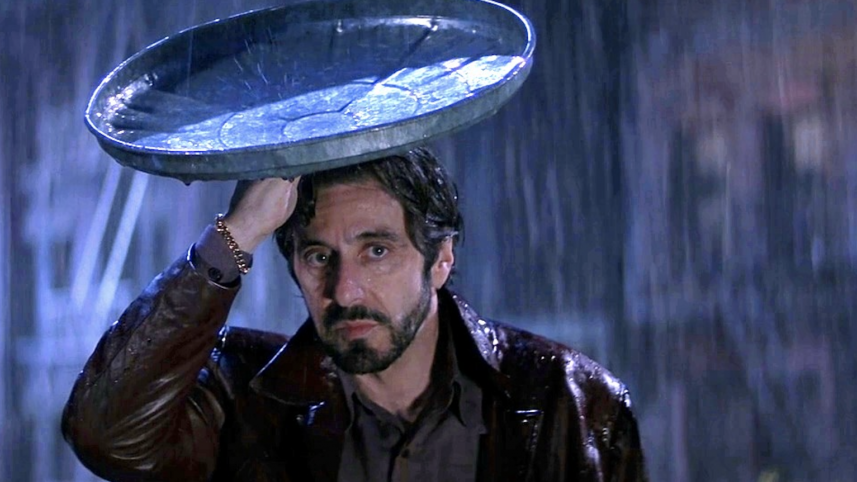
One learns, with time, that life does not so much offer clean departures as negotiated continuities. Carlito’s longing for purity of escape becomes, in this sense, profoundly human and profoundly unattainable.
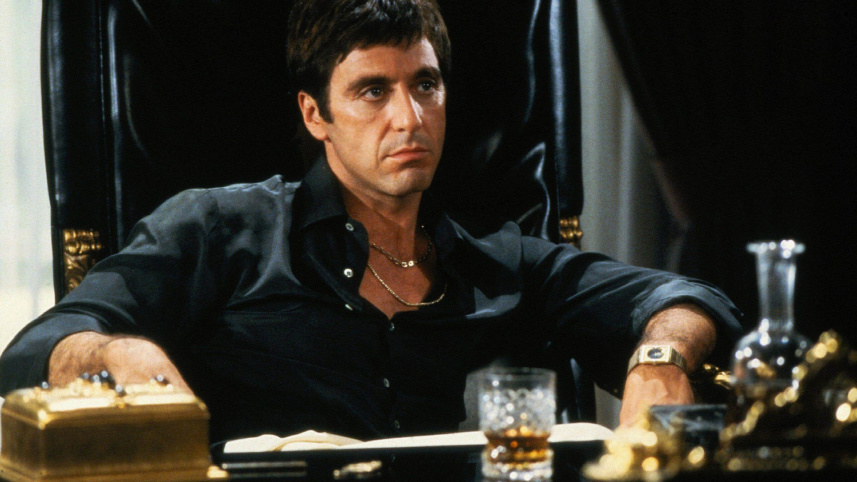
If Carlito is the man attempting to leave history, Tony Montana in Scarface is its most unrestrained author. He is appetite without grammar, will without punctuation. In earlier years, one might mistake such excess for vitality.
Later, it reveals itself as incapacity for measure. Tony does not merely desire more; he is structurally unable to conceive of “enough”.
Age, however, imposes its own arithmetic. It teaches that the unsustainable is not merely dangerous but unspeakably wasteful.
 For all latest news, follow The Daily Star's Google News channel.
 Tony’s trajectory is therefore less a morality tale than a correction of perspective: velocity is not destiny.
There is a different kind of sorrow in Lefty Ruggiero in Donnie Brasco.
Lefty is not undone by grandeur but by its absence. He is a man who has spent a lifetime near the machinery of significance without ever being fully absorbed into it.
One recognises, with uncomfortable honesty, that most lives resemble this condition more than they do the cinematic extremes of Corleone or Montana.
Lefty’s tragedy is the quiet one: The slow recognition that proximity to importance is not the same as participation in it. Age sharpens this awareness without cruelty, only clarity.
And then there is Frank Slade in Scent of a Woman, perhaps the most paradoxical of Pacino’s ageing figures.
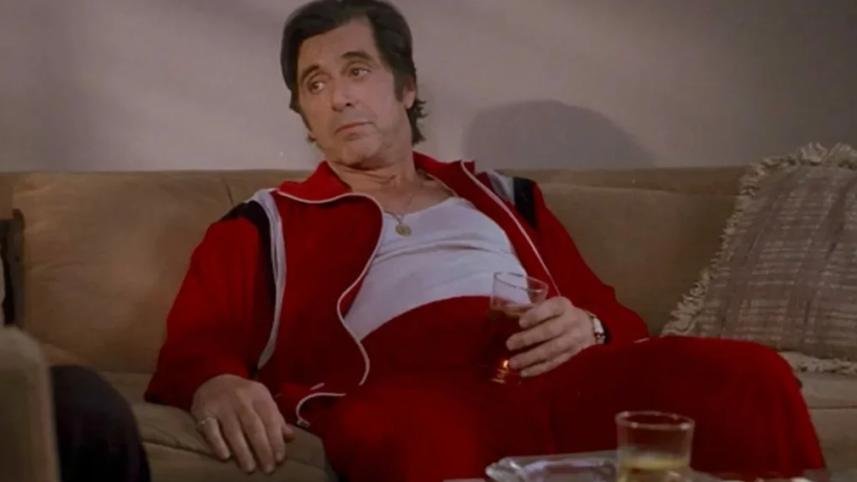
Blind, irritable, abrasive, he might at first appear diminished. Yet he possesses a kind of interior luminosity that the younger characters lack.
Frank’s authority does not derive from control of circumstance but from refusal of self-pity. In him, one encounters the final lesson of age -- that dignity is not a condition granted by life but a stance taken toward it.
To move through these characters at this stage of life is to experience something akin to retrospective autobiography.
One begins to recognise not biography but pattern. Not narrative resolution but thematic recurrence -- power and its cost, ambition and its residue, escape and its impossibility, survival and its quieter nobility.
And so, the shared birthday becomes a modest philosophical device.
It is not that one’s life resembles Pacino’s roles in any literal sense. That would be absurd.
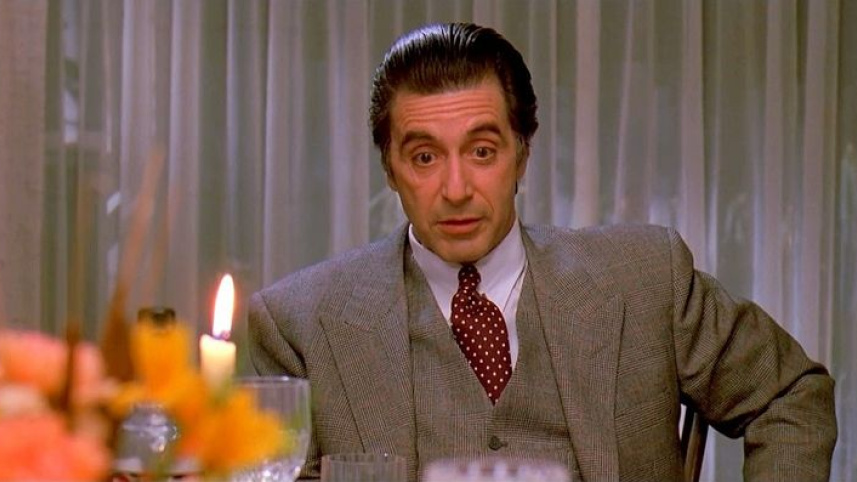
Rather, it is that his characters provide a vocabulary for articulating what age otherwise leaves inarticulate -- the sense that time does not merely pass but accrues meaning, that identity is not static but revised under pressure and that the most consequential dramas are often internal and unobserved.
In the end, to grow older alongside these figures is to discover that cinema, at its finest, does not imitate life so much as annotate it.
Pacino’s men do not explain age; they render it legible.
And in their cracked certainties, exhausted triumphs, and stubborn survivals, one finds, if not consolation, then at least recognition.
Reba McEntire, Lily Tomlin, Taylor Swift, Donald Trump and more pay tribute to Dolly Parton
Sadia Ayman, Shofin Ahmed star in short film 'Aro Kichukhon'

Pritom Hasan returns to live stage with ‘Monsoon Beats’
‘The University of Chankharpul’ to have world TV premiere on Channel i

Dolly Parton, queen of country music, dies at 80

Nartanam Dance Academy stages debut production ‘Anweshan’

Mim seeks more distinctive roles with ‘Jibon Opera’

Kit Harington to play Gilderoy Lockhart in Harry Potter series

Ethic celebrates 100th staging of Utpal Dutt’s ‘Hari Phatibe’