Samurai Jack and the future we became

Just as the new millennium was acquiring its first vocabulary of optimism, Samurai Jack premiered on Cartoon Network on August 10, 2001.
It seemed, at first glance, an eccentric collision of samurai mythology, spaghetti westerns, cyberpunk and comic-book kinetics. A quarter of a century later, its real achievement looks rather more consequential -- it imagined not merely the future, but the psychology of living in it.

Genndy Tartakovsky's creation followed a nameless Japanese prince hurled by the shape-shifting demon Aku into a distant future where the villain has triumphed.
Stranded in a world he does not recognise, he spends decades trying to find a portal home.
The lyrics of the opening theme song states:
Fifty years have passed
But I do not age
Time has lost its effect on me
Yet the suffering continues
Aku's grasp chokes the past, present, and future
Hope is lost
Gotta get back
Back to the past
Samurai Jack
Yet the premise conceals the show's deeper question: what happens to a person when history, homeland and certainty are all taken away?
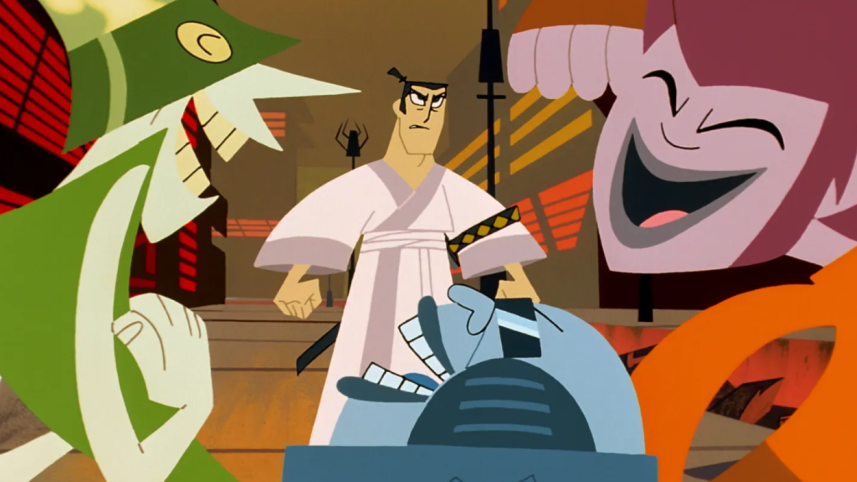
He adopts the alias "Jack" when he first encounters the locals in this new, dystopian world. They casually refer to him as "Jack" (used as future slang), and he simply rolls with the name.
Jack is an anachronism, but not a relic. He carries something the future has misplaced -- a moral vocabulary.
Jack's Bushido-inflected code of honour, courage, restraint and benevolence stands in stark opposition to Aku's world of industrial excess, commercialised existence and technological power without ethical ballast.
That conflict is what makes Samurai Jack surprisingly contemporary.
 For all latest news, follow The Daily Star's Google News channel.
 As Jack says, "You can never defeat another if you know not how to defeat yourself."
Its sulfurous cities, once recognisable as cyberpunk fantasy, now evoke our own anxieties about environmental degradation, corporate concentration and technology colonising everyday life. Its machines are not frightening because they are machines; they are frightening because they operate within a civilisation that has forgotten why human beings should matter more than systems.

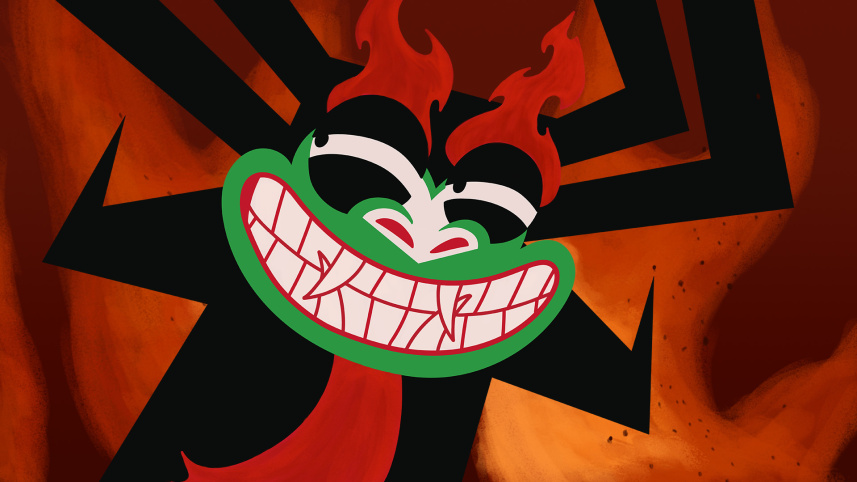
Aku, whose very name in Japanese carries associations with evil, is shapelessness given personality. He can change form, scale and appearance at will, becoming monstrous, comic, grotesque or almost absurdly flamboyant.
He is not only the monster at the end of the sword. He is the temptation to surrender one's principles to the circumstances of one's time.
Yet beneath that theatricality lies a precise idea: evil without limit, power without restraint, appetite without satiety
His greatest weapon is not his strength. It is his ability to corrupt the world around him.
"I am everywhere... and anywhere!" as he says.
Aku turns civilisation into an extension of himself. His future is technologically magnificent but spiritually bankrupt, a place where commerce, violence, spectacle and machinery have crowded out memory, nature and moral responsibility. He does not simply conquer people; he alters the conditions under which they live until his order begins to seem normal.
He represents the danger of power becoming its own justification.

Aku is not merely the villain Jack must defeat; he is the metaphysical disorder against which Jack defines himself. Aku has no fixed form because corruption rarely does. It adapts to whatever age it inhabits. In Jack's medieval past, he is a demon. In the future, he becomes an industrial sovereign.
But Aku also gives Jack his moral definition. Without Aku, Jack is merely a warrior. Against Aku, he becomes a custodian of memory, discipline and human dignity. Their conflict is therefore not simply good versus evil. It is continuity versus chaos, restraint versus appetite, conscience versus power.
Aku wants the world to become whatever serves him. Jack's quiet rebellion is to remain himself.
The series was also visually avant-garde. Its silhouettes, expanses of negative space, cinematic panoramas and extraordinary reliance on silence made it closer to animated cinema than conventional television cartooning.
Genndy Tartakovsky understood that visual storytelling does not require noise. Sometimes a solitary figure crossing an immense landscape says more than a page of dialogue.
That restraint is particularly resonant in an age of perpetual digital stimulation.
Samurai Jack was made before smartphones, algorithmic feeds and generative AI became fixtures of ordinary life, yet it understood the alienation produced when technological acceleration outruns human reflection.
Its most prescient idea, however, may be historical dislocation.
Aku does not merely send Jack forward in time; he severs him from his past. Jack remembers a world that no longer exists, while the future has largely forgotten it. That is an increasingly familiar predicament in a culture where information is abundant but historical continuity feels fragile. We are simultaneously drowning in archives and becoming impatient with memory.
Jack cannot recover the years stolen from him. He cannot return unchanged to the past. He can only decide what kind of man he will remain.
Meaning is not something Jack finds waiting for him at the end of the road. It is something he creates through the manner in which he walks it.
And that, ultimately, is why Samurai Jack has survived its quarter-century journey so remarkably well. It was never really about a samurai fighting his way through the future, it was about a human being trying not to become corrupted by it.
The future has changed considerably since 2001. Jack's predicament has not.
We are still surrounded by machines, yet searching for meaning; connected, yet lonely; informed, yet historically unmoored; technologically empowered, yet uncertain about the ethics of our power.
In that sense, Samurai Jack was prophetic. And the unsettling part is that its future now looks rather like our present.

Tribute / Nana Patekar: Rage was never the whole story

Nana Patekar helped 77 lakh farmers throughout his life

Raw, powerful, unmatched: Six unforgettable performances that defined Nana Patekar

Star Cineplex marks 22 years with buy-one-get-one-free ticket offer

Emmy Awards to end a 79-year tradition

Rowan Atkinson to revive ‘Mr Bean’, ‘Blackadder’ sketches on West End stage

How ‘Drishyam’ blurs the line between truth and illusion

Mosharraf Karim reminisces a life gone by
Mubin, de Matteis bring 12 films to New York’s first Muslim film festival