


How religion is finding space in today’s Bangladeshi cinema

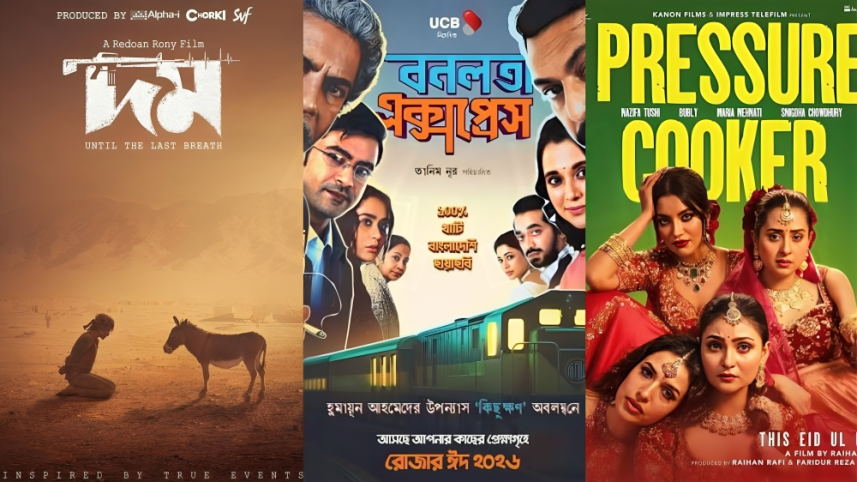
In Bonolota Express, one of this year’s Eid releases, there is a scene where a child is born on a running train. One character suggests that the father give the azaan. This is followed by a reflective line: when a child is born, the azaan is given but no prayer is offered; and when a person dies, the janaza prayer is offered without an azaan. A person’s life, the dialogue suggests, is the time between that azaan and the janaza prayer.
In another Eid film, Domm, the protagonist finds himself just seconds away from death. He keeps reciting dua Yunus, believing it can save him from danger. At the same time, thousands of miles away, his wife and mother are also praying for him. In the end, he barely survives.

In Pressure Cooker, another Eid release, a woman working as a massage therapist in the city sends her child to a madrasa to become a Quran hafez. Most of her earnings go towards her child’s education.
These films show something that has not always been common in Bangladeshi cinema -- religion appearing quietly and naturally in everyday life. It is not loud or preachy. Instead, it feels like a normal part of the characters’ lives.
For many people, this may not seem unusual. After all, religion is already a part of daily life for many in Bangladesh. So why does this feel new?
For a long time, Bangladeshi films -- especially commercial ones -- stayed away from showing religious practices. One reason may have been the belief held by some that films, music, and other forms of art are not acceptable in Islam.
Another reason could be the heavy reliance on foreign stories, especially from South Indian films. Many scripts were adapted directly, leaving little effort to include local culture -- particularly something as sensitive as religion.
As a result, Bangladeshi cinema often felt distant from real life. In reality, people in Bangladesh are closely connected to religious practices at different stages of life, even if they are not always deeply devout. Yet, these experiences were rarely shown on screen.
This gap became clearer when compared to films from neighbouring countries like India and Pakistan, where religion has long been part of storytelling, helping to present a more layered picture of society.
However, things are now starting to change. There was a time when Bangladeshi films did not even include Eid songs. In recent years, such songs have started to appear. While they may not replace classics like "Ramjaner oi rojar sheshe," their presence shows a shift.
Similarly, for decades, Bangladeshi films did not focus on religious festivals. That changed last year with Utshob, which centred on Eid-ul-Fitr.
These changes suggest that filmmakers are slowly trying to reflect real life with more authenticity. A film becomes meaningful when it shows life as it is -- including the good, the bad, and the ordinary. While there are still gaps in representation, this gradual effort to include local culture is a positive sign.
Importantly, this shift is not about showing only the positive side of religion. These films try to be honest. At times, that means questioning beliefs or showing paradoxes.
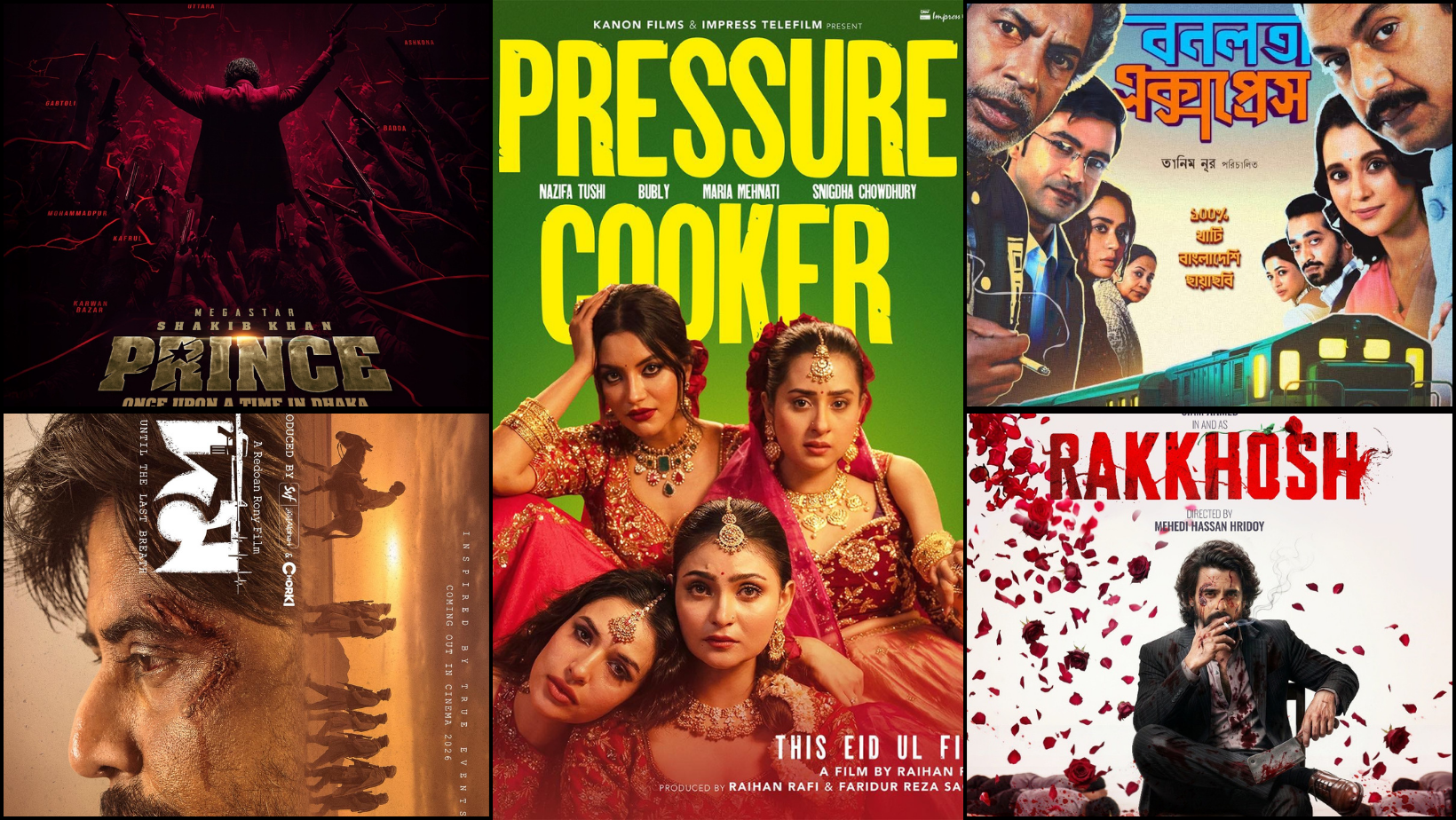
For example, in Bonolota Express, a key issue is whether a male doctor can assist in childbirth. In Domm, the protagonist identifies as a proud Bangladeshi Muslim, but that identity alone does not ensure acceptance from Muslims in another country, raising questions about the idea of Muslim unity. In Pressure Cooker, a character turns to religious practices while also denying others their rights, showing how personal actions can sometimes conflict with outward displays of faith.
These examples show that religion, or even the absence of it, is deeply entrenched in our society. It is encouraging that films are no longer avoiding these topics. Instead, they are beginning to explore them with care -- showing different sides, including the complexities and contradictions.
This marks a small but important step towards more realistic storytelling in Bangladeshi cinema. If this trend continues -- and if films also begin to include people from different religions, ethnic backgrounds, regions, and abilities -- then one day Bangladeshi cinema may truly reflect the diversity of its society.
 For all latest news, follow The Daily Star's Google News channel.
Comments