


Understanding the science, salience, and surge of ‘Project Hail Mary’


The theatrical experience has been under quiet negotiation for years, reshaped by streaming, shrinking attention spans, and an industry increasingly inclined to design films for quick consumption rather than sustained engagement. Into this landscape arrives “Project Hail Mary”, a film that feels almost defiant in how fully it leans into what cinema can achieve when it assumes the audience is actually watching.
On paper, its premise sits comfortably within familiar science fiction territory. Adapted from Andy Weir’s novel and directed by Phil Lord and Christopher Miller, the story follows a reluctant scientist-turned-schoolteacher sent on a near-impossible mission to save humanity. The structure carries echoes of “The Martian” and “Interstellar”, with its lone protagonist, ticking clock, and existential stakes. Yet what unfolds feels less like repetition and more like a recalibration of what modern blockbusters can prioritise.

The appeal begins with scale, though not in the way contemporary spectacle often deploys it. This is a film built for large screens, filled with expansive cosmic imagery, intricate production design, and sequences that stretch across galaxies. Yet the grandeur rarely exists for its own sake. It frames something more intimate: one man waking up alone, disoriented, and deeply unqualified for the task ahead.
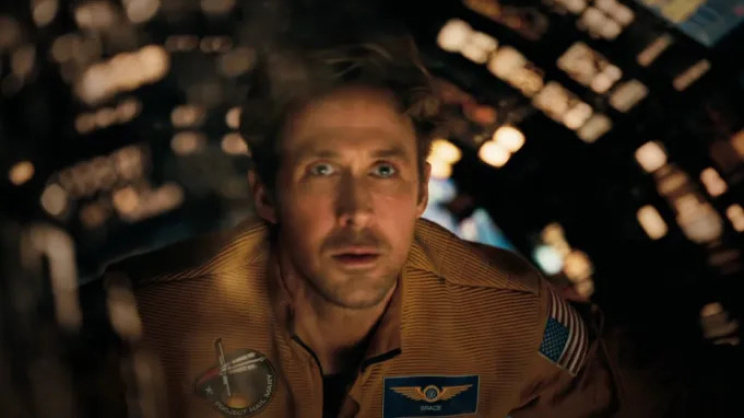
Ryan Gosling anchors that contradiction with a performance that shifts between physical comedy, quiet vulnerability, and a reluctant resolve that never settles into conventional heroism. In an era where the idea of the movie star is often diluted by franchise-driven storytelling, Gosling’s presence becomes central to the film’s pull. For extended stretches, he remains the sole human voice, carrying exposition, emotion, and narrative momentum simultaneously. The film leans into that, placing him firmly at its centre rather than dispersing focus across an ensemble cast.
Yet the film’s emotional gravity does not rest on solitude. It shifts, unexpectedly, into companionship. The introduction of an alien counterpart, rendered through practical effects rather than purely digital construction, transforms the narrative into something closer to a partnership than a survival story. Their relationship develops through shared problem-solving, improvised communication, and a gradual recognition of common ground across entirely different forms of existence.
This dynamic sits at the core of the film’s broader appeal. Science fiction has long explored isolation, discovery, and existential threat, but “Project Hail Mary” reframes these elements through connection. The stakes remain cosmic, yet the emotional investment builds through smaller, more personal exchanges. Friendship becomes the engine that drives the narrative, turning abstract danger into something immediate and tangible.
That balance between the technical and the emotional reflects the influence of Weir’s writing, where scientific detail often takes centre stage. The film preserves that spirit, though it adapts it for a different medium. Instead of lingering on calculations and processes, it prioritises momentum and clarity, offering enough explanation to ground the audience without slowing the narrative. For some viewers, this streamlines the experience; for others, it trims away layers that gave the original text its depth.
More notably, the film assumes that the audience is willing to keep up. It allows sequences to unfold without constant reinforcement, trusting viewers to follow both logic and emotion. That trust becomes part of the viewing experience, rewarding attention rather than competing with its absence.
This approach extends to pacing. Where many modern blockbusters rush to establish stakes, “Project Hail Mary” allows its opening to breathe. It unfolds through fragmented memory, gradual discovery, and moments of quiet that might feel out of place in a more aggressively paced production. The result is a rhythm that mirrors the protagonist’s disorientation, drawing the audience into the process rather than simply presenting conclusions.
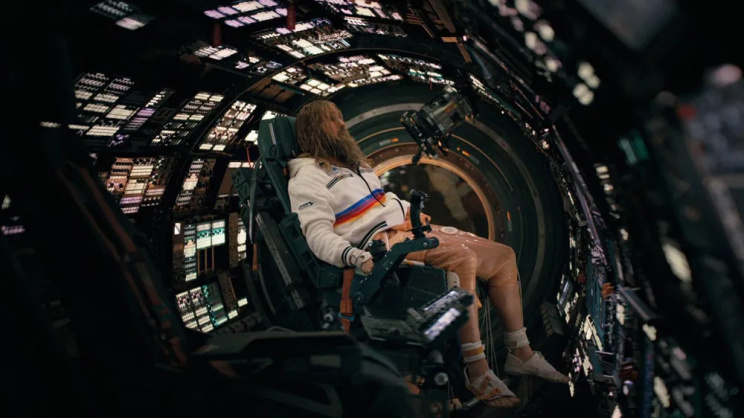
Visually, the film reinforces immersion through a commitment to texture. Practical sets, tangible props, and physical performances create a sense of weight that contrasts with the polished sheen of digital-heavy filmmaking. Space feels vast, though never abstract. The ship feels lived-in, defined by function rather than minimalism. Even the alien presence carries a tactile quality, grounded in puppetry and sound design.
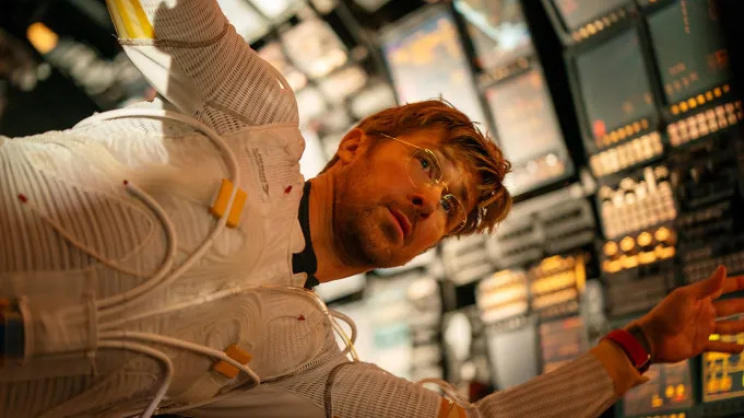
At its thematic core, the film returns repeatedly to problem-solving. The narrative unfolds as a series of challenges, each requiring improvisation, experimentation, and a willingness to fail before arriving at a solution. This emphasis resonates in a cultural moment shaped by automation and shortcuts. Watching a character think through problems step by step, adapt, and persist carries a quiet satisfaction.
The film arrives at a time when audiences are often perceived as passive and resistant to complexity. By contrast, “Project Hail Mary” operates on the assumption that engagement still exists, that viewers are willing to invest attention when given a reason. Its reception suggests that this assumption holds weight.
The theatrical dimension further amplifies that effect. Its scale, pacing, and sensory design point toward a viewing environment where distractions fall away. Without the option to pause or divide attention, the experience becomes more immersive, allowing quieter moments to resonate and larger sequences to land with greater impact. In that sense, the film functions not only as a story, but also as a statement about how certain stories are best experienced.
What ultimately sets the film apart is its coherence of intent. Performance, design, pacing, and narrative structure align to create an experience that feels considered and complete. The familiarity of its premise becomes secondary to its execution. Its resonance emerges from a combination of craft, clarity, and trust in its audience.
In a cinematic landscape increasingly shaped by efficiency and immediacy, “Project Hail Mary” suggests an alternative; one where patience, detail, and connection remain central. And perhaps that, more than anything else, explains why audiences are still willing to show up.
 For all latest news, follow The Daily Star's Google News channel.
Comments