


‘Photoseum: Life of Poetree’: Nasir Ali Mamun’s rythmic lens on display

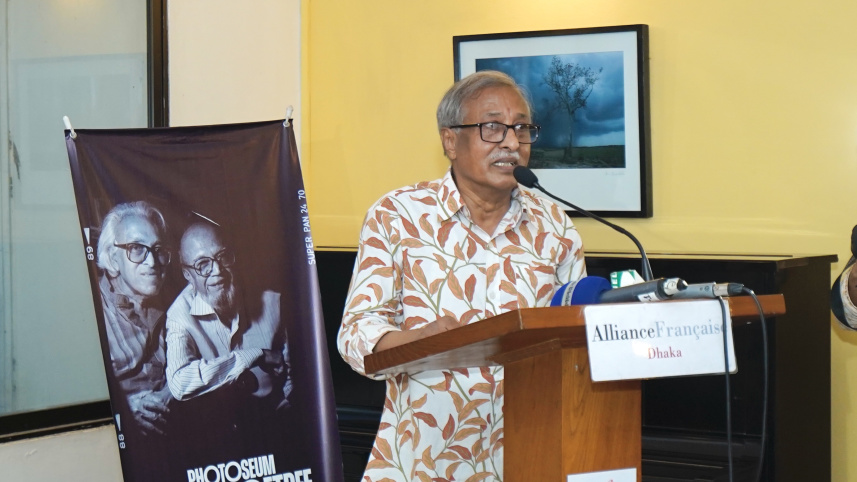
The evening of April 3 marked the opening of the 66th solo exhibition of acclaimed photographer Nasir Ali Mamun, titled “Photoseum: Life of Poetree”, at La Galerie, Alliance Française de Dhaka.
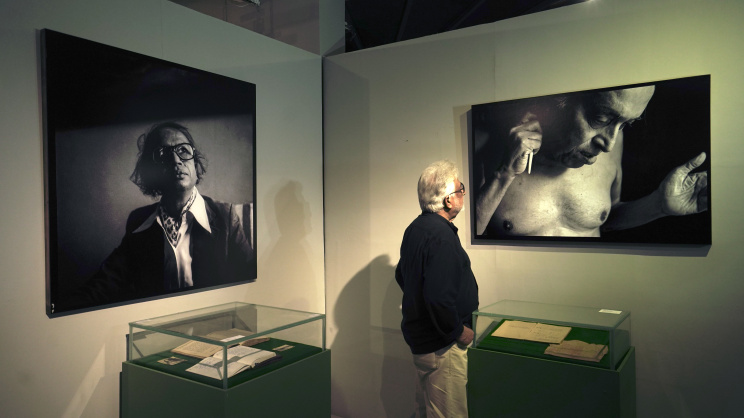
The exhibition brings together two of Bangladesh’s most profound poetic voices—Shamsur Rahman and Al Mahmud—through a deeply visual dialogue. More than a photographic display, it invites viewers into an intimate encounter with literature, where poetry is not read but felt.

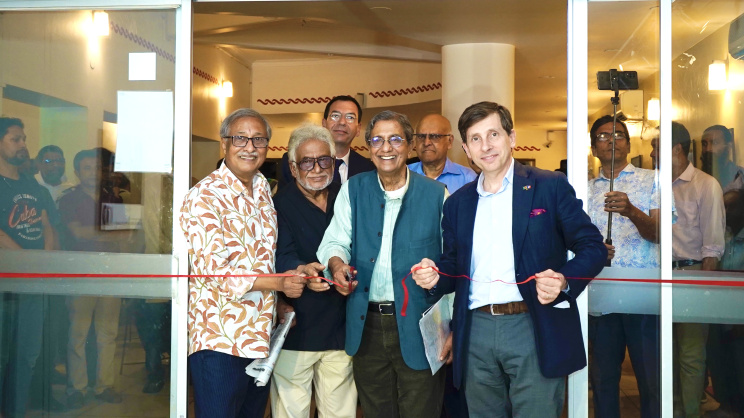
The inauguration ceremony, held at 6:00pm, was attended by a distinguished gathering of cultural figures and dignitaries, including Motiur Rahman, editor and publisher of Prothom Alo; Jean-Marc Séré-Charlet, Ambassador of France to Bangladesh; and eminent artist Monirul Islam.
Mamun, often described as the “poet of the camera”, has spent decades capturing the essence of cultural icons. In this exhibition, his lens turns toward the inner worlds of Rahman and Mahmud—not merely documenting their likeness, but revealing the emotional and philosophical landscapes that shaped their words.
Opening the ceremony, Mamun shared his personal experiences with both poets, recalling moments from his life, including his time in prison. He talked about the distant and complex relationship between Rahman and Mahmud. Even though they rarely shared the same space, Mamun said that his work connects them through photography and experience. He described the photographs as a “museum of memories.” He recognized the families of both poets and hoped that the exhibition honors their legacy.
He also shared how his friendship with the poets shaped the project, and mentioned the enthusiasm of Motiur Rahman in publishing stories surrounding their lives and works. Despite the challenges posed by the poets’ ideological differences, Mamun worked with them individually, creating a tribute that bridges their separation.
Emphasising the importance of preserving visual history, Mamun called for greater recognition of photographers, even after their passing. He urged the younger generation to take part in a cultural movement that protects photography and honours those behind the lens saying, “The GenZ youths who made the uprising possible are capable of working toward safeguarding the photo museum.”
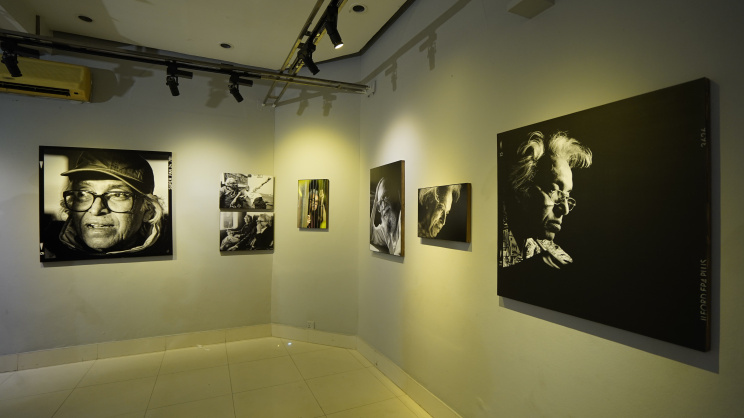
What makes the exhibition particularly compelling is its ability to transcend biography. These are not merely portraits of two literary giants, but studies of presence, memory, and influence. The interplay of light and shadow, combined with minimal compositions, strips away distraction, leaving behind something deeply human.
As speakers reflected on Mamun’s lifelong contribution to documenting Bangladesh’s intellectual and artistic heritage, the evening came to a close with a full house feeling more connected to the lives and legacies of these remarkable poets.
Running until April 16, “Photoseum: Life of Poetree” is as much about photography as it is about connection—between art forms, between artists, and ultimately, between the viewer and the language of the human spirit.
 For all latest news, follow The Daily Star's Google News channel.
Comments