


Celebrating the eternal legacy of Andrei Tarkovsky on his birth anniversary

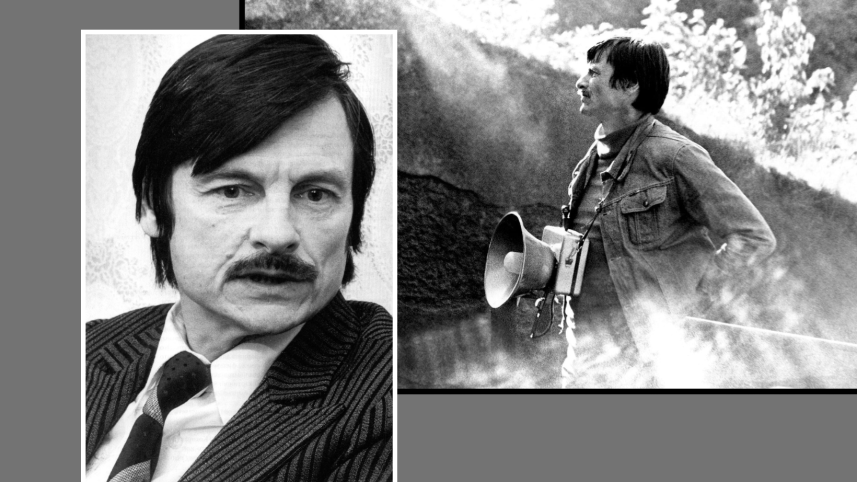
Few filmmakers have altered the language of cinema as profoundly as Andrei Tarkovsky. Revered by critics and auteurs alike, his work redefined what film could be, not merely storytelling, but a meditative exploration of time, memory, and the human soul. As Ingmar Bergman once admitted, encountering Tarkovsky felt like discovering a long locked room one had always yearned to enter. In the broadest sense, world cinema can be divided into two parts: cinema before Tarkovsky, and cinema after.
On April 4, the world marks the birthday of one of cinema’s most discussed and studied directors. This Soviet filmmaker was born in 1932, just a decade after the formation of the Soviet Union, and came of age at a time when the Soviet state had become an inescapable force in everyday life. Though Tarkovsky was raised within a culturally inclined family, his childhood was shaped by his father’s departure, the ravages of World War II, and prolonged economic uncertainty.
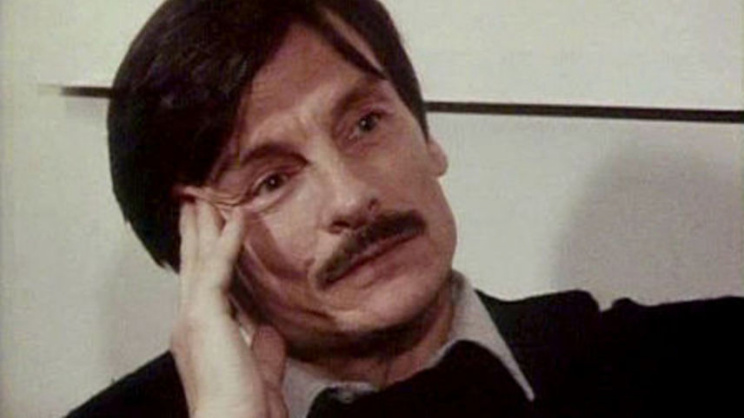
His entry into filmmaking marked a decisive turn after a period of personal drifting. Following his father’s absence and a struggling academic record, he found his calling through a transformative year spent on a geological expedition in the Siberian wilderness in 1954. The solitude of that experience convinced him to become a director.
Tarkovsky is often called the “poet of cinema”. In his films, frames speak through a language of silence. Without concern for conventional editing, he chose to show the melancholy of a character walking for extended periods. While making cinema, he reshaped its language in his own way. His films became poems with a delicate rhythm. Within the frame lies the horror of war, while settings often appear as symbols of emptiness. Tarkovsky did not make many films, largely because he was not given the opportunity. As a result, each work became a reflection of his struggle with the Soviet government and his engagement with memory. He made only seven feature films. Including student works and documentaries, his total output stands at around eleven. Yet, these few films changed the way the world sees cinema.

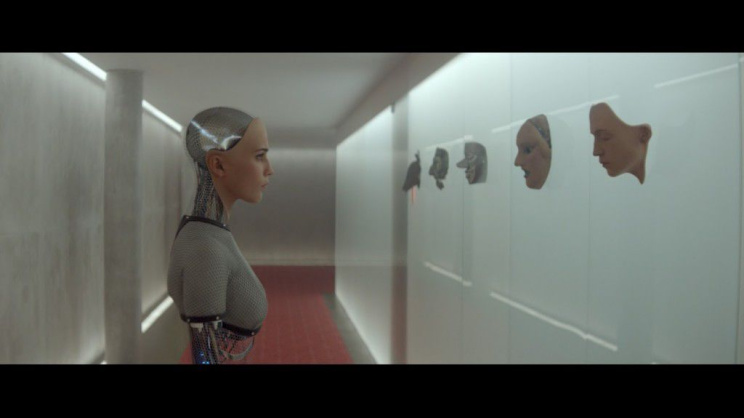
His first feature film, “Ivan’s Childhood”, was received with great acclaim. The film tells the story of a twelve year old orphan boy whose lost childhood emerges through extraordinary, dreamlike visuals. Ivan, whose entire family was killed in the war, carries deep psychological suffering, and the horrors of war form the core of the film. Tarkovsky avoids heroic action scenes, instead exploring restlessness and anxiety within a troop during moments of stillness. Its most memorable sequences are the poetic yet claustrophobic forest scenes. Considered one of cinema’s greatest war films, “Ivan’s Childhood” brought Tarkovsky international recognition, winning the Golden Lion at the Venice Film Festival. Many see reflections of Tarkovsky’s own childhood in the film.
In 1965, he made “Andrei Rublev”, a feature film on the fifteenth century icon painter. From its creation, Soviet authorities imposed obstacles. Yet, in 1969, Tarkovsky won the Fipresci Prize at the Cannes Film Festival. The poet monk Rublev sees the world through a child’s eyes, witnessing brutality while remaining compassionate. Within this inner conflict, Tarkovsky’s pursuit of truth and beauty unfolds, combining his visual style with recurring elements of earth, air, fire, and water. “Andrei Rublev” is also his first film to use colour and black and white side by side, portraying an idealistic painter who becomes a silent monk amid the sorrow of medieval life, creating a surreal poetic vision.
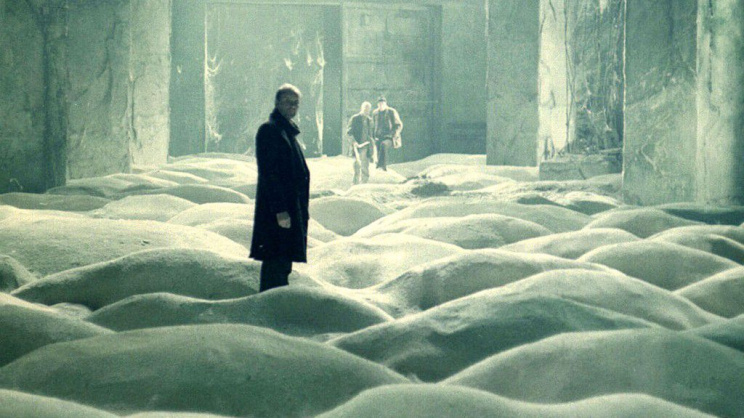
In 1972, he made “Solaris”, a science fiction film about events surrounding a man made satellite orbiting a mysterious planet. The story focuses on the scientist Kelvin and his wife Natalya, exploring emotional and psychological development. “Solaris” is Tarkovsky’s only film centred on love. Romantic moments in his earlier films such as “Ivan’s Childhood” and “Mirror” are brief. In “Solaris”, Natalya becomes a memory shaped by guilt and lost love.
Tarkovsky then made his autobiographical film “Mirror”, revealing memories of his father, the poet Arseny Tarkovsky, who left the family at a crucial time. Slow motion imagery blends with symbolic richness. “Mirror” reflects Alexei’s childhood, adolescence, and middle age, weaving together memories, dreams, and events across three time frames. This narrative structure made the film politically sensitive under Soviet authority.
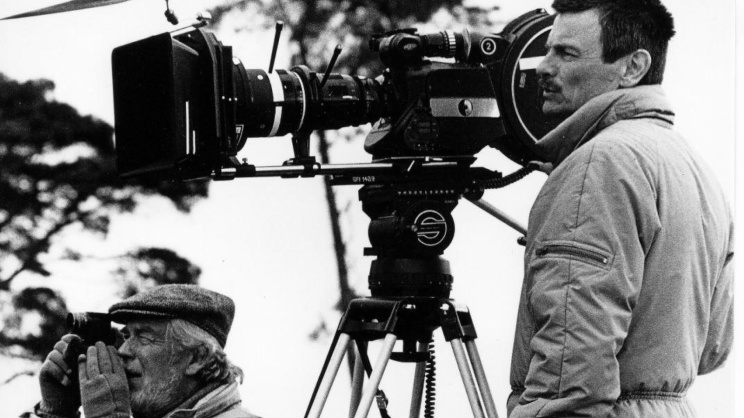
“Stalker”, based on “Roadside Picnic”, explores humanity’s enduring questions about the meaning and purpose of life. Tarkovsky blends reality and imagination, the lyrical and the epic, the inner and the outer worlds. Like “Solaris”, “Stalker” focuses on confronting the self, though the director ultimately leaves its central conflict unresolved.
After “Mirror”, he made “Nostalghia” in collaboration with Italian screenwriter Tonino Guerra. The film follows a Russian poet who arrives at an Italian spa with his interpreter while researching a book. Despite the beauty around him, he longs for home. Tarkovsky’s cinematography gives life to the environment, culminating in a final long take in which the dying poet, at a friend’s request, attempts to cross a drained pool carrying a burning candle, a deeply emotional moment.
In 1985, while working on “The Sacrifice”, Tarkovsky was aware that he was facing terminal cancer, possibly linked to exposure during the filming of “Stalker” near an abandoned nuclear reactor. “The Sacrifice” becomes a metaphor for surrendering everything to prevent catastrophe. The protagonist Alexander sacrifices all to save the world, ultimately setting his house on fire. Though often considered less accomplished than “Nostalghia”, it remains a fitting conclusion to his challenging career.
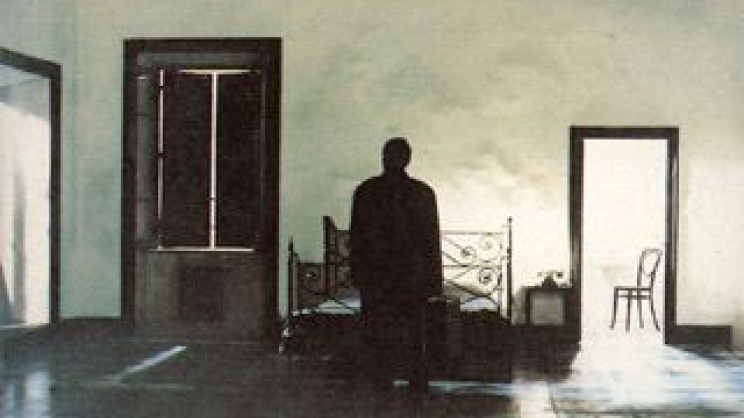
Tarkovsky passed away in 1986, leaving behind a cinematic legacy that established him as a defining figure in film language. Even after his death, filmmakers across the world continue to aspire to create a distinctly Tarkovskian cinema.
He was renowned for a poetic and deeply philosophical style characterised by long takes, slow cinema aesthetics, and the idea of “sculpting in time”. Tarkovsky rejected traditional montage, or rapid editing, and instead focused on the internal rhythm of a shot and the pressure of time within it. He used long, uninterrupted takes to create a contemplative and immersive experience, deliberately opposing the pace of mainstream cinema. His films are slow, yet visually absorbing. His characters often grapple with spiritual turmoil, questioning faith, the soul, and the role of the artist, shaped by his existential and philosophical outlook.
His visual sensibilities and abstract themes create worlds that feel intensely personal. Drawing from his own life and reflections, he blurred the boundary between art and existence. What he captured on screen was inseparable from his own lived experience. For Tarkovsky, cinema was not about literal reality. Instead, he constructed heightened and often dreamlike worlds to express inner emotion and thought. From the trauma of growing up in “Ivan’s Childhood” to the quiet anticipation of death in “The Sacrifice”, his films explore deeply personal truths. In his work, style and story exist as equal and inseparable elements.
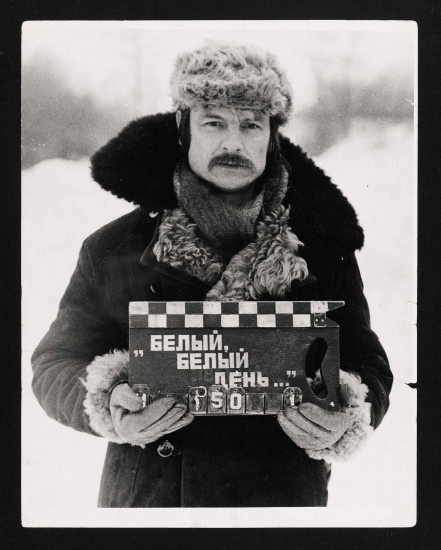
Themes of love, loneliness, depression, and emotional intensity, often beyond rational explanation, are given form through his cinematic craft. His attention to detail allows each frame to carry weight and meaning, inviting viewers into a slow and immersive journey. His choice of locations gives even contemporary settings a timeless quality. Only three of his films feature modern urban spaces. “Mirror” depicts interiors such as apartments, courtyards, and factories, while “Solaris”, “Nostalghia”, and “The Sacrifice” include brief glimpses of the city. Yet, in his cinema, landscapes are not merely settings but expressive presences.
His camera examines human anguish while portraying women with a distant sense of mystery.
Tarkovsky’s focus on memory, spiritual crisis, nature, and elemental imagery helped shape the tradition of slow cinema. His influence can be seen in the works of filmmakers such as Béla Tarr, Terrence Malick, Lars von Trier, and Denis Villeneuve. It also resonates in contemporary films like “Blade Runner 2049” and “The Revenant”, where the environment itself becomes a central character.
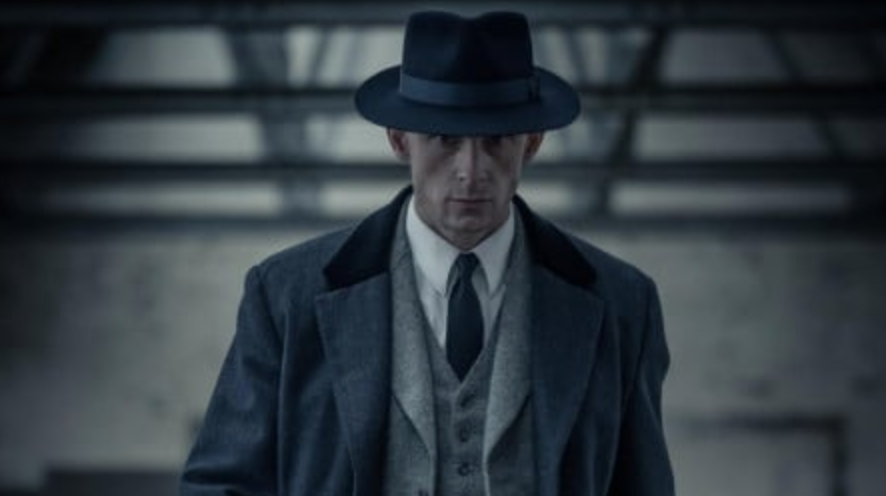
On his birth anniversary, Andrei Tarkovsky is remembered as a filmmaker whose work continues to outlive him. Though he left too soon, his seven films remain enduring testaments to a vision that transcends time. Echoing his father’s words, his legacy suggests that there is no death, only the persistence of dreams and memories. His cinema continues to reveal the extraordinary within the ordinary, where life itself becomes a miracle, and art its reflection.
 For all latest news, follow The Daily Star's Google News channel.
Comments