


Cate Blanchett’s DFF, its Bangladesh connection, and a fleeting opportunity

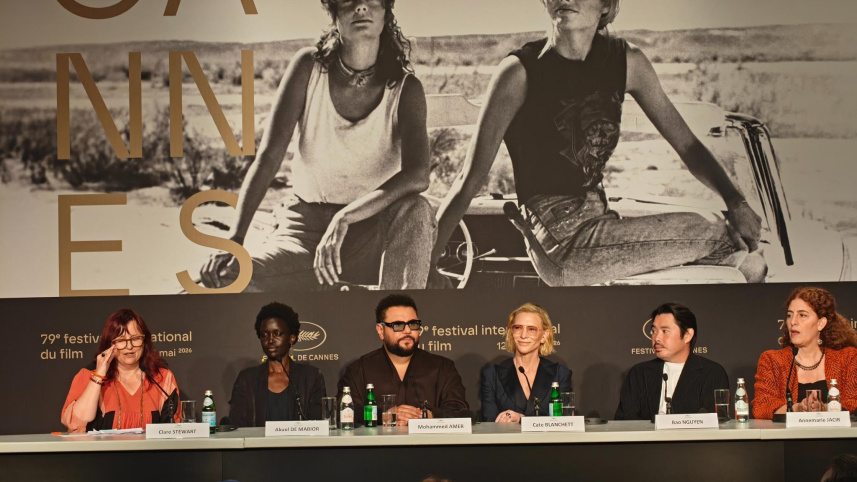
When I walked into the Salle de Conférence de Presse for the Displaced Filmmakers Fund (DFF), admittedly a bit late after a screening, one thing instantly came to mind: Annemarie Jacir, Mohammed Amer, Akuol de Mabior, and Bao Nguyen are incredibly talented directors of the highest calibre. However, I wondered whether the fund could also be used to amplify voices that would otherwise have no way of being heard. I will circle back to this point.

Murmurs about the DFF conference spread around Cannes at noon, with international journalists discussing its merits and imagining the participation of their own countries in the future. It is, indeed, one of the most significant humanitarian-meets-cinema initiatives at Cannes this year, designed for filmmakers whose careers have been fractured by forced exile, war, or political persecution.
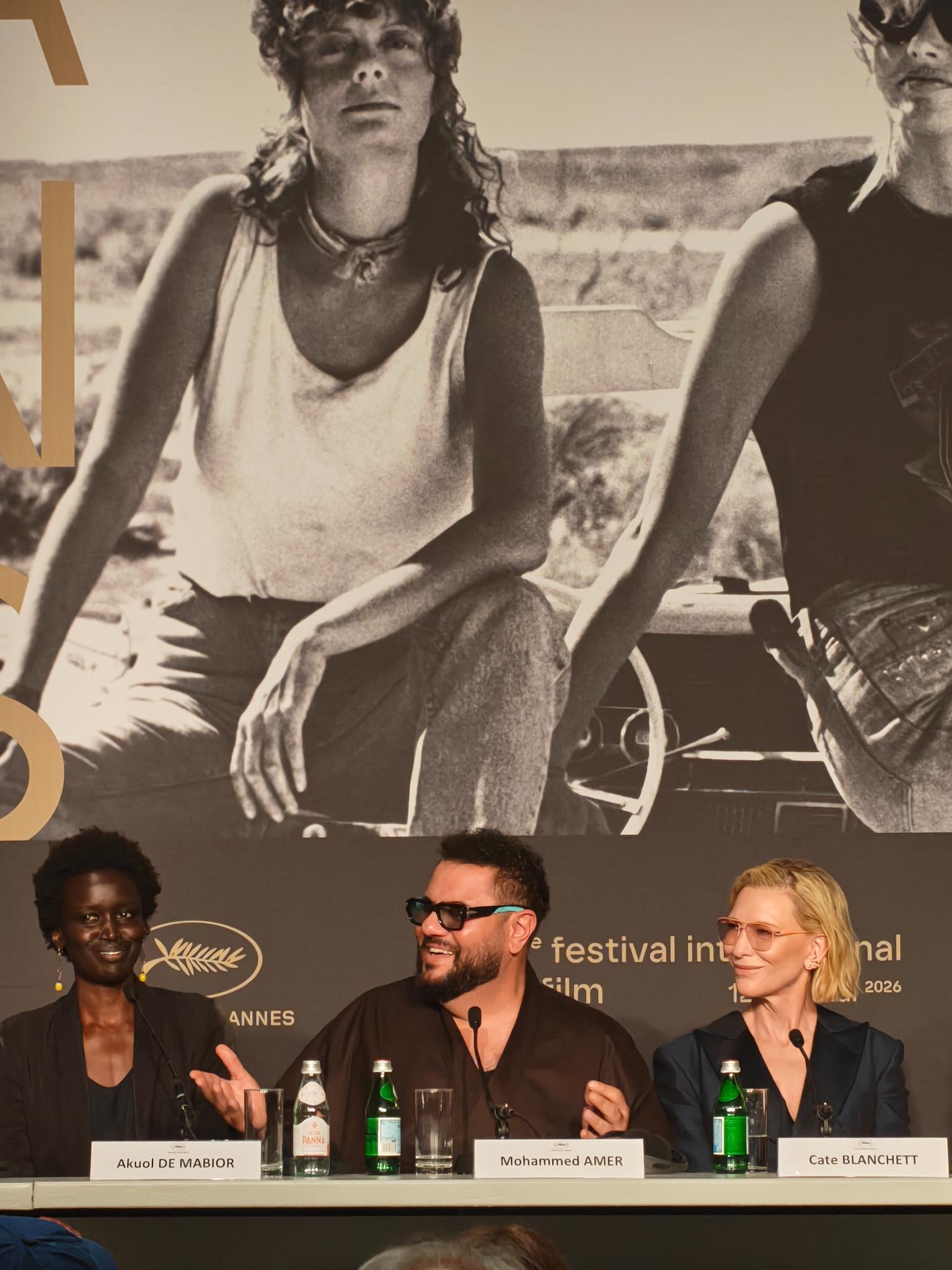
Cate Blanchett spearheaded the fund in her capacity as a UNHCR Global Goodwill Ambassador, alongside the International Film Festival Rotterdam (IFFR).
“Ten years ago, 60 million people were displaced,” the actress said to a room full of international journalists. “Today, more than 120 million are facing this fate. When you are displaced, you don’t stop being a filmmaker. An entire career is lost to their respective tragedies.”
The inaugural batch of the Displaced Filmmakers Fund created immediate critical impact through funding worth EUR 100,000. All five short films — including Mohammad Rasoulof’s “Sense of Water” — premiered to standing ovations at IFFR. The filmmakers proved that displaced artists do not need “charity”, but rather professional resources to reclaim their narratives on some of the world’s most prestigious stages.
As the conference continued, journalists became increasingly eager to question the panel. “How do we get our films into the DFF?” many asked, albeit indirectly. The answer, at least as I perceived it, is: you do not — at least for now.
As of today, inclusion in the fund is invitation-based. A nominations committee creates a “longlist”. Members have included Blanchett herself, Ke Huy Quan, Waad Al-Kateab, and representatives from UNHCR, UNIQLO, and the Hubert Bals Fund.
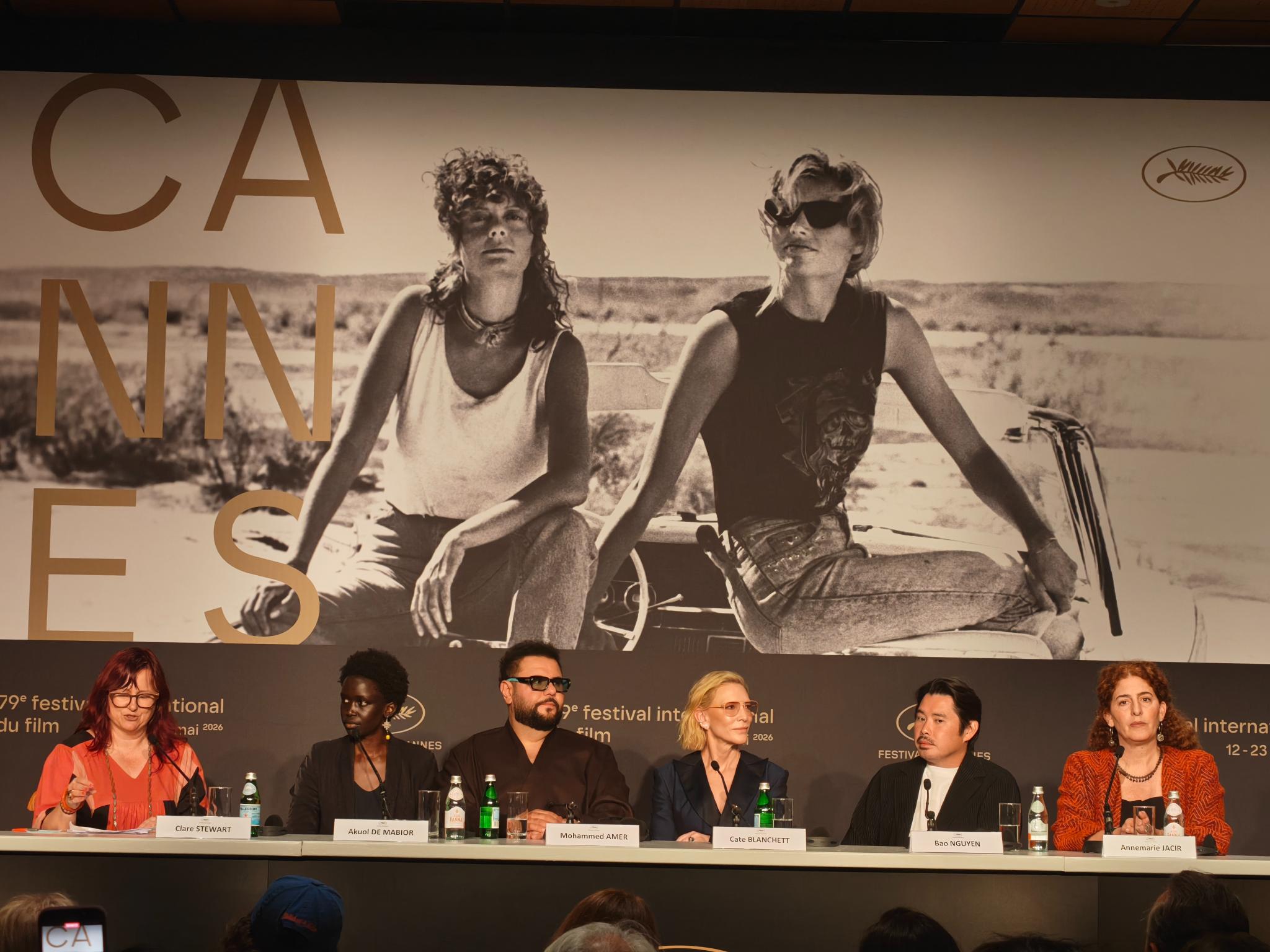
“Hey, where are you going? Cate Blanchett is here, what’s the matter with you?” joked Mohammed Amer when a reporter was seen leaving the press conference. Thanks to the Palestinian-American comedian’s semi-biographical Netflix series “Mo”, Amer is already world-famous, especially among audiences sympathetic to the Palestinian cause.
The entire cohort of the DFF has already reached legendary status. Rithy Panh is the architect of Cambodian cinematic memory; Annemarie Jacir is arguably one of the most poignant Palestinian voices working today.
Through the press conference, I also learned about “exiled” media organisations in France, comprising entire newsrooms of journalists displaced from their countries. These are the people who could truly benefit from greater visibility and funding.
This brings me back to my earlier point about voices needing amplification.
One must remember that one of Cate Blanchett’s most transformative moments as a Goodwill Ambassador was her 2018 visit to the Rohingya camps in Cox’s Bazar. She spent time with Rohingya musician Mohammed Sayidul Islam, who was writing ghazals about camp life and exile. She later addressed the UN Security Council, speaking specifically about meeting refugee artisans and storytellers.
The DFF’s invitation-only policy — even if intended to ensure that talented directors tell underrepresented stories — means access is primarily available to those with high-level networks or already established careers. This also implies they may already possess enough cultural cachet to secure funding through other means.
It may not be too far-fetched to imagine that, in the DFF’s initial stages, gatekeeping is being exercised to ensure the stability of incoming funds. However, one can still remain hopeful that an initiative as noble as the DFF will eventually branch out to reach underrepresented talent, even in communities as marginalised as the Rohingya, who are currently too embroiled in a struggle for survival to focus on luxuries such as filmmaking.
After the press conference, speaking briefly with Cate Blanchett and the directors, the collective optimism in the room was palpable. The DFF is a vital step forward, but it remains a fleeting opportunity for those at the very bottom of the geopolitical ladder.
One can only hope that as this initiative grows, its gaze shifts toward the truly invisible. Until a storyteller like Mohammad Sayidul Islam can trade his camp-born ghazals for a director’s chair, the world’s most prestigious stages will remain incomplete. The dialogue has started at the Palais; now, it’s time to widen the circle.
 For all latest news, follow The Daily Star's Google News channel.
Comments