


‘From Form to Concept’: Nuri Bhuiyan’s solo exhibition explores architecture through design and film

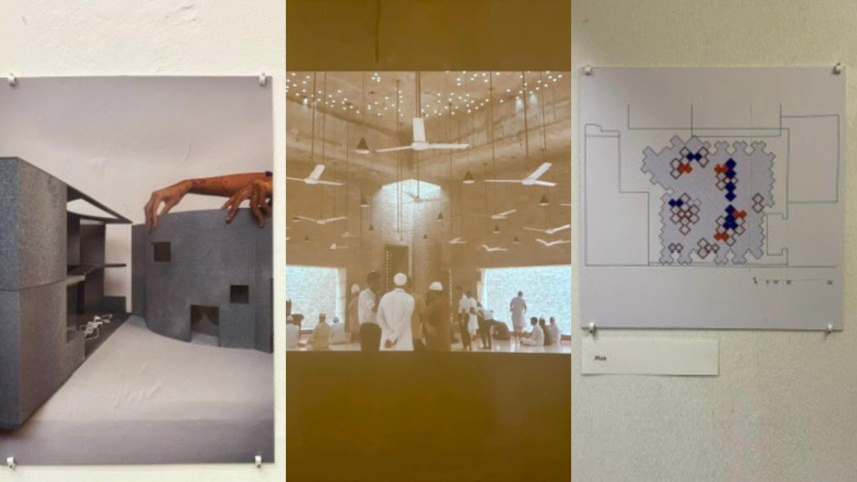
Behind an architect’s work, there is always a question – form followed function or function followed form. The answer summarises the work process of the architect. But then again, one can always go back and forth between these two until reaching the final design. There is a third element that also defines a design – concept. These three are intertwined inside an architect’s brain along with the Vitruvian Triad – firmitas, utilitas, and venustas, referring to durability, usability, and beauty. And the final output is what we see as drawings and then as built spaces. Architect and filmmaker Nuri Bhuiyan’s solo exhibition “From Form to Concept” gives us a glimpse of how an architect works and explores their imagination.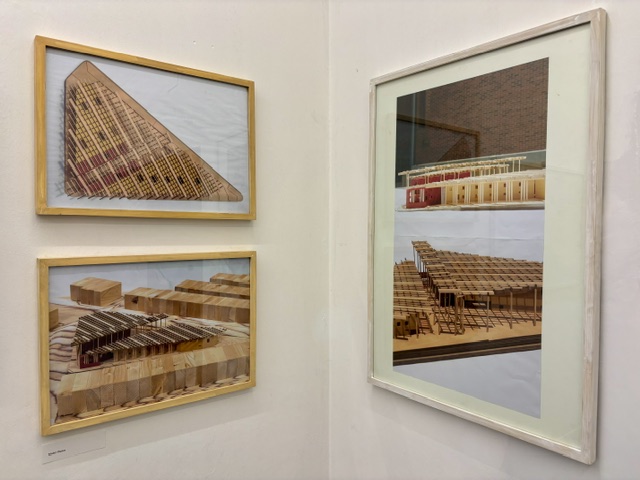
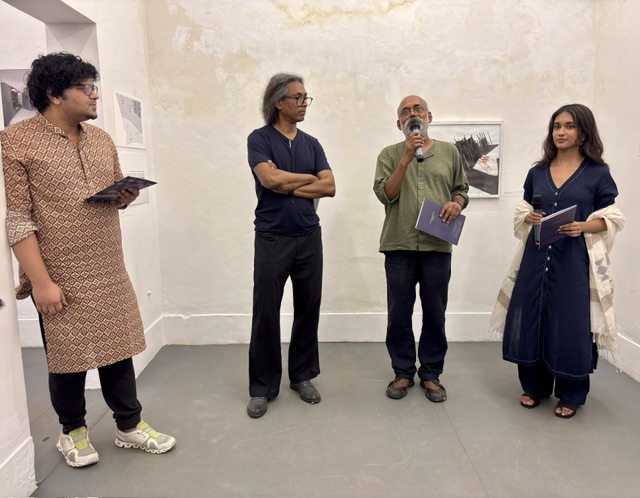
On July 29, Kala Kendra inaugurated an exhibition titled “From Form to Concept” on architecture and films by Nuri Bhuiyan, a US-based architect who received her BA from Harvard University in the History of Art and Architecture and a minor in Art, Film, and Visual Studies. She is currently a Master of Architecture candidate at the University of Pennsylvania and is pursuing an internship under Bangladeshi architect Marina Tabassum. The CEO of Kala Kendra, Wakilur Rahman, architect Salahuddin, and filmmaker Nuhash Humayun were present at the inauguration. Salahuddin praised Nuri’s work, saying that her staying up late night after night was evident in her drawings. Nuri mentioned that her introduction to architecture was through films. Nuhash, in his speech, highlighted how both films and architecture tell stories and create memories out of a space.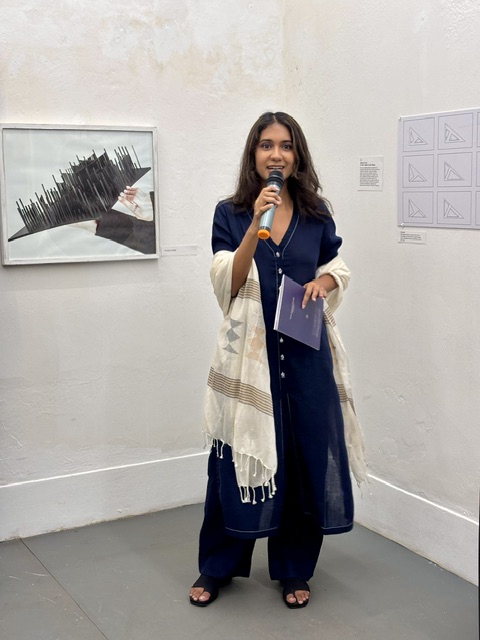
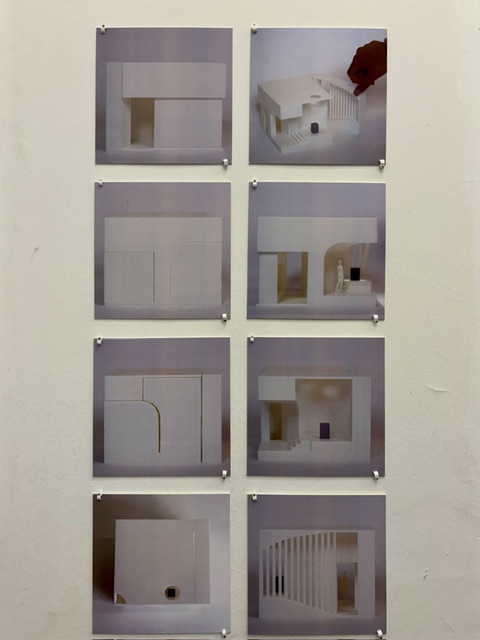
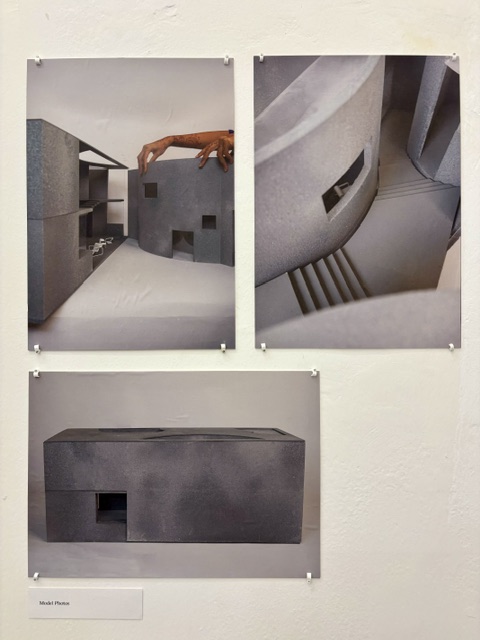
“My work materialises identity and narrative through original design proposals for and careful visual treatment of our environments. Engaging spatial and psychological territories and their thresholds to reveal our presumptions about our understanding of them and discern their true interrelationships, I direct the viewer to explore how we inhabit place and time,” said Nuri. She showcases her academic projects in the exhibition. The totem she designed, titled “Light Throughputs”, for a park was the most intriguing among them, as it creates a vertical space with openings through which light could enter, illuminating the inside of the cuboid structure and then be directed to the surrounding areas in the park. The openings reminded me of Le Corbusier’s Ronchamp Chapel windows. Though small, the section drawing showcases the project’s complexity and the artist’s skills. She is also exhibiting her designs for a museum extension, a community space, and a library.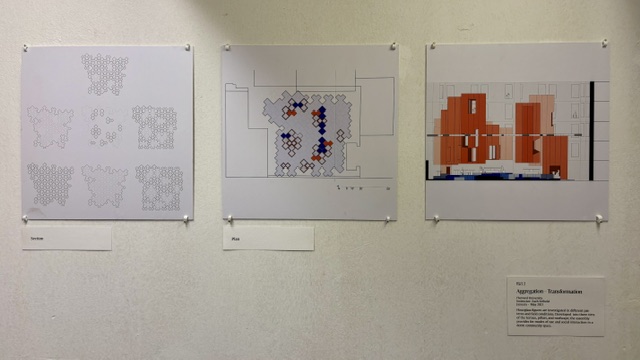
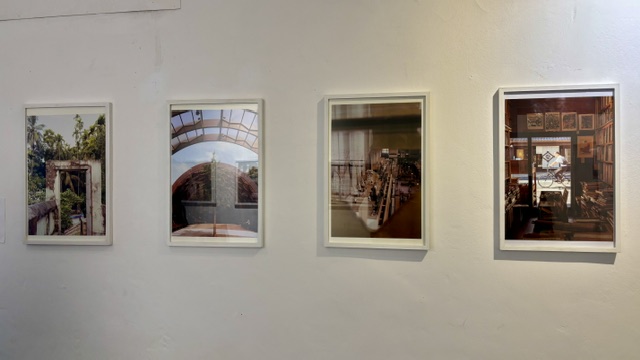
One of Nuri’s academic projects was inspired by the Bait ur Rouf Mosque in Bangladesh, designed by Marina Tabassum. Thus, she decided to film the spaces, the users, the circulation, light wells, ventilation, and other architectural elements of the mosque. The little details, the sepia tones of the entire documentary, the vibration – everything genuinely felt like a spring breeze for a spectator, soothing the eyes too. She has displayed some of her lovely photographs of different built spaces and nature as well.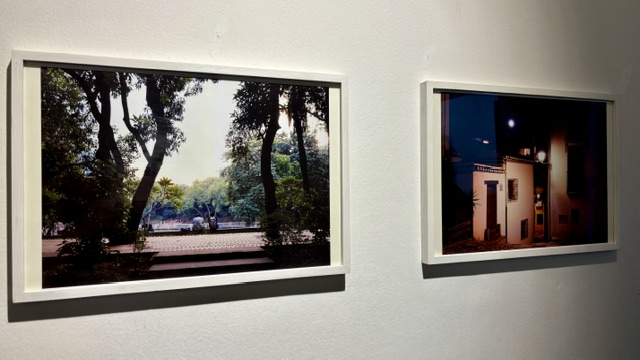
Nuri’s love for her Nanu (maternal grandmother) and Nanu’s attachment to her own flat in Chittagong, Bangladesh, inspired her to create a non-fiction film on her beloved ancestor. Nanu lives alone with her two helpers and refuses to move in with any of her children, some of whom live abroad. Her apartment has green walls, an ever-familiar image of Bangladeshi interiors. The relatives are having the usual discussions, the living room is decorated with sofa sets, carpets, and a TV – these are the most relatable family pictures and memories of Bangladeshi millennials and Gen Z. The film has maintained careful framing, symmetry, and repetition, and highlighted objects and practices occurring in the space, illustrating a narrative of the protagonist’s daily life, her relations with others, and her core memories embedded in architecture, creating an embodied experience of space.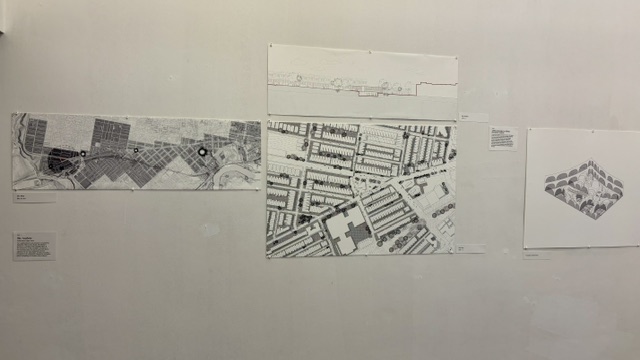
Nuri Bhuiyan might have been raised in the States, but her skillful work carries the essence of Bangladesh. Kala Kendra will run the exhibition until July 10, daily from 4:00pm to 8:00pm.

 For all latest news, follow The Daily Star's Google News channel.
Comments