


An out-of-the-box Baishakh takes shape in Dhaka
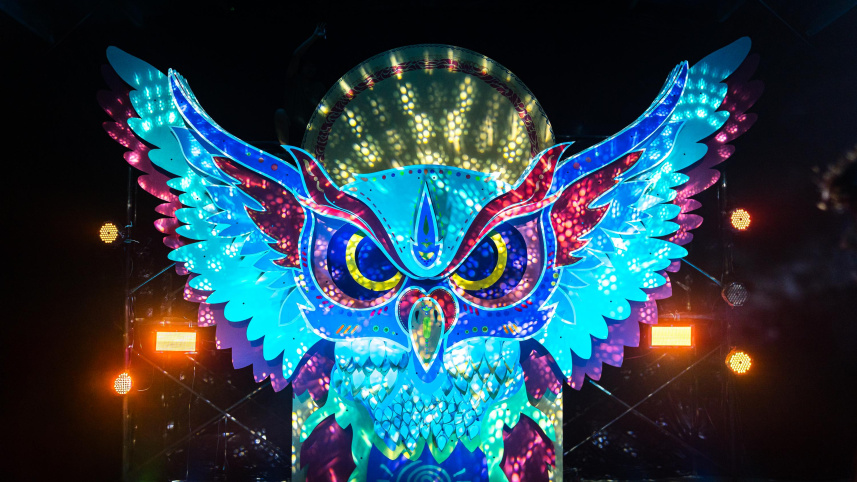
Dhaka knows how to welcome the Bengali New Year. There is Mongol Shobhajatra, red-and-white attire, panta-ilish, folk songs, fairs, and the familiar rhythm of a city leaning into tradition. This year, however, Breakfast Club Dhaka offered a different proposition: what if Pahela Baishakh could stretch beyond the morning rituals and become a 24-hour cultural experience?
That idea took shape earlier this month at a resort in Purbachal, where Breakfast Club Dhaka organised its first Baishakh festival, “Breakfast Club Dhaka 1433”. Held from April 10 to 11, the festival drew around 870 attendees into a space that felt less like a conventional mela and more like a living, evolving celebration.

Presented by Prime NOW, the festival drew from the spirit of haalkhata—the tradition of closing old accounts and beginning anew—but reimagined it for a generation comfortable with both cultural memory and electronic music.
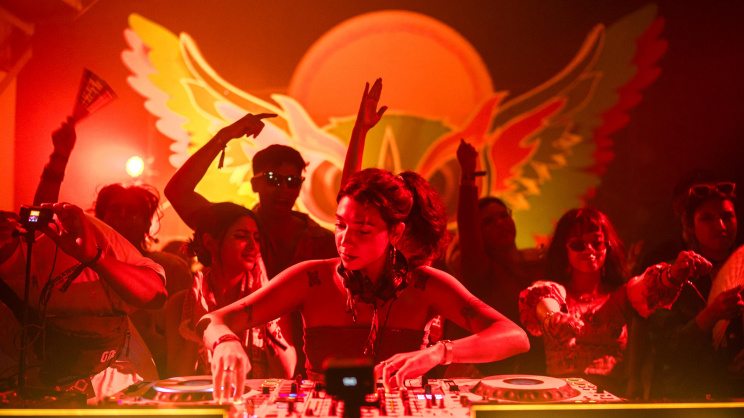
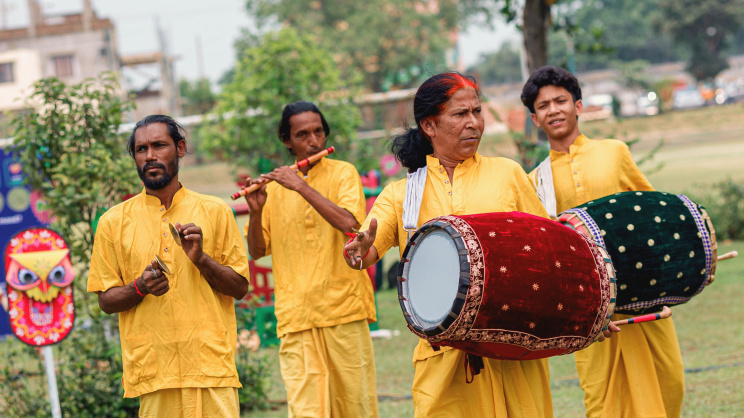
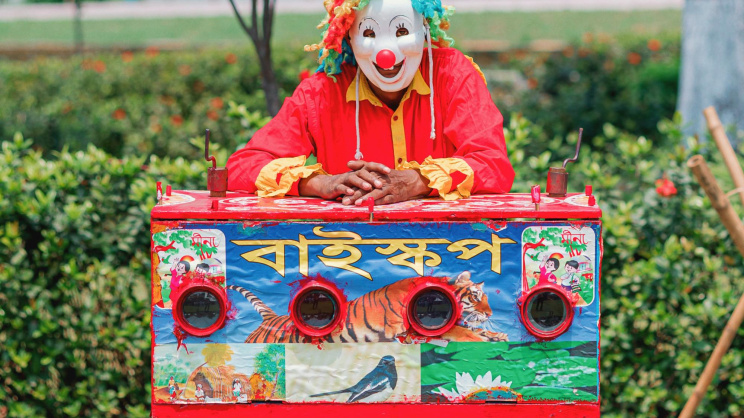
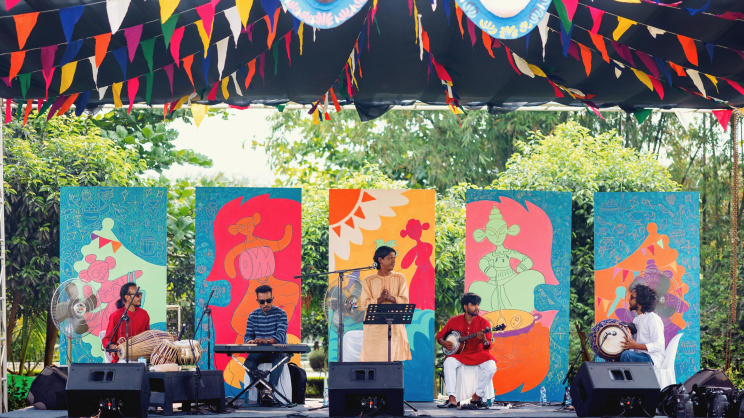
At the Baishakhi Moncho, the festival’s largest outdoor stage, the day began with familiarity. Built with Bangla folk traditions in mind, the stage hosted performances by Md Makhon Mia and Shemonty Monjari, easing audiences into the festival through the textures of folk music. Around it, the atmosphere of a traditional mela unfolded through baul performances, a bioscope corner, pitha stalls, live painting, interactive activities, and a nagordola.
As daylight faded, the festival shifted into more experimental territory.
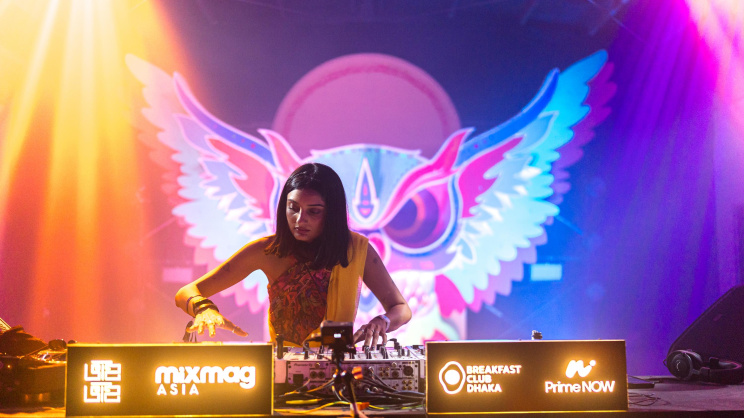
At the Hutum Pecha stage, curated by Hasib Mahmud of Bhai Bhai Soundsystem and produced in collaboration with Bhai Bhai Soundsystem and Mixmag Asia, classical and electronic elements came together in a layered soundscape. The evening opened with a back-to-back DJ set by local artistes JOn4ki and Socketjumpa, accompanied by live tabla and percussion from Mithun Chakra.
The stage then moved into a distinctly South Asian exchange, with sets by Kahli from Sri Lanka, Lyla from Pakistan, Ratna from Nepal, and Nida from India. Together, they brought regional underground sounds into one shared space, quietly bridging divides shaped by time, geography, and politics.
For Kahli, that regional presence carried meaning beyond the music. “We are underrepresented in the electronic music world globally,” she said after her set. “If we don’t support each other, there’s hardly anyone else who will. We have so much talent behind our countries and communities—it’s beautiful to see and come across.”
She also observed a particular openness in Dhaka’s audience. “There is immense curiosity in the crowds here. A lot of people are still learning about alternative, leftfield styles of music. That curiosity brings a unique energy and momentum.”
Lyla, from Pakistan, found the cultural context equally striking. “Everyone was dancing in their sarees; I was so happy to see that,” she said. “You see a lot more culture when you’re playing in Asia, and you experience so much more warmth and hospitality.”
She added that seeing artists from Nepal, Pakistan, India, Bangladesh, and Sri Lanka on the same lineup felt rare and significant. “It happens with the diaspora abroad, in places like London, but these are people actually living in these spaces. For me, that is beautiful and important.”
For Nida, the appeal lay in the freedom of the format. “Coming here and being told ‘do whatever you want’ gives me a really fresh vibe, especially at such a traditional festival,” she said. “I can experiment and let people know that I’m not boxed into playing one type of music.”
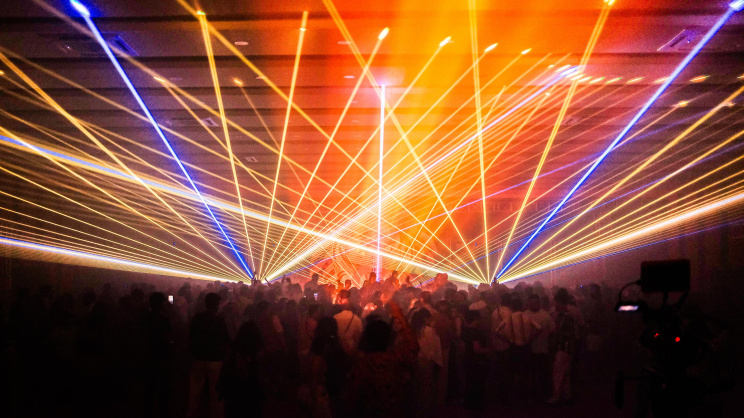
By nightfall, the crowd moved indoors to Bonobibi’r Daak, the festival’s main stage. Built around a towering tiger’s face, inspired by conversations around Mongol Shobhajatra, the stage became the visual centrepiece of the night. It hosted international acts Budakid and M.A.N.D.Y., alongside Bangladeshi performers Momi, OMDG, and The Brown Testament.
The DJ sets continued from 9pm into the early hours, allowing the crowd to settle into a slower, more fluid rhythm. For Budakid, returning to Dhaka, the change was noticeable. “The first time I played here was for 50 people; the second time it was 200. This time, it was almost a thousand,” he said. “Seeing this progress is special. It’s about building a community.”

That sense of community was central to the festival’s design. Unlike many music-heavy events, “Breakfast Club Dhaka 1433” was intended as a space where friends, children, and families could gather alongside electronic music enthusiasts. It felt like a contemporary extension of the traditional mela rather than a departure from it.
M.A.N.D.Y., from Germany, described the atmosphere as inclusive. “Your friends from Breakfast Club are doing it right—giving friends, family, and children the experience of dancing and music in a safe, wholesome way,” he said. “It is also about community-networking, bringing together people from fashion, art, and music, and creating space to grow together.”
As night gave way to morning, the festival softened into its final chapter at the Poddopukur stage, set beside the resort pool. With sunrise slowly taking over the background, Boogaloo Jones from Canada and local artistes Tawsiv and Readhwan carried the closing hours through layered, winding sounds. Some continued dancing; others lingered by the water. Few seemed ready to leave.
“I didn’t really know what to expect,” said Boogaloo Jones. “And I thought it was amazing. In some ways, it’s a lot better than what we have in Canada. A lot of effort was put into it, and it really showed.”
Beyond music, the festival grounds resembled a small village, with 30 stalls representing 22 emerging and established brands across food, fashion, and art.
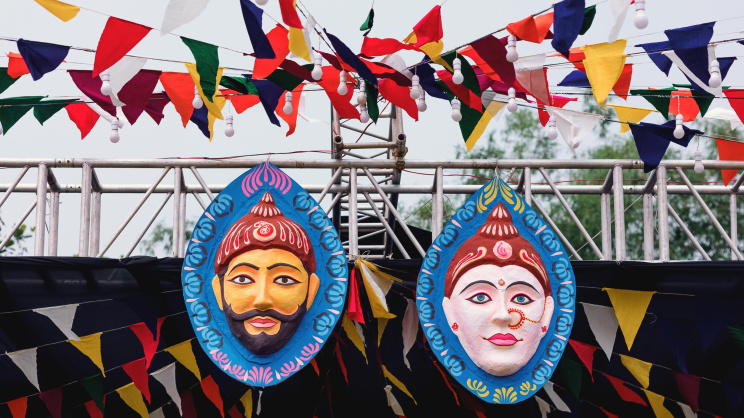
Behind the scenes, the scale of the production was considerable. A core Breakfast Club team of 15 worked with a 70-member crew. Founders Tawsif Alam Khan and Tonmoy Dutta Gupta saw the physical design of the festival as central to its identity. Stage architects Asif Imteaz Tanu and Moinak Ahmed Mridul shaped the environment, while Morshed Mishu’s illustrations added layers of cultural storytelling. Saba Islam planned the festival’s overall visual identity, while Sakib Tonmoy of Bhai Bhai Soundsystem oversaw sound and lighting, helping transform each stage from day to night.
 For all latest news, follow The Daily Star's Google News channel.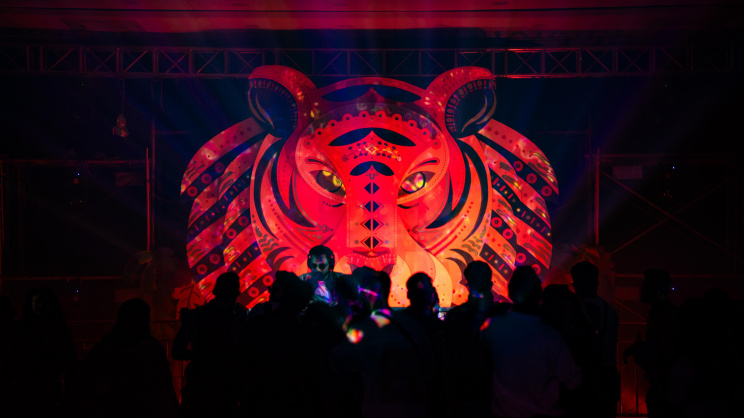
“What truly brought the festival to life were the stages themselves,” said Tawsif. “Each one was built with attention to detail rooted in familiar Baishakh elements, blending tradition with experimentation in ways that felt both familiar and entirely new.”
For Tonmoy, the 24-hour format reflected a wider shift in how Dhaka experiences culture. “More people are drawn to experiences that don’t follow a fixed schedule,” he said. “A 24-hour Baishakh pushes past the idea that celebrations belong only to the morning or afternoon.”
In a city where culture is often framed as either old or new, this version of Pahela Baishakh refused the binary. It did not discard tradition; it expanded its vocabulary. And if Baishakh is about beginning again, “Breakfast Club Dhaka 1433” suggested that renewal does not always have to arrive quietly. Sometimes, it comes with folk songs at sunset, electronic music after dark, and a crowd still dancing at sunrise.
Comments