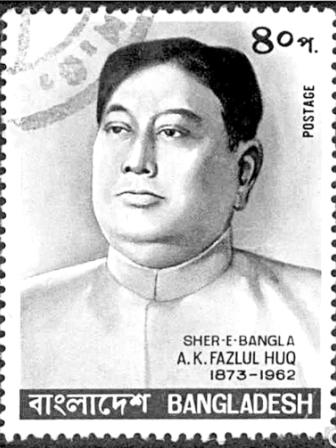
A glimpse into the formative years of Fazlul Huq

O Jaglul of that era! I did not forget your affection,
Still recall your vast heart and towering presence.
Crushing the thorns of many mistakes, and scattering countless flowers,
You wandered through the desert of life with a restless thirst.
I would observe you from my quiet blue sky,
Rising like the moon, and at times, veiled by the clouds.
I witnessed, from afar, the interplay of your flowers and errors,
And the whispering: this moon shall one day be the vessel to the shore!
After a while, I see, those whom this vessel carried across,
Those who looted the vessel’s treasures and wares with both hands –
They are the ones who now mock with harsh neglect,
That very vessel, now worn by betrayal and wounds.
– Shere Bangla, Kazi Nazrul Islam
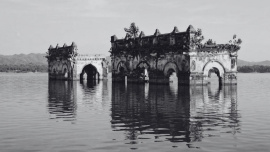
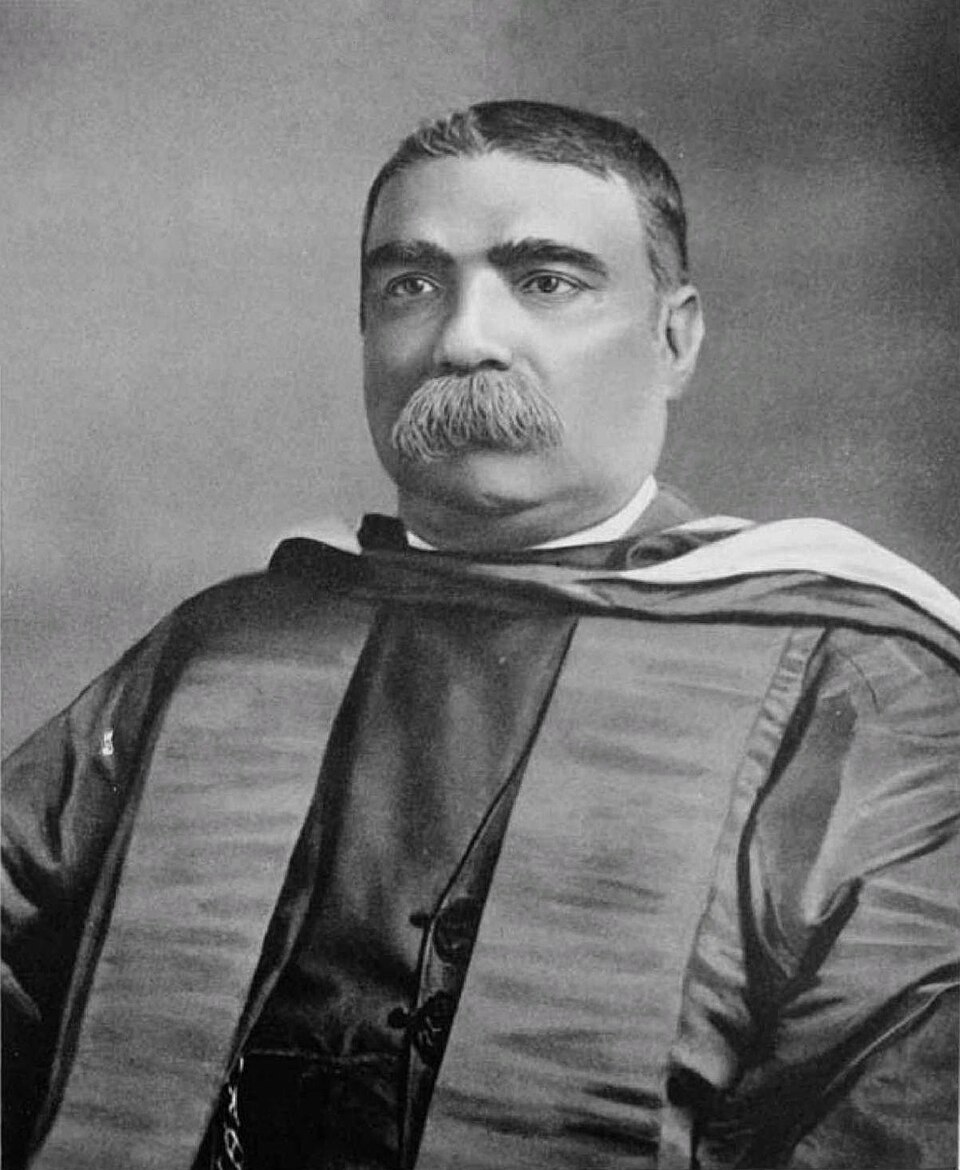
A. K. Fazlul Huq’s life began amidst the ‘Great Backerganj Cyclone’ of October 1876—one of the deadliest tropical cyclones in history—which occurred only three years after his birth. Two lakh people perished in that disaster. To save him and his sister, Afzalunnissa, their mother, Saidunnissa Khatun, placed them in a floating copper pot, inscribed with their names and address. They were eventually rescued and brought home by villagers after the storm subsided.
Sher-e-Bangla’s life, his political psyche, and his overall journey cannot be fully understood without examining the series of events and interactions with great minds during his formative years.
2
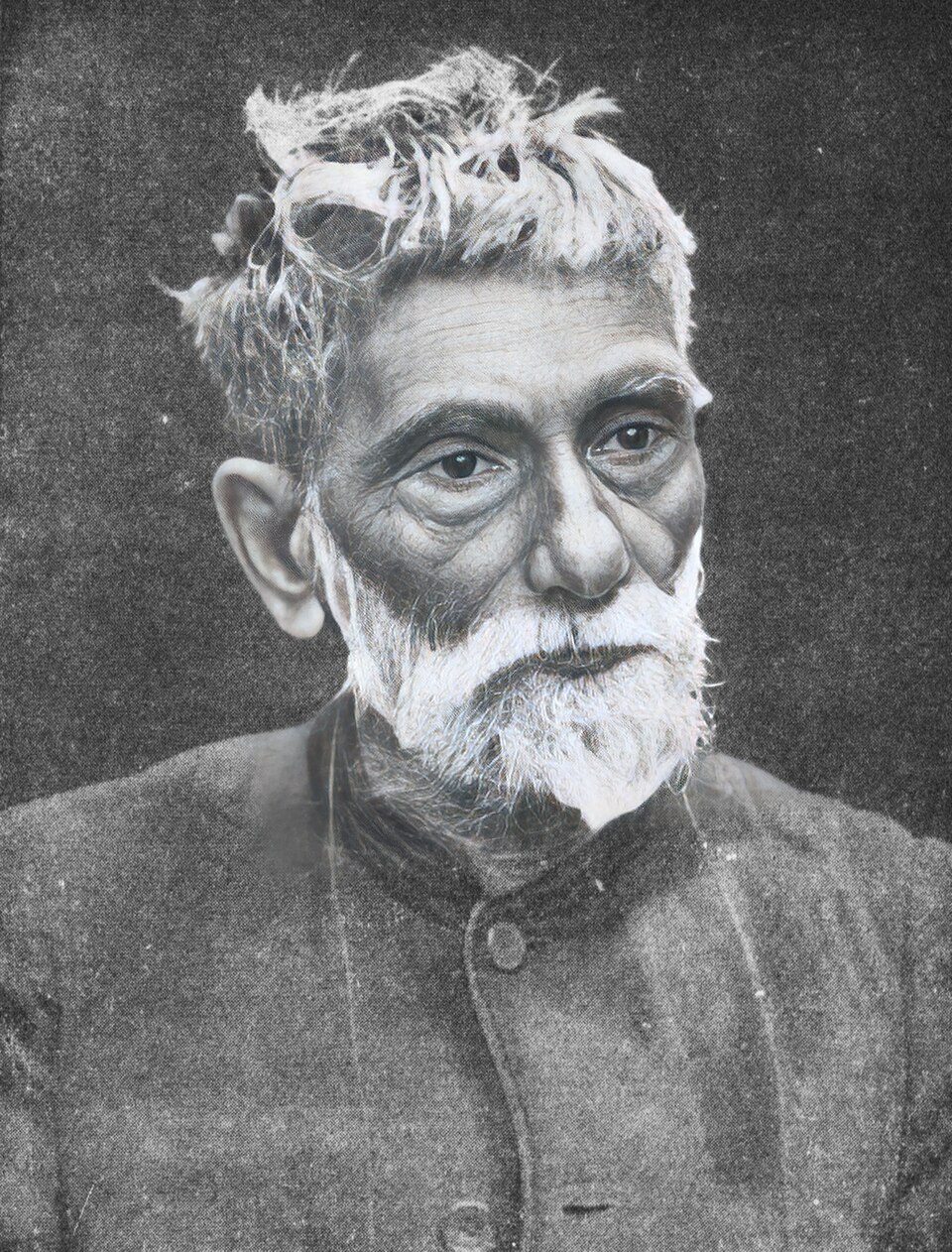
When Fazlul Huq was a BA student at Presidency College from 1891 to 1893, he encountered the renowned scientist, educationist, and national visionary Prafulla Chandra Ray. Huq was a student of Chemistry, Mathematics, and Physics, and Prafulla Chandra—who was quite young at the time—was his direct teacher. Prafulla Chandra viewed him with paternal affection. One particular event illustrates this bond.
Fazlul Huq was once absent from class for six or seven consecutive days. Prafulla Chandra went directly to Huq’s residence to check on him. Huq was not at home, and when he returned an hour later, he found his teacher waiting. He asked, ‘When did you come, Sir?’ Prafulla Chandra answered, ‘It must be one hour according to your calculation. But by my calculation, it is more than that—nearly 60 minutes.’ He then warned Huq about his absence and advised him to take his studies more seriously. Consequently, we know that Huq passed his B.A. with excellent results.
In later years, Prafulla Chandra remained a great admirer of Fazlul Huq. Even when Huq’s long-time friends, such as Abul Mansur Ahmed, became sceptical of him after he formed a coalition with the Muslim League to become the Prime Minister of Bengal and moved a vote of no confidence, Prafulla Chandra maintained his faith in him. In a conversation with Abul Mansur Ahmed, Prafulla Chandra remarked: ‘Listen, Mansur, I don’t understand politics; I don’t even pay any heed to it. But my request to you is this: please revoke your vote of no confidence against the Huq ministry as soon as possible.’
When Abul Mansur Ahmed expressed his resentment towards Huq and his ministry, Prafulla Chandra replied, ‘What you have said are matters of politics. I am not talking about politics. There is a truth above all political truths: the existence of the Bengali nation. The existence of the Bengali nation depends on Hindu-Muslim unity, and Fazlul Huq is the symbol of this unity. I don’t understand the Indian nationalism of the Congress; I only understand the identity of the Bangalee. Only Fazlul Huq can establish that identity. He is a Bangalee from head to toe. At the same time, he is a pure Muslim from head to toe. I have never seen such a wonderful combination of pure Bengalism and pure Muslimism. I am not saying this because he was my student; I am saying it for the sake of truth. The future of the Bengali people depends on the syncretism of pure Bengalism and pure Muslimism. Fazlul Huq is the symbol of this syncretism. Do not break this symbol and do not be disrespectful to him. Listen, Mansur, if Bengalis do not respect him, misery lies in their fate.’
Determining whether this was an overestimation or an accurate assessment requires a separate evaluation. French philosopher Alexandre Kojève once noted: ‘The perception of an individual among people and his real intentions are not one. They are two, or, in some cases, many.’ This statement applies to Fazlul Huq as well. While we may assume his real intentions are accessible to us, we can never truly grasp them in full. Regardless, the faith Prafulla Chandra placed in him remains a remarkable instance that elevates his stature in history.
Academically, Fazlul Huq did not follow Prafulla Chandra’s scientific path. After completing an M.A. in Mathematics, he obtained a B.L. degree from Ripon College, Kolkata, in 1897. He then began working as an apprentice lawyer under Ashutosh Mukherjee, a towering figure in Indian history who made major contributions to mathematics, law, and higher education. Both held Master’s degrees in Mathematics before pursuing careers in law. Fazlul Huq worked with him from 1897 to 1900, and it was through Mukherjee's inspiration that he began practising independently at the Calcutta High Court. These three years of mentorship were another pivotal chapter in the making of Fazlul Huq.
3
Fazlul Huq’s father passed away on 9 February 1901. To look after his family, Huq returned to Barisal immediately following his father's death. Upon his return, he immersed himself in various activities and local affairs. This phase of his life was marked by another pivotal event: meeting and working with Ashwini Kumar Dutta. Dutta was not merely an institution builder; he was a visionary who sought to transform the inner spirit of the people of Bengal.
In addition to Ashwini Kumar, Huq became acquainted with Dr Harendranath Mukherjee, then the Principal of Rajchandra College—an institution that functioned parallel to the Brojomohun College founded by Ashwini Kumar Dutta. At the request of Dr Harendranath, Fazlul Huq served as a mathematics teacher at Rajchandra College for two years, maintaining a very close relationship with him.
Huq learned that Farid once owned seven bighas of farmland, all of which had been claimed by Mohim Sarker, piece by piece, as loan repayments. Farid was now a mere day labourer. Mohim Sarker’s men had already seized the goat and its kids, as well as two brass (kasa) plates. They were now forcefully trying to take Keramot’s plate of fermented rice. Despite the child’s desperate cries, the men ignored him and snatched the plate. Keramot lay rolling in the yard, crying, ‘Amar thala, amar thala’ (My plate, my plate). Huq’s eyes were brimming with tears. He first paid five taka to recover the plate, then repaid the entire loan to rescue the goats and other belongings. Farid and his wife were left speechless.
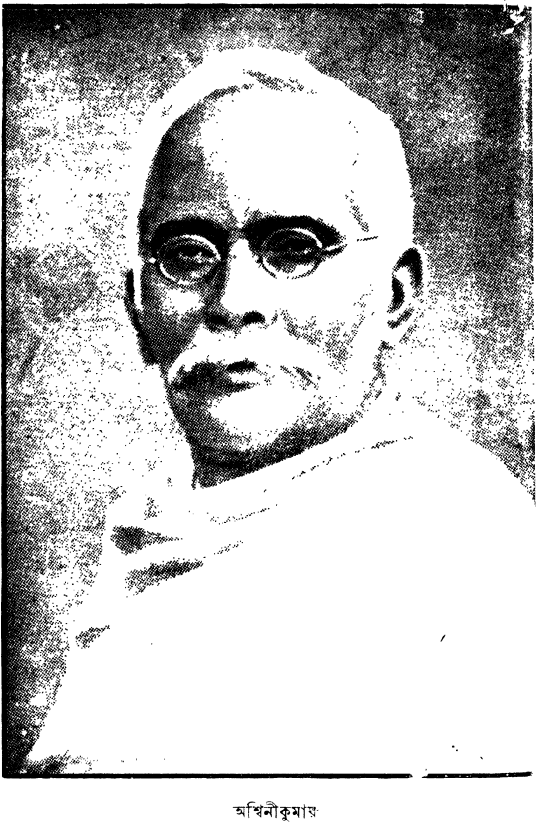
These two men, Ashwini Kumar Dutta and Harendranath Mukhrjee, were the ones who insisted that he involve himself directly in politics. It was at their urging that he first contested the Barisal Municipality election. Later, inspired by them, he participated in the election for the Backerganj District Board. During this period, Huq was also involved with two journals: Balak (1901) and Bharat Suhrid (1903). The former was a weekly which Huq edited alone, while the latter, a monthly, was edited jointly by Fazlul Huq and Nibaran Chandra Das. According to the scholar Ahmed Sharif, the noted writer Abdul Karim Shahityabisharod contributed to Bharat Suhrid.
4
Principal Ibrahim Khan recounted a story from Fazlul Huq’s early career in a memorial volume published in 1969, marking the eighth anniversary of Huq’s death. This narrative likely dates back to the first decade of the twentieth century, during Huq's brief professional stint in Barisal following his return from Kolkata. The story is titled ‘Sher-e-Banglar pantar thala’—The Fermented Rice Plate of Sher-e-Bangla.
While travelling from Barisal to Chakhar, Huq heard the piercing scream of a child: ‘No, no, I will not give up my pantar thala!’ Curious, Fazlul Huq stopped his horse carriage and entered the hut. Inside lived Farid, his wife, and their seven-year-old son, Keramot, along with a goat and its two kids. A crowd had gathered because a moneylender, Mohim Sarker, had come to auction the house after Farid had failed to repay a loan.
Huq learned that Farid once owned seven bighas of farmland, all of which had been claimed by Mohim Sarker, piece by piece, as loan repayments. Farid was now a mere day labourer. Mohim Sarker’s men had already seized the goat and its kids, as well as two brass (kasa) plates. They were now forcefully trying to take Keramot’s plate of fermented rice. Despite the child’s desperate cries, the men ignored him and snatched the plate. Keramot lay rolling in the yard, crying, ‘Amar thala, amar thala’ (My plate, my plate).
Huq’s eyes were brimming with tears. He first paid five taka to recover the plate, then repaid the entire loan to rescue the goats and other belongings. Farid and his wife were left speechless.
Fazlul Huq took the incident deeply to heart. He remained silent for the rest of the journey to Chakhar. Upon alighting from the carriage, he remarked: ‘The scream of that child has marked the future path of my life. I will try my level best to bring back those pantar thalas taken from them by force. From now on, these plates are my plates.’
This can be considered one of the foundational stories of Fazlul Huq’s life; his entire journey can be seen as an extension of this moment.
5
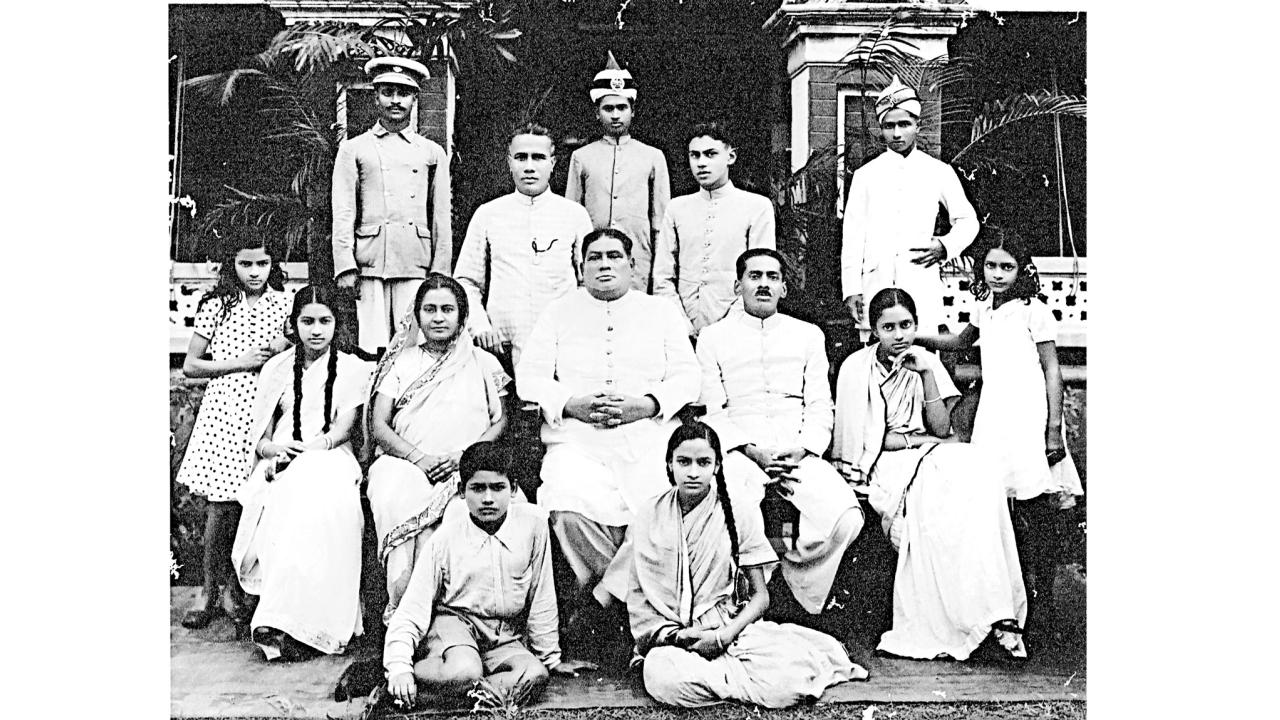
Fazlul Huq understood clearly that the Krishak-Praja (peasant-tenant) communities were severely deprived and faced systemic discrimination. He realised that his political objectives must be rooted in their struggle. This understanding was reflected in his maiden budget speech in the Bengal Legislative Council, where he broke sharply from his predecessors. While the aristocrats and Nawabs remained obedient to the British Raj to preserve their status, Huq chose a different path. From his very first days in the Council, he defended the cause of the downtrodden, especially the Bengali Muslims.
I believe he was able to do this because of his prior engagements with people across the social spectrum. His voice became an echo of the screams of those suppressed for generations. Through him, the tradition of loyalist politics received a significant blow. He recognised that such politics only benefited the wealthy while leaving the poor in the same stagnant conditions. The later chapters of his political career, well known to us all, grew from this very resolve.
Mehedi Hasan is a writer and researcher. He can be contacted at mehedi7119@gmail.com.
Send your articles for Slow Reads to slowreads@thedailystar.net. Check out our submission guidelines for details.

157th Birth Anniversary of Mahatma Gandhi / Gandhi’s return to Noakhali
Why does Tagore still trouble Bangladesh’s idea of ‘us’?

Can Bangladesh make better use of its zakat money?
Three revolutions that reshaped the world
Paradise lost and found: Rediscovering early modern Bengal
Unbound Mother: The making and remaking of Kaali in Bengal

Do great leaders make history, or does history make them?
Poison and cremation: A forensic history of colonial Bengal