


Gazi Rakayet’s ‘Manushtike Dekho’ explores resilience and inner strength
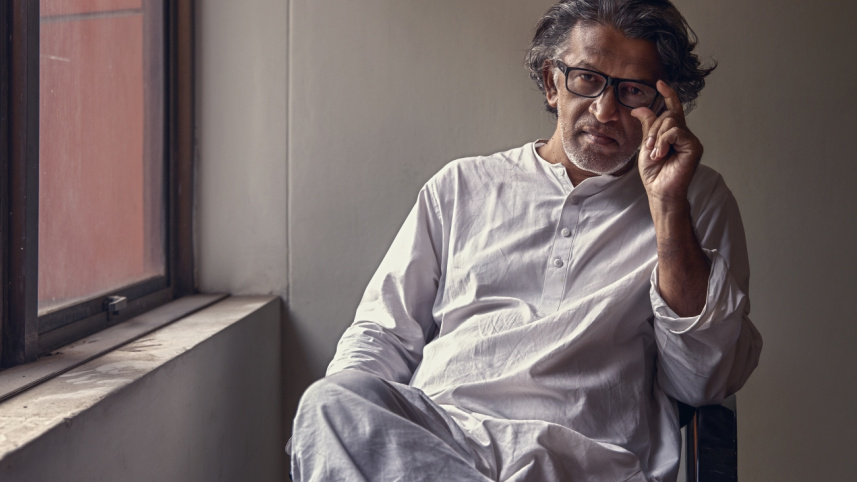
Gazi Rakayet—actor, director and playwright—once studied at BUET but ultimately chose a career in performance and filmmaking. His debut film “Mrittika Maya” won National Film Awards in 17 categories, a record in Bangladeshi cinema, while “Gor” secured 11. He now returns with a new film, “Manushtike Dekho”, which hit theatres today.
Speaking to The Daily Star, Rakayet opened up about the film and his creative philosophy.

On “Manushtike Dekho”, Rakayet explained that the title is less literal and more reflective of an inner journey. “It’s really about seeing the strength within a person. People tend to focus on outward strength, but this story asks you to look deeper,” he said. “When I finalised the script, I felt it was immensely powerful.”
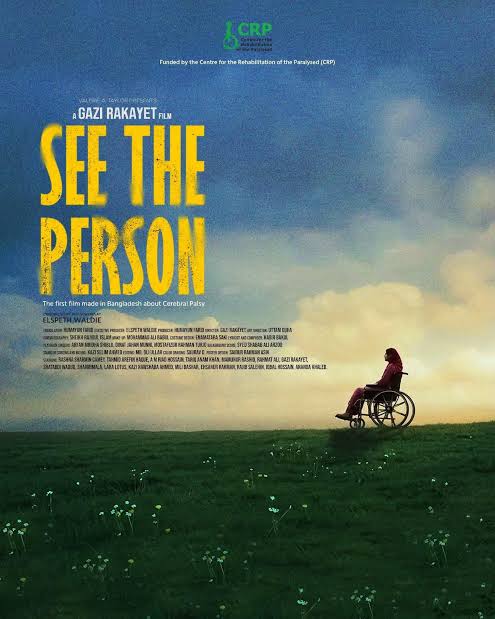
The film is adapted from a story by a British writer. Rakayet noted that he had earlier explored a similar narrative thread through a film inspired by Abdullah Al Mamun.
“I don’t want to see what everyone else sees,” he continued. “I approach my work professionally, and I make sure each film is distinct from the last. The same goes for my writing—I am always searching for differences.”
At its core, the film tells a story of resilience. “You’ll see people fighting against illness—fighting to overcome it. It’s a story of victory,” he said. “I made this film out of love. Essentially, it follows the struggles of three individuals: a child and two young adults, all living with rare diseases.”
Alongside a cast of established actors, the film introduces three newcomers. Rakayet shared that they underwent three months of grooming. “They’ve delivered very natural performances—one boy, one girl, and a child. And of course, the experienced actors are there as well.”
“Manushtike Dekho” has been produced with support from CRP and is produced by Humayun Farid. Rakayet described it as a message-driven film. “Cinema without an issue rarely resonates. This film, too, is built around a strong theme,” he said. “There haven’t been many films like this in Bangladesh.”
He believes cinema remains one of the most powerful mediums to express humanity and culture. “There is no alternative to film when it comes to presenting our culture in the service of humanity. I’ve made this film from a deeply human perspective.”
The film features performances by Mamunur Rashid, Tariq Anam Khan, Mili Basher and Shatabdi Wadud, among others. Rakayet himself appears in the role of a minister.
Reflecting on other filmmakers, he praised Tanvir Mokammel for his remarkable work. He also spoke highly of Satyajit Ray, noting that Indian cinema has produced some extraordinary films, and added that Iranian cinema continues to stand out for its storytelling.
Rakayet also touched on the cultural landscape, recalling a time when reading held greater prominence than cinema. “We grew up reading good books,” he said. “Yes, not every book was refined—but that doesn’t mean we would burn them. Why should we?”
He also mentioned the involvement of Valerie Taylor in the film. “I can’t say enough about her. She is a person with a truly generous heart. I have never seen Mother Teresa, but I have seen Valerie Taylor,” he remarked.
For now, “Manushtike Dekho” is open in a single cinema hall in the capital, with plans to expand screenings gradually. Rakayet hopes to take the film to educational institutions as well. “We want to screen it in colleges and universities,” he said.
 For all latest news, follow The Daily Star's Google News channel.
Comments