A closer look at Bangladesh’s new labour law: Gains and gaps
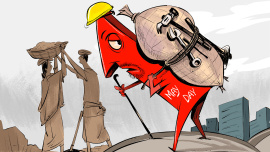
Around 140 years ago, on 1 May, young workers gathered at Chicago’s Haymarket Square in the United States to demand recognition of an eight-hour working day. The protest faced police baton charges and gunfire. Later, leaders of the movement—August Spies, Albert Parsons, Adolf Fischer and George Engel—were hanged. At that time, workers often had to work 14, 16, and sometimes even 18 hours a day, sacrificing their youth, energy, and strength. In the nineteenth century, the slogan “8 hours labour, 8 hours rest, 8 hours recreation” resonated across Europe and America. As a result of the 1 May 1886 movement and the sacrifices of workers, the eight-hour working day was gradually recognised in labour laws across many countries. At the same time, 1 May began to be observed in many parts of the world as International Workers’ Day and a public holiday. May Day continues to highlight issues of wages, safety, and trade union rights, along with workers’ struggles, gains and losses.
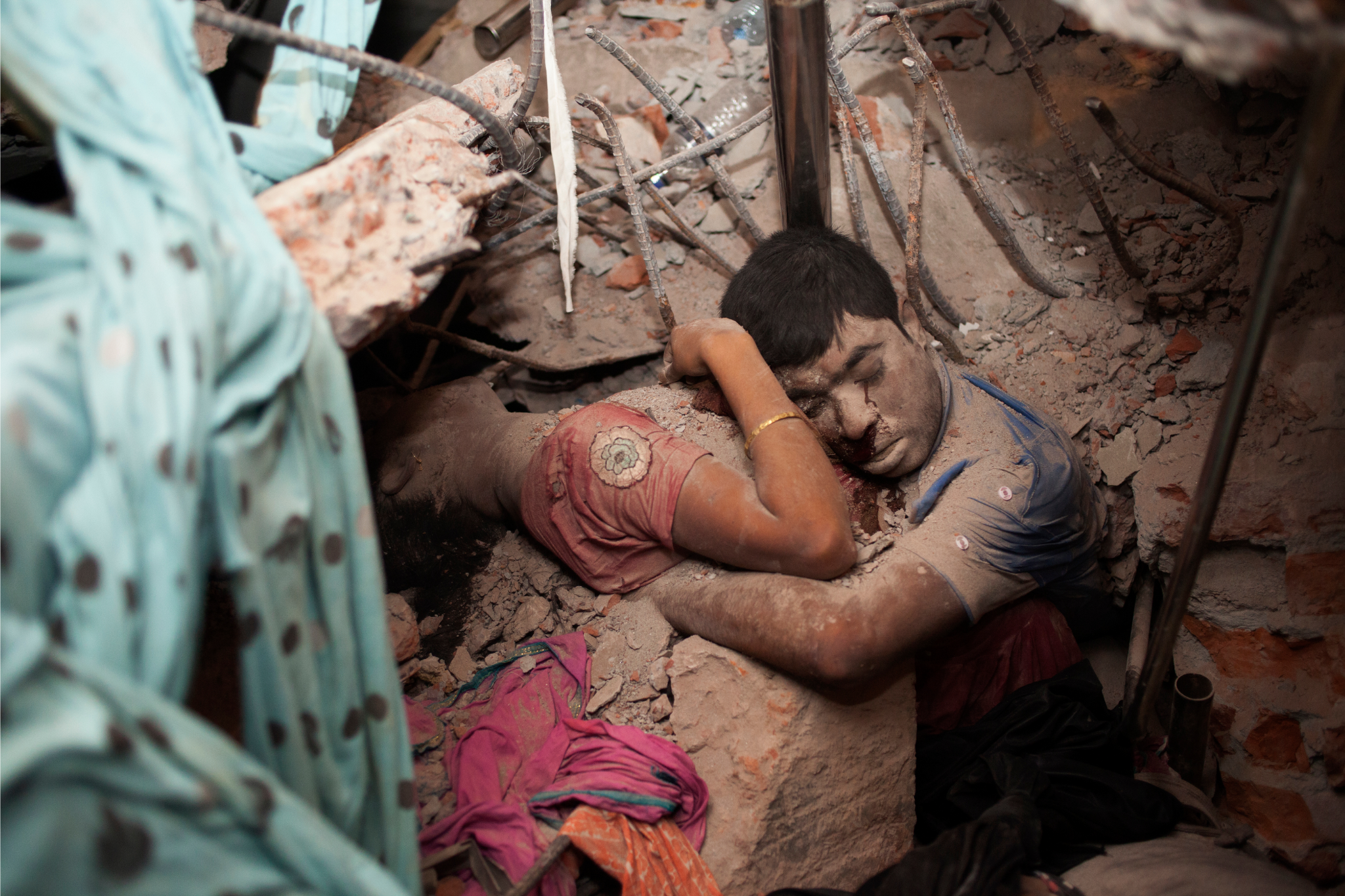
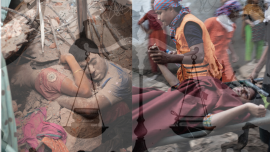
In 1911, a fire at the Triangle Shirtwaist Factory in the United States killed 146 young workers. Following this tragedy and public mobilisation, the New York Factory Investigating Commission was formed in 1911. In 1913, working hours were reduced to 53 hours per week. In 1915, a safety code was introduced. Within a year of the incident, around 36 new laws were passed covering safety, factory inspection, and related issues. This tragedy created a new awareness in American history. Similarly, in our country, after the Rana Plaza disaster, which killed 1,175 workers, we see significant changes in the Labour Act 2013.
History teaches us how the strength of movements and struggles, or tragic loss of life, creates the foundation for changes in society, the state, and laws. It also increases public awareness of rights and responsibilities. At the same time, struggles and movements make a nation more mature, creating opportunities to reshape the country and society. Major social changes in history have not come without struggle and sacrifice. For example, the Labour (Amendment) Act 2026 of Bangladesh, the Labour (Amendment) Ordinance 2025, and the report of the Labour Reform Commission led by Syed Sultan Uddin Ahmed (2025) are rooted in the ground of mass uprisings. These laws are closely linked with the 2024 mass uprising, the dreams of those who lost their lives in it, and the expectations of surviving workers. A significant portion of those killed in the uprising were workers. Through the uprising, the journey towards democracy began in 2026, and citizens regained the opportunity to exercise their voting rights, leading to the formation of the Thirteenth Parliament.
Although some important demands remain unfulfilled, the progress made in the Labour Act 2026 is undoubtedly a historic advancement. This progress would not have been possible without the mass uprising. As a member of the Labour Reform Commission and Tripartite Consultative Council (TCC), being a witness to the entire process and its history has been a deeply educational experience for me. The opportunity to contribute something for the country was created by that uprising. I wish to reflect on the labour law in light of that experience.
In the process of drafting the Labour Act 2026, various stakeholders—including lawyers, teachers, and researchers—provided data and support for workers. However, in the final stages of law-making, the TCC or government did not hold separate consultations with stakeholders. Even so, it must be said that for the first time, there was a sincere effort from all three parties—employers, government, and workers—within the TCC. All three parties presented their arguments, both verbally and in writing. There was also sincere effort from members of the Labour Commission in preparing their recommendations. There was a strong sense of motivation among all involved, inspired by the mass uprising, to contribute to reshaping the nation, society, and labour environment.
Throughout history, workers have struggled for the rights to life, livelihood, and dignity. These include demands for fair wages, freedom of expression, the right to organise, safety, equal opportunities regardless of gender, religion, race, or class, and social protection. These demands have often been constrained by legal limitations that have restricted workers’ opportunities.
However, this time the labour law has brought some gains for workers. Among the most significant is the relaxation of conditions for forming trade unions (ranging from 20 people up to a slab of 400 workers). Previously, union registration required the consent of 20% of workers in an establishment, and 30% for group-based establishments. In the 2026 Act, under the amendment to Section 179, registration now begins with 20 workers. There are five slabs in total: 20–300 workers require 20 members; 301–500 require 40; 501–1,500 require 100; 1,501–3,000 require 300; and above 3,001 requires 400 workers. For group-based establishments, union formation is possible with the consent of just 20 workers. While the opportunity to form unions with as few as 20 workers has expanded workers’ scope for organisation, the cap of a maximum of three unions in certain cases still creates some constraints. Previously, the law was such that registration had effectively become a political matter, where local and foreign owners, government influence, and significant financial resources played a decisive role in obtaining union registration. At present, to ensure a democratic process of union formation, it is necessary to clarify the provisions in the rules so that workers do not face obstacles created by legal ambiguity.
Several other positive changes include reducing the wage revision cycle from every five years to every three year, recognition of domestic workers (Section 2/9B), replacement of the term “female” with “woman”, prohibition of discriminatory behaviour (Section 345A), definitions of discrimination, gender-based violence and sexual harassment along with the establishment of complaints disposal committees (Section 332A), mandatory safety committees (Section 90A), recognition of workers’ right to refuse hazardous work (Section 61A), extension of eviction notice from 60 days to 6 months (Section 32A), increase in festival holidays from 11 to 13 days (Section 118(1)), improvements in lay-off, death compensation and termination benefits, establishment of an accident compensation fund, definition of blacklisting, a National Social Dialogue Forum (Section 348B), and an alternative dispute resolution authority (Section 348C). Many provisions from the Labour Ordinance (2025) have been carried over almost verbatim into the new Labour Act (2026).
Every year, when May Day comes around, we discuss the working hours and overall conditions of workers in our country. In Bangladesh, although the eight-hour working day exists on paper, it is not a reality in practice. Workers still endure inhumane working hours. This is directly linked to the question of a dignified wage for labour. Because wages are not dignified, workers often seek jobs where excessive overtime is available. The demand that a worker should be able to earn a dignified wage within eight hours, without relying on overtime or extra work, is now urgent.
This time, particular emphasis has been placed on easing the conditions for trade union formation, as well as ensuring a safe and violence-free workplace for women and men. These reflect the provisions of ILO Conventions 190, 155 and 187. The new law also introduces a discrimination, violence and harassment redress committee, consistent with the 2009 High Court directives and long-standing demands of workers’ and women’s movements. There is no doubt that these are positive advances in the history of labour movements.
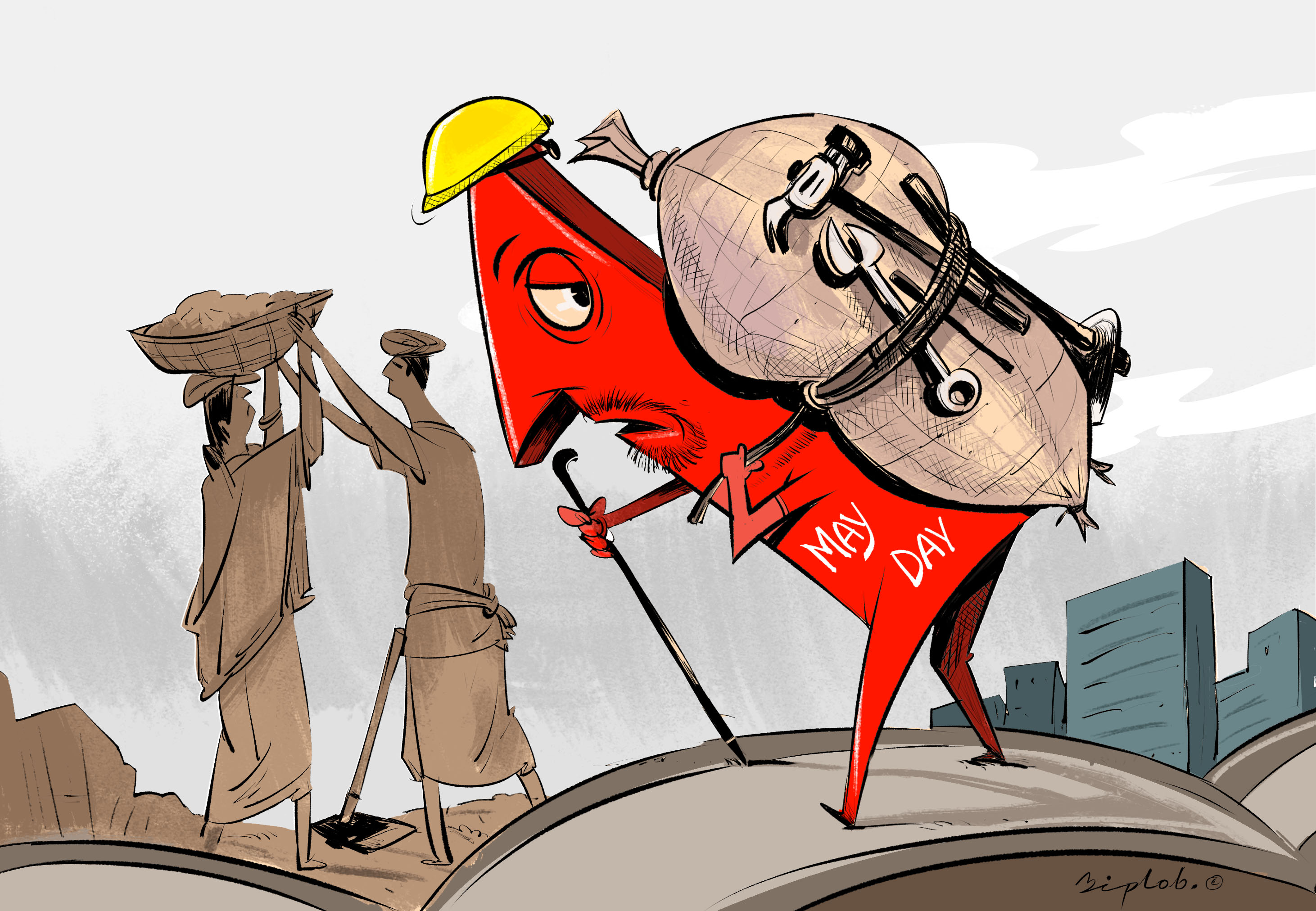
Nevertheless, several important demands remain unfulfilled. The government has attempted to balance the interests of workers and employers. In the transition from the ordinance to the Act, there has been a rollback in three key areas to accommodate employers’ demands. These include the narrowing of the definition of “worker”. By excluding “managerial officers” from the definition, many workers may be deprived of labour law protections and social security benefits. The mandatory provision for a provident fund has also been removed from the Act. Although the ordinance allowed for up to five unions, the Act has reduced this to three.
On the other hand, one demand from the workers’ side has been reinstated: under Section 180(1)(b), the provision allowing 10 per cent representation of external workers in industrial sector establishments, which had been removed in the ordinance. Under Section 27(4) of the Labour Act 2026, termination benefits for workers who resign have increased slightly, although this has faced objections from employers.
Despite long-standing demands, the new labour law does not include a National Minimum Wage Commission or a statutory mechanism for wage determination. Proposals to ensure the use of Bengali in all labour courts, from the Labour Court up to the High Court, have also not been implemented. Maternity leave, which was proposed to be standardised at 180 days with paid leave across both public and private sectors to eliminate disparities, has instead been increased from the existing 112 days to 120 days, an increase of just 8 days. Demands relating to outsourcing workers and daily-wage workers have also not been incorporated into the law. Even after the Rana Plaza and Tazreen incidents, there has been no change in the compensation framework. The current ordinance does not provide specific or enhanced penalties for death due to negligence or structural failures in the workplace.
Every year, when May Day comes around, we discuss the working hours and overall conditions of workers in our country. In Bangladesh, although the eight-hour working day exists on paper, it is not a reality in practice. Workers still endure inhumane working hours. This is directly linked to the question of a dignified wage for labour. Because wages are not dignified, workers often seek jobs where excessive overtime is available. The demand that a worker should be able to earn a dignified wage within eight hours, without relying on overtime or extra work, is now urgent.
Nevertheless, whatever progress has been made in labour law in favour of workers has not come easily. It is not, in my view, only the continuity of past labour law reforms or complaints from the ILO (under Article 26 of the ILO Constitution, complaints were brought against Bangladesh for not properly implementing conventions such as Labour Inspection Convention No. 81, Freedom of Association Convention No. 87, and Right to Organise and Collective Bargaining Convention No. 98). Rather, the principal factor was the mass uprising. The uprising created a new opportunity to end delays, to take ILO complaints into account, to accelerate the process of labour law reform, and to bring workers’ new expectations together in a coherent framework. Key sectors of Bangladesh’s economy are dependent on international markets. In this context, roadmaps from the ILO and international markets (the US, EU, Canada and others) have also been considered, and were discussed in the TCC, and this is reflected in the labour law. However, we always place greater emphasis on domestic realities and the conditions of the labour sector, because Bangladesh’s context is not comparable with that of other countries.
The history of labour law shows that at times laws were enacted to strengthen control over workers, and at other times change became inevitable due to movements or the loss of workers’ lives. Bangladesh’s labour law has evolved through the legacy of British and Pakistani labour laws. During the Pakistan period, the Industrial Relations Ordinance of 1969 later came into force as Presidential Order No. 48 after the Liberation War in 1971. Subsequent amendments and additions were also made through ordinances. Bangladesh’s Labour Act was first enacted in 2006. After the anti-autocracy mass uprising of the 1990s, a Labour Law Commission was formed in 1992, which submitted its report in 1994. However, the law was ultimately enacted in 2006, following a movement for wage increases in the garment sector. At that time, wages increased from 930 taka to 1,662 taka. Currently, garment workers’ wages are 12,500 taka, which is still not sufficient for a decent standard of living in today’s market.
From 2006 to 2026, the Labour Act has been amended five times: in 2009 (8 sections amended/added), 2010 (3 sections), 2013 (87 sections), 2018 (50 sections), and 2026 (93 sections). In countries without an elected government, laws enacted are generally called ordinances or temporary laws. Such ordinances were issued in 2009 and 2025. During elected governments, these are later converted into laws. The Labour Ordinance of 2008 was issued during the state of emergency under the caretaker government of Fakhruddin Ahmed (2007–2009). The Labour Ordinance of 2025 was issued during the post-uprising period under Dr Muhammad Yunus’s government (2024–2026).
This time the labour law has brought some gains for workers. Among the most significant is the relaxation of conditions for forming trade unions (ranging from 20 people up to a slab of 400 workers). Previously, union registration required the consent of 20% of workers in an establishment, and 30% for group-based establishments. In the 2026 Act, under the amendment to Section 179, registration now begins with 20 workers. There are five slabs in total: 20–300 workers require 20 members; 301–500 require 40; 501–1,500 require 100; 1,501–3,000 require 300; and above 3,001 requires 400 workers. For group-based establishments, union formation is possible with the consent of just 20 workers. While the opportunity to form unions with as few as 20 workers has expanded workers’ scope for organisation, the cap of a maximum of three unions in certain cases still creates some constraints. Previously, the law was such that registration had effectively become a political matter, where local and foreign owners, government influence, and significant financial resources played a decisive role in obtaining union registration. At present, to ensure a democratic process of union formation, it is necessary to clarify the provisions in the rules so that workers do not face obstacles created by legal ambiguity.
In the 20-year history of labour law, two major turning points occurred in 2013 and 2026. The first followed the Rana Plaza collapse on 24 April 2013, in which 1,175 workers died. Within two months (22 July 2013), the labour law was amended with 87 sections revised. At that time, the number of trade unions increased. In 2024, there was a mass uprising against authoritarian rule. On the foundation of that uprising and subsequent labour movements, the Labour Act was revised again in 2026, with 93 sections amended or modified. It is now essential to ensure that these laws are properly implemented in practice. Equally important is the formulation of consistent and effective rules and regulations. It is expected that the process of labour law reform and new legislation will remain open through democratic means in the future.
Amendment and new legislation are ongoing processes. It is hoped that in the future, the law will become more labour-friendly and democratic, and that this opportunity will continue. During the previous authoritarian government, workers repeatedly suffered from politicisation and abuse of power. They lost rights and lives. In the post-2024 uprising period, with elections and a new parliament, the role of the government in this historic moment is more important than ever. Whether the government is moving towards a labour-friendly democracy will be reflected in improvements in the lives of working people. A democratic path, an accountable system, and the strength of a united movement are essential to establishing workers’ rights to life, livelihood, and dignity. At the same time, a strong and united labour movement is necessary for the development of effective labour laws and the labour sector as a whole. Without unity and coordinated action, even the achievements of the uprising risk being lost.
This article has been translated by Ystiaque Ahmed.
Taslima Akhter is the president of the Bangladesh Garment Sramik Sanghati and a member of the Political Council of Ganosamhati Andolon. She was also a member of the Labour Reform Commission (2024). She can be reached at taslima_74@yahoo.com
Send your articles for Slow Reads to slowreads@thedailystar.net. Check out our submission guidelines for details.
Interactive: Bangladesh Labour History · 1881 - 2026 / Fight for Justice
In conversation with Richard Wolff / Can workers seize the opportunity as Western capitalism declines?
The expansion of wage labour and the message of May Day
A closer look at Bangladesh’s new labour law: Gains and gaps
Fixing a labour justice system that fails workers

Servants of an algorithm: May Day and the fight for the South Asian digital working class
Beyond reform: Securing dignity for Bangladesh’s workers