


A journey without end
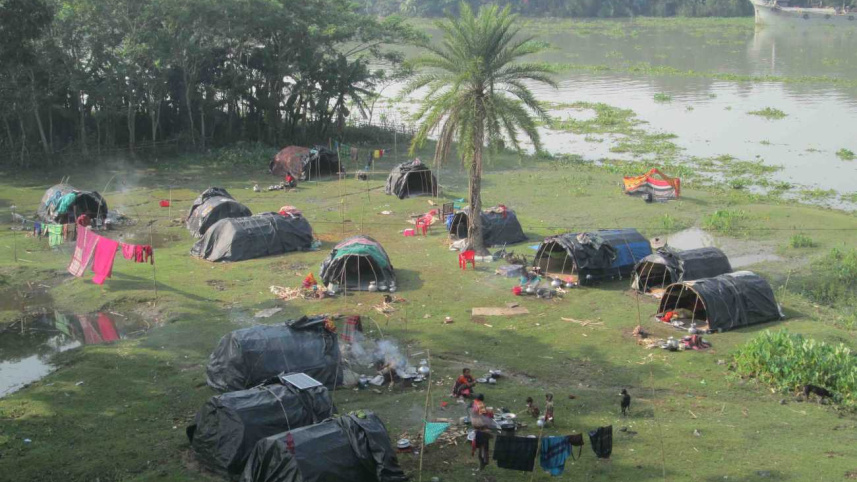
A very long time ago, in 1638 to be precise, a community mainly comprising ethnic Mong-tong from Arakan accompanied the fugitive king Ballal Raja to settle in the area of Munshiganj. It was the start of the journey of the contemporary Bedey people, who subsequently spread out to the remote corners of Bengal and Assam, many converting to Islam along the way. Traditionally nomadic, the wanderings of the Bedey have never ceased; but there are some who hope to find a permanent dwelling place.
"How can I go to school?" asks thirteen-year-old Bedey, Subel Sarder. "We have to change our location regularly and it's not possible to study while living in such a way." He dreams of a formal education but as for many Bedeys it's an elusive dream.

"We have no chance to study," agrees Md Rian, 16, who has already started working with his parents.
According to research by AKM Masud, the executive director of the organisation Grambangla Unnayan Committee, 69 percent of Bedeys never went to school and more than 95 percent cannot read or write, with the illiteracy rate among females at almost 100 percent. Around 98 percent of the 5-lakh strong Bedey community lives below the poverty line.
The term Bedey is believed to have arisen from the Bangla word "baidda" meaning village doctor; and the Bedey in general have pursued a variety of occupations centred on traditional healing practices. They are divided among nine groups, each roaming specific parts of the country, practising unique customs and specific traditional livelihoods.
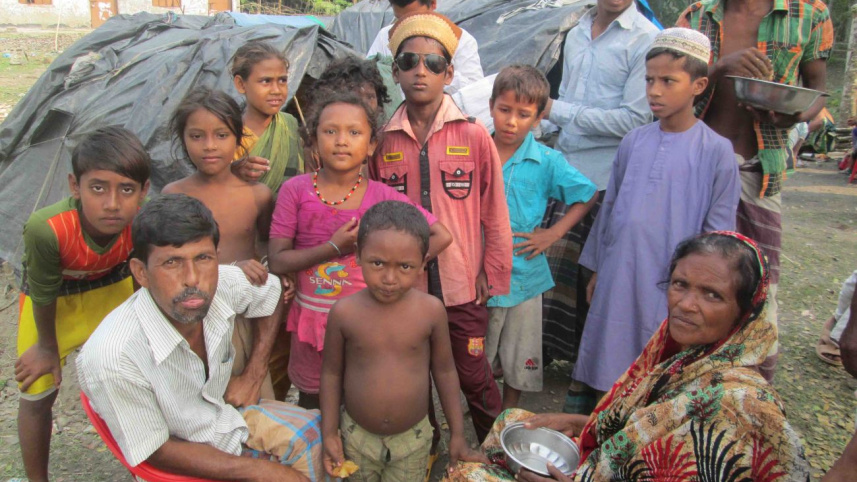
The Daily Star spoke with Bedeys based in Munshiganj while they were sheltering in 23 tents beside the Baleshwar River in Togra village of Pirojpur's Zianagar upazila.
"We follow our forefathers' professions," says Sarwar. "But nowadays we can't earn enough because people's attitudes towards us have changed. For medical help people consult doctors."
"After walking from dawn to dusk it has become difficult to earn Tk 200," says Shadinata, 46, a woman among the group.
Bedey women, who are often the primary breadwinners, often walk more than twelve miles in a day. Bedey medical treatment commonly involves extracting "bad blood" with an instrument made of animal horn called a "singa". They sell amulets to protect against illness and evil, including plastic bangles and chains of catfish bone to be worn around the waist. They chant spells and sometimes extract "tooth worm" from troublesome teeth. A consultation costs up to Tk 50, though Bedeys are sometimes paid with paddy, rice or coconuts.
School-age Bedey children often assist parents in earning an income, by selling amulets, catching snakes, performing acts of magic and so on.
Lack of access to formal education is not the only disadvantage of a nomadic lifestyle. There are health consequences. Bedey births are often unregistered, with children unable to take the benefits of routine vaccinations. Child marriage is commonplace with girls often wed before they turn 14 and boys before 18, which results in the associated health risks of early pregnancy. By age 16, many Bedey women are mothers.
Due to their peripatetic lifestyle Bedeys often cook with and drink unsafe water, and knowledge of basic hygiene and nutrition are at a minimum. When sick the Bedey rarely consult a qualified doctor.
But now some seek change, to live more as others do, in broader society. "Most of us don't like our traditional professions anymore," says Abdul Kader Sarder, leader of the group in Togra. "But we have nothing to do."
Across Bangladesh there are around 10,000 nomadic groups including the Bedey who on average travel, traditionally by boat, to around 90 different locations during their ten months of wandering per year. Around 90 percent of Bedeys own no land.
"If we had some land where we could settle," contemplates Abdul, "we could get involved in other jobs and leave our ancient professions. We could educate our children. But we are in need of help to get started."
"We are Bangladeshi citizens," says another Bedey, Paltan. "But nobody cares for us. Nobody enquires after our wellbeing or helps with nutrition or other problems."
 For all latest news, follow The Daily Star's Google News channel.
Comments