


Indigenous people keep vigil for safety in Bandarban
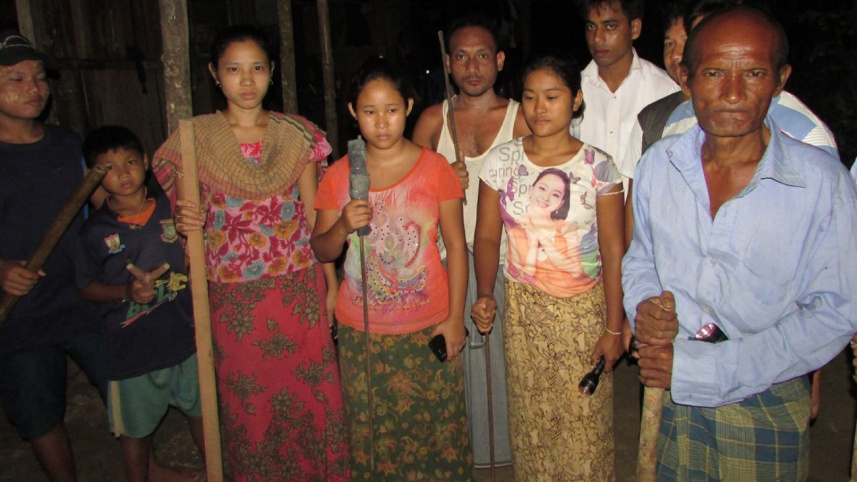
Life in Dabong Khali Marma Para in remote Baishari union of Bandarban's Nykkhongchhari upazila has been anything but usual of late. Following two brutal murders in the area over the last few months, locals are concerned. Determined to ensure security in their area, villagers decided to be vigilant rather than scared, a strategy that on 4 August 2016 successfully prevented a third murder.
The unexpected hacking death of Buddhist monk U Damma Oaing Cha on 14 May 2016 sent shockwaves through the normally peaceful community. On 30 June 2016 when a second Buddhist, Mong Shwe Lung Marma, 55, was hacked to death the sense of danger only intensified.

Both murders held similarities with those carried out over recent months by militants elsewhere in the country, but according to local headmaster Monghla Marma, the area's authorities seem indifferent to community concerns.
"The thinking is that those who killed the two might be militants connected with the Rohingya Solidarity Organisation," says Monghla. "But the local administration didn't seem much concerned. There are claims they have reached an understanding with the organisation's ringleaders in Nykkhongchhari."
Baishari union's chairman Md Alam agrees that the Rohingya Solidarity Organisation (RSO) might be involved. "There is a group among them," he says, "who want to create panic among the indigenous villagers in the union. Militants with the help of RSO members might have carried out the murders."
Ching Hla Mong Chak, a leader of Bandarban's Chak community similarly believes Rohingya militants have long been trying to stir up fear and insecurity among indigenous residents across Nykkhongchhari upazila. "Ultimately the gang wants to evict the villagers from their ancestral lands by threatening their lives."
"We have informed the local administration about the problem," he continues, "But efforts have been in vain since they paid no heed to our concerns; rather, it may be that they have an understanding with the criminals."
"We lost two of our beloved community members, including our religious leader," Monghla says, recalling the murders. "We want no more pain. That's why we decided to be vigilant, and protect ourselves."
"We had no other option but to keep watch over the temple and our community every night since the murders," says local Mya Mya Ching Marma.
Mong Mrau Marma, the Karbari or chief of Dabon Khali Marma Para agrees. "Who else will protect us and provide security when the local administration has already failed to identify the masterminds behind the killings?"
On the Thursday evening of 4 August 2016 the community's preparedness was put to the test.
"The militants broke the door of the temple at around 8:20 p.m.," says Tain Dima, 62, chief monk of Dabong Khali Marma Para Buddhist temple. "They tried to enter my room."
But the monk was ready. As planned, he turned on the loudspeaker and called the villagers to help him. When the attackers heard the calls over the loudspeaker, they fled.
The community is understandably relieved and satisfied that through their efforts the life of their chief monk was almost certainly saved; an outcome only made possible by their vigilance.
Bandarban police chief, Sanjit Kumar Roy, meanwhile, denies there are links between police and the RSO. "Police are investigating the Baishari murders, including looking into whether there were any links to militancy or the RSO."
The officer-in-charge of Nykkhongchhari police station, Abul Kyer, offered the same response.
On 18 August 2016 the state minister for Chittagong Hill Tract Affairs, Bir Bahadur U Shwe Sing, visited Baishara, urging the area's locals to stand united against terrorism and militancy.
 For all latest news, follow The Daily Star's Google News channel.
Comments