


True sustainability for ports means going beyond green

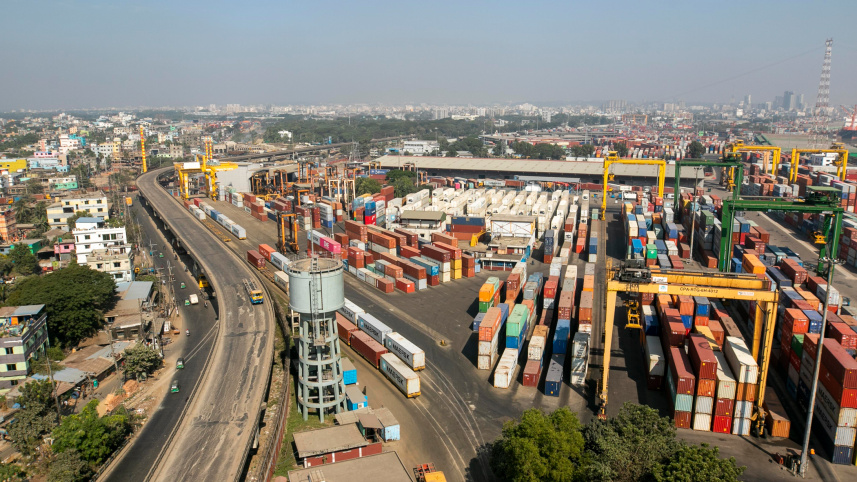
Ports are key gateways of trade and economic growth around the world, and they are increasingly embracing the idea of going green. Efforts to cut emissions, control pollution, and improve energy efficiency are now central to port development strategies. In Bangladesh, too, this conversation is gaining momentum as we modernise our maritime infrastructure.
However, an important question remains: is being environmentally friendly enough to make a port truly sustainable? The increasingly clear answer is: no.

A port may succeed in reducing emissions and meeting environmental standards, but it may still struggle with labour concerns, community dissatisfaction, or economic inefficiencies. It may become cleaner but less competitive, or more efficient but socially unbalanced. In today’s complex and interconnected world, focusing on environmental performance alone no longer provides true sustainability.
This is why global thinking on port reform is evolving beyond the idea of the “green port” and towards a broader and more balanced framework known as the Triple Bottom Line (TBL). This approach looks at sustainability through three interconnected lenses: environmental protection, social responsibility, and economic performance. Instead of treating these areas separately, it brings them together into a single framework for decision-making.
For Bangladesh, this shift in thinking is both timely and necessary. The country is in the middle of a major transformation of its port sector. Chattogram port continues to expand in capacity, while large-scale projects such as the Matarbari deep-sea port and the Bay Terminal promise to redefine the country’s connectivity with global trade networks. These investments will have long-term consequences not only for economic growth, but also for communities and the environment.
At present, however, the way sustainability is approached in Bangladesh’s port development remains somewhat fragmented. Environmental issues such as pollution control, dredging impacts, and energy use are typically handled within regulatory frameworks. Economic performance is measured in terms of cargo throughput, turnaround time, and operational efficiency. Social considerations, including labour conditions and community impact, are often addressed indirectly or receive less structured attention.
This separation creates a gap in decision-making. When environmental, social and economic factors are treated in isolation, it becomes difficult to see the full picture. A port may perform well in one area while falling short in others, yet still be considered successful. Over time, this imbalance can lead to inefficiencies, conflicts, and missed opportunities.
The TBL approach offers a way to address this challenge by bringing these dimensions together. It does not suggest that every objective can be achieved perfectly at the same time. On the contrary, it recognises that trade-offs are inevitable. The key is to make these trade-offs explicit, informed, and transparent.
For example, investments in cleaner technologies may increase costs in the short term but deliver long-term economic and environmental benefits. Expanding port capacity may boost trade but also place pressure on local communities and ecosystems. Likewise, improving labour conditions may require changes in operational practices. These are not simple decisions to make, but they are better managed when all dimensions are considered together rather than separately.
Adopting a more integrated approach does not require complex or unrealistic reforms. It can begin with relatively practical steps. Port authorities could develop simple dashboards that track performance across environmental, social and economic indicators simultaneously. Investment decisions could be evaluated not only on the basis of financial returns but also in terms of their broader impacts. There is also an opportunity to align port operations more closely with the SDGs, providing a clear and internationally recognised framework for measuring progress.
Perhaps most importantly, a shift in mindset is needed. Sustainability should not be seen as a checklist of separate requirements but rather as a continuous process of balancing different priorities in a changing environment. This requires coordination between regulators, port operators, businesses, and communities, as well as a willingness to engage with complexity rather than avoid it.
As Bangladesh seeks to position itself as a key player in regional and global trade, the importance of getting this balance right cannot be overstated. Ports are systems that connect economies, shape livelihoods, and interact with sensitive natural environments. Decisions made today will influence not only trade performance, but also social well-being and environmental resilience for decades to come.
Yes, the idea of a green port remains important and should continue to guide policy and investment decisions. But it should be seen as one part of a larger picture, not the end goal. A port that is environmentally compliant but socially strained or economically inefficient cannot be considered truly sustainable.
Sustainability is not only about reducing emissions or protecting ecosystems, important as those goals are. It is also about ensuring that economic growth is inclusive and that the benefits of development are shared fairly, while maintaining long-term competitiveness. A truly modern port is one that finds balance—among the environment, society, and economy. For Bangladesh, embracing this broader vision of sustainability will be essential as we move into the next phase of port reform.
The author expresses his gratitude for the insights from Prof Mojahid Chowdhury of Bangladesh Maritime University (currently pursuing his PhD at the Australian Maritime College, University of Tasmania), whose research on sustainable port management through the TBL framework brings together environmental, social and economic practices in a structured way, offering valuable guidance for aligning port development with the SDGs.
Ahamedul Karim Chowdhury is adjunct faculty member at Bangladesh Maritime University.
Views expressed in this article are the author's own.
Follow The Daily Star Opinion on Facebook for the latest opinions, commentaries, and analyses by experts and professionals. To contribute your article or letter to The Daily Star Opinion, see our guidelines for submission.
 For all latest news, follow The Daily Star's Google News channel.
Comments