


Indigenous 'chambol' needs protection
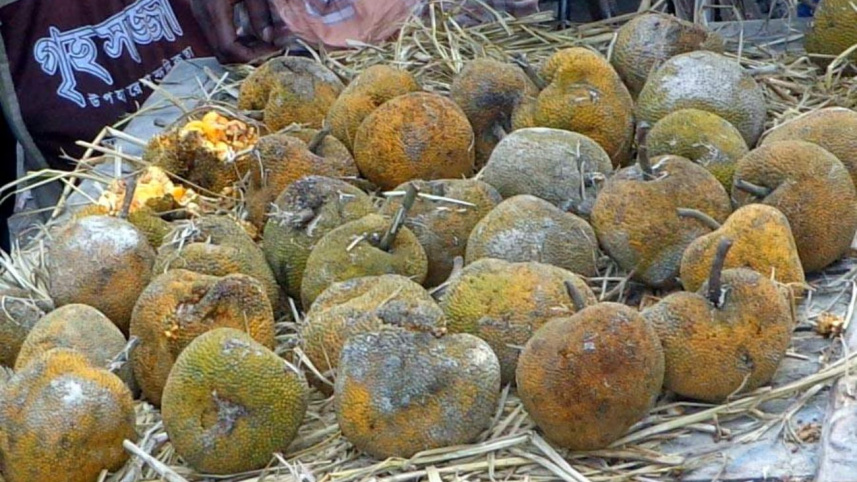
In Mymensingh's Rasulpur Forest the monsoon months of Ashar and Shraban were once a time to ramble; on random expeditions in search of 'chambol', the fruit of the indigenous chapalish tree. The chambol, renowned for a taste of sweet and sour, has long been considered a delicacy.
Also called the "forest jackfruit" in Mymensingh and a relative of the breadfruit, chambols were once familiar to all; but nowadays they're rare.

As atocarpus chaplasha, the chapalish tree, is generous in giving not only tasty fruit but also in providing timber suitable for fashionable furniture, many were felled over the years, and snatched away from the forest. Yet still a few chapalish trees remain.
According to local memory, the ripe chambols were a quintessential component of the lush and plentiful atmosphere donned by the forest to mark each monsoon. In Muktagachha the chambol was, for visitors, a special attraction.
One who is aware of the chambol's virtues is Dr. Md Abdur Rahim, director of the Germ Plasm Centre at the nearby Bangladesh Agricultural University. "The fruit which is now endangered has good nutritional value," he says. "The sweet and sour taste is attractive and the seeds can be used for cooking." In recognition of its attributes and rarity, the university has planted chapalish trees on its campus.
But beyond nutrition and taster, the chambol served a social good as well. In years gone by, struggling families found daily survival in collecting the wild fruit at this time of the year, for local market sale.
Until the 1990s the trees were in good number but thereafter their prevalence declined, making vulnerable the tree's existence locally.
Moreover, since the decline of the chapalish and other indigenous trees, several forest animals, once commonplace in Rasulpur and Shantoshpur, and in adjacent areas of Madhupur Forest in Tangail, have largely or entirely vanished. Gone are the tigers and leopards, the deer and bears. Indeed the number of avian species is also fewer than before.
With indiscriminate logging the food supply for many species of fauna has dwindled. Even the hundreds of monkeys in Shantoshpur Forest of Phulbari upazila are nowadays hungry, a situation that has the forestry officials concerned.
"We have taken some steps to protect indigenous fruit and trees for better ecological balance," says divisional forest officer Gobinda Roy. "And in the coming fiscal year preservation of the chambol will get top priority."
"There's a need for new orchards of indigenous fruit trees including the chapalish to be planted in forest areas to ensure the survival of these species," he added.
 For all latest news, follow The Daily Star's Google News channel.
Comments