


Farmers lose interest in cultivating zinc rice
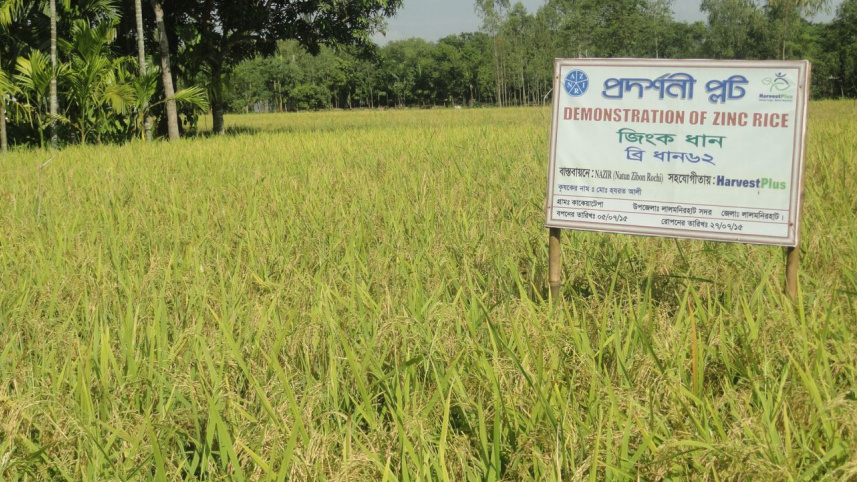
Enthusiasm among Lalmonirhat's paddy farmers for zinc rice cultivation has waned as predicted harvest targets fail to be reached. "We were advised that with BRRI Dhan-62 zinc rice variety we could achieve up to 15 maunds of rice from each bigha of land," says Mozammel Haque of Kakeyatepa village in Mogolhat union. "I couldn't achieve anywhere near that. I won't grow this variety again without better technical information and training."
"I became interested in zinc rice when I understood the importance of zinc to the human body," says his neighbour Hazarat Ali. "But I could only harvest 9 maunds per bigha, while from general aman paddy on the same land 16 maunds is possible."

Another local farmer, Saiful Islam, shares the disappointment. "NGO officials encouraged us to try zinc rice, but they didn't share enough technical detail. I won't allocate much land to this variety next year." Zinc rice was cultivated on 400 bighas of land in the district this year, according to agricultural extension department sources.
Shahin Islam, agriculturist of the NGO Natun Zibon Rochi, which has been implementing zinc rice farming in Lalmonirhat and Kurigram over the past three years, says although correct information about cultivating the strain was provided, many farmers did not properly understand. 'We provided seeds, vermicompost fertiliser and pesticides to 450 zinc rice growers," he says, "Only those who properly followed the correct cultivation process achieved targets."
Meanwhile, Ruhul Amin Mondol, the Rangpur region's officer of agricultural research and development from partner agency Harvest Plus, says that the comparatively low output of zinc rice is partially offset by high demand.
Agricultural officer for Lalmonirhat Sadar upazila, Enamul Haque, says that while production may be lower, so is the time required from seed to harvest. "Aman needs about 145 days to grow," he says, "Zinc rice is harvested after about 102 days." He suggests the earlier harvest is an opportunity for farmers to prepare their fields for early winter crops, with potential for an extra windfall.
However, with farmers dissuaded from zinc rice, the community will continue to suffer from a zinc shortage in many diets. "Zinc is important for nutrition," says Lalmonirhat's civil surgeon Dr. Abdus Samad. "Low zinc intake stunts growth, which means that zinc is especially valuable in children's development."
 For all latest news, follow The Daily Star's Google News channel.
Comments