


Public health experts call for more investments
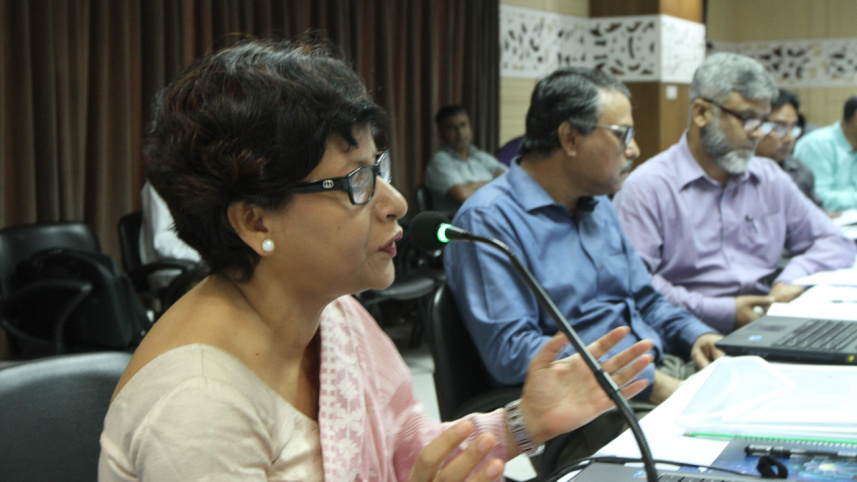
Public health experts yesterday called for more investments to improve the health status of the urban poor.
Over one third of the urban people live in slums with poor housing, water and sanitation facilities, which greatly contribute to the poor health conditions, they said.

Besides, there is a lack of coordination among the government and non-government organisations in conducting health programmes, which needs to be addressed urgently, experts noted.
The observations came at a consultation on urban heath for the upcoming Global Strategy for Women, Children and Adolescents.
Save the Children, Bangladesh Paediatric Association, Brac, icddr,b, Partnership for Maternal, Newborn and Child Health and The Daily Star jointly organised it at the newspaper's office.
According to the Bangladesh Urban Health Survey-2013, 50 percent of the slum children below the age of five are stunted, whereas it is 33 percent in the non-slums.
A total of 43 percent of slum children are underweight, whereas the percentage is 26 for children in non-slums.
Only half the women living in slums receive antenatal care (ANC) from the medically trained providers, while it is 83 percent for the non-slum women. NGOs are the major source of ANC in the slums amid absence of strong public healthcare facilities there.
"There is a huge gap in many health indicators between slum and non-slum areas," said icddr,b scientist Dr Shams El Arifeen.
Dr Kaosar Afsana, director of Health, Nutrition and Population Programme of Brac, said investment in women, children and adolescents can reduce, remarkably, the health cost later in life. It also enhances economic and cognitive development, she said.
"Early childhood development starts from pregnancy. So, we must take care of pregnant women from the very beginning," she said.
Ishtiaq Mannan, chief of party of Save the Children's Mamoni Project, Dr Margub Aref Jahangir of Unicef, Prof Dr Shahidullah, president of Bangladesh Paediatric Association President, and Dr Setara Rahman of Asian Development Bank, among others, addressed the programme.
 For all latest news, follow The Daily Star's Google News channel.


Comments