


Govt will, coordination, public support solutions
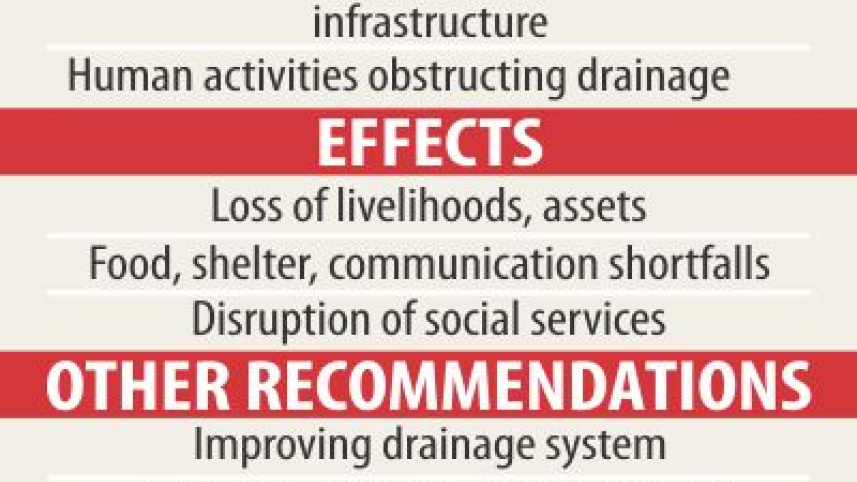
All the government bodies concerned and NGOs should work together in a coordinated approach to address the problem of waterlogging in the country's south-western region, discussants told a meeting yesterday.
Besides, the government's political will and engagement of the local community with the state's policy implementation process are very crucial to reach a solution, they viewed.
 For all latest news, follow The Daily Star's Google News channel.
 The "National Consultation Meeting on Waterlogging in South West Bangladesh" was organised by the Bangladesh chapter of Food and Agriculture Organization (FAO) in the capital's Bangabandhu International Conference Centre.
The Ministry of Agriculture, World Food Programme (WFP), United Nations Development Programme, UKAid and Humanitarian Aid and Civil Protection helped arrange the meeting.
Addressing as the chief guest, the prime minister's economic affairs adviser Mashiur Rahman said technical skills, administrative efficiency and political goodwill needs to come together to address the problem.
The Ganges barrage on the Padma river in Bangladesh will be constructed after completion of some technical studies that are being jointly conducted by experts of Bangladesh and India, he said.
State Minister for Public Administration Ismat Ara Sadique emphasised enhancing capacity and technical skills of government agencies.
Palli Karma-Sahayak Foundation Chairman Qazi Kholiquzzaman Ahmad said more comprehensive research was necessary to reveal accurate data to address the problem.
The FAO, in coordination with the Ministry of Agriculture, carried out a study at Khulna, Jessore and Satkhira districts between April and December, 2014.
It aimed at documenting the extent of areas affected by waterlogging, coping mechanisms, institutional responses and develop a possible roadmap for long-term solutions.
FAO Representative in Bangladesh Mike Robson yesterday shared the study's findings.
Agriculture Secretary Shyamal Kanti Ghosh chaired the meeting, participated by dozens of discussants including lawmakers, senior government officials, academicians and NGO representatives.
Comments