


In conversation with Abdullah Jaman, Founder and Principal of WIS and GIS

Abdullah Jaman is an author, a seasoned educator with over 20 years of experience, and a respected leader in education. He is the Founder and Principal of Wheaton International School (WIS) and Guidance International School (GIS) in Dhaka. Known for academic excellence and holistic development, his student-centred leadership emphasises innovation, technology integration, ethical values, and global practices, making a lasting impact on education in Bangladesh.
Campus sat down with Jaman to talk about his early influences, lifelong commitment to learning, and his vision for value-driven international education.

Childhood and early influences
"Growing up in a modest and disciplined household, my earliest lessons came not from textbooks, but from the character and values embodied by my parents," says Jaman. "My father was a firm believer in responsibility and integrity. He taught us that honesty is not merely a virtue; it is a lifelong commitment. My mother, on the other hand, nurtured compassion, spirituality, and emotional strength. Together, they created a home where faith and discipline shaped everyday life."
"Despite limited resources, education was always treated as the most powerful tool we possessed," Jaman continues. "My parents believed that knowledge shapes destiny, and that conviction guided every decision in our home."
These formative experiences shaped Jaman's discipline, his deep respect for learning, and ultimately, his lifelong passion for transforming education in Bangladesh.
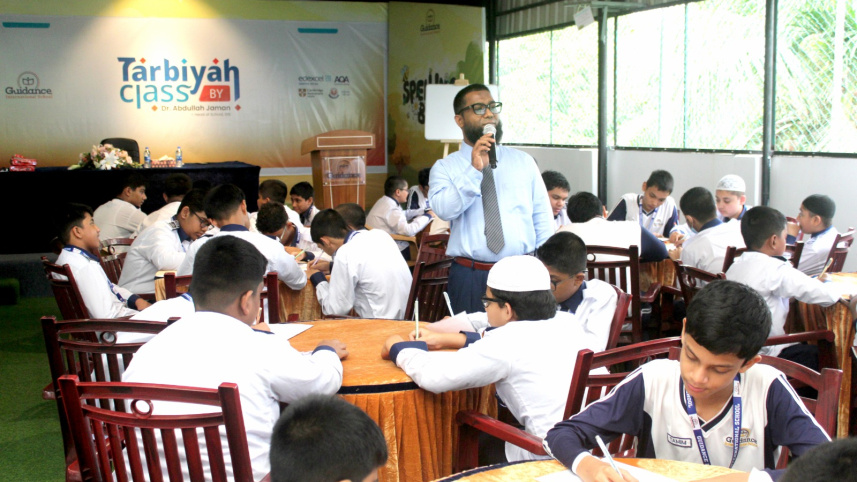
Formative years and education
Jaman's early schooling was typical of the Bangladeshi system. It was structured, disciplined, and exam-driven. While it taught him resilience, he often felt restricted by the lack of creativity and critical exploration in the curriculum. This changed when Jaman entered Dhaka University.
"At Dhaka University, my intellectual world expanded," says Jaman. "I learned to question, think critically, and appreciate academic rigour. University life introduced me to vibrant discussions, diverse perspectives, and the powerful role of education in shaping societies. At the same time, my connection to Islamic knowledge grew deeper. I realised that modern education alone cannot nurture a complete human being unless paired with moral and spiritual grounding."
This realisation formed the foundation of Jaman's belief that today's learners need a global and modern curriculum, as well as a strong Islamic worldview rooted in ethics, values, and identity.
A vision for integrated education
For Jaman, the idea of combining Islamic education with the Cambridge curriculum was not a sudden revelation. It began forming quietly during his early university years, driven by countless conversations with parents who felt torn between two options: choosing world-class academics or a strong Islamic identity for their children.
"I believed that this should never be a choice as both are essential," says Jaman. "This conviction led to the first integrated-school model I designed, a system where children could experience academic excellence while developing a strong moral and spiritual foundation."
"Over the years, this model expanded through different institutions, and now, that model is being implemented at Wheaton International School (WIS) and Guidance International School (GIS)," Jaman continues. "Today, the model is widely acknowledged across Bangladesh as a pioneering framework, one that has inspired many institutions to adopt similar approaches. It humbles me to know that what started as a personal conviction has become a movement shaping thousands of young minds."
Founding WIS and GIS
According to Jaman, establishing multiple schools has been one of the most challenging yet rewarding journeys of his life. His earliest initiatives served as testing grounds where he applied his ideas with courage, purpose, and strong conviction. These formative efforts enabled him to continuously refine and strengthen the integrated curriculum model. The establishment of WIS marked a significant turning point, as it delivered an international standard of education while remaining firmly anchored in core values. GIS, by contrast, stands as the culmination of Jaman's two decades of learning, experimentation, thoughtful refinement, and sustained educational leadership.
"The greatest challenges were ensuring teacher quality, building a relevant curriculum, and maintaining strong Islamic values without compromising academic excellence," says Jaman, reflecting on his experience of establishing multiple schools. "Yet, the milestones that sustained me were far greater — watching our students grow in confidence, character, and leadership, and seeing parents trust our mission wholeheartedly. These experiences reaffirmed that meaningful change in education requires vision, persistence, and unwavering belief in the potential of young people."
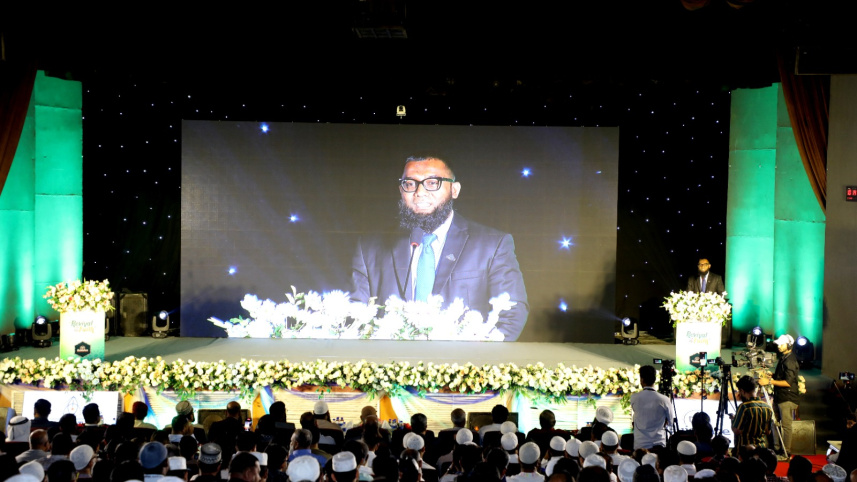
Academic pursuit and lifelong learning
 For all latest news, follow The Daily Star's Google News channel.
 Jaman firmly believes that an educator must be a lifelong learner, and his academic journey clearly reflects that philosophy. His studies at Dhaka University provided a solid intellectual foundation. His postgraduate degree in Aqidah from Al Madinah International University in Kuala Lumpur, Malaysia, further deepened his understanding of the Islamic intellectual tradition.
Returning to Dhaka University for his M Ed strengthened his expertise in curriculum assessment and school leadership. And now, Jaman's ongoing postgraduate studies at Cambridge University in the UK have completely transformed his understanding of educational measurement, assessment validity, and global educational standards.
Cambridge exposed Jaman to advanced frameworks, contemporary research, and world-leading experts, knowledge that he is already applying across his institutions. Jaman notes that continuous learning keeps him grounded and ensures that his leadership remains dynamic, informed, and globally aligned.
Reflecting on his experience as an author and thinker
"My journey as an author began when I identified significant gaps in the materials used globally in Islamic Studies for English-medium students," says Jaman. "Many textbooks were overly simplified, lacked authenticity, and, most importantly, were not developed following international curriculum standards or established curriculum-development models."
Noticing all this, Jaman wanted to develop study materials that were academically rigorous, theologically authentic, visually engaging, and pedagogically structured for modern learners.
"One of the most impactful dimensions of my work has been the development of comprehensive, research-based Islamic learning materials for students from playgroup to higher secondary levels," adds Jaman. "Over the years, I have authored and supervised multiple book series that address long-standing gaps in the global English-medium Islamic education landscape."
"The Islamic Studies Book Series was my first major project," Jaman continues. "It was born from the need for textbooks that are not only authentic but also age-appropriate, academically structured, and visually engaging. Each level of the series is designed following internationally recognised curriculum-development models, ensuring clear learning outcomes, vertical progression, and pedagogical coherence. These books integrate Quranic verses, authentic Hadiths, Seerah, Islamic manners, and historical lessons in a way that resonates with modern learners while maintaining complete theological integrity."
Alongside this, Jaman also developed the Arabic Language Learning Series, a structured programme that introduces Arabic not just as a language, but as a gateway to understanding the Quran. While most Arabic textbooks available for English-medium learners rely on rote memorisation, Jaman's series adopts a communicative approach, focusing on vocabulary development, sentence formation, comprehension skills, and functional usage.
The Aqidah Series is another effort Jaman is deeply proud of. Recognising the complexity of Islamic belief systems, he designed this series to present Aqidah concepts with clarity, authenticity, and intellectual depth. According to Jaman, this series will help students build a strong foundation in Islamic creed while nurturing critical thinking and moral consciousness.
"Together, these series form a complete ecosystem of Islamic learning materials, something I had always wished to see in the English-medium sector. Today, many schools across Bangladesh and abroad are using these books as standard references," says Jaman. "Their growing acceptance is an indication that parents and educators around the world are seeking content that is academically robust, spiritually grounded, and aligned with international curriculum standards."
Jaman's vision for transforming education in Bangladesh
Jaman's long-term vision is to help Bangladesh emerge as a global model of balanced, value-driven, and high-quality education. He wants to see a system where every child – regardless of socioeconomic background – receives education that builds intellect, identity, character, technological competence, and spiritual grounding.
"I want our children to grow up confident in their identity, competent in their skills, compassionate in their actions, and guided by a spirit of inclusivity that embraces diversity," Jaman says. "For Bangladesh to move forward, we need stronger teacher-training institutes, improved assessment systems, modernised curriculum frameworks, and a unified national vision for education. Through the schools I lead, the training programmes I develop, and the advisory work I do at home and abroad, I am committed to contributing to this transformation. Bangladesh has immense potential. All we need is strategic direction, collaboration, and an unwavering commitment to educational excellence."
Comments