Ramadan in student hostels

Every year, thousands of students leave their hometowns to pursue higher education in the country's bustling cities and university towns. For many, moving to a place like Dhaka means transitioning from the comfort of family life to the independence of rented messes or flats, and – often for the first time – preparing their own meals, including iftar.
The first day of Ramadan in a new place can feel quietly isolating – standing alone in an unfamiliar kitchen, staring at a bare counter, and knowing that if you don't chop the onions, no one will. There's no one calling you from the next room, no familiar odour drifting from a stove someone else is tending to. And yet, somewhere between the effort and the solitude, most find their footing, even if that first meal comes out slightly burnt or a bit undercooked.

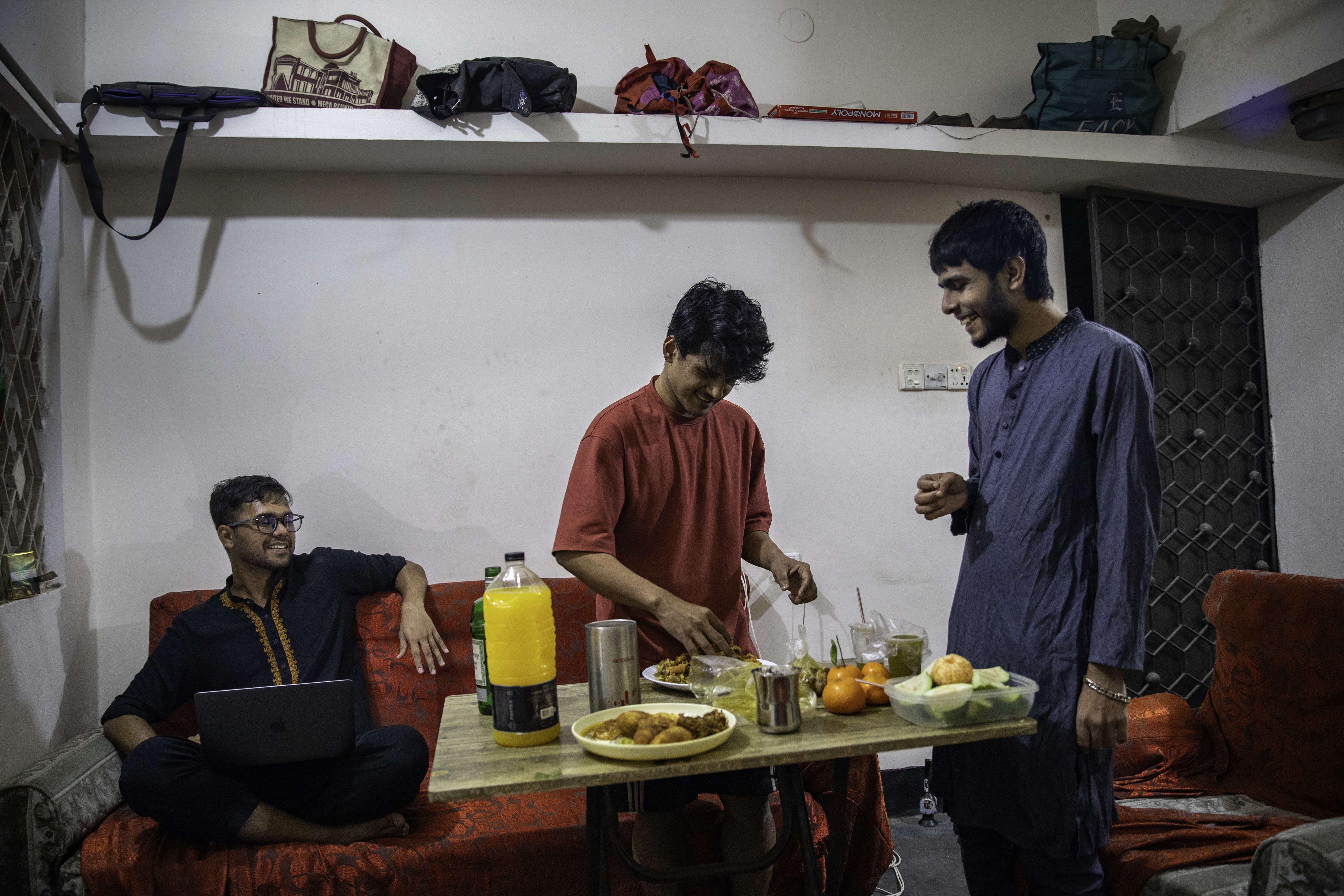
University life leaves little room for elaborate cooking, and for those juggling part-time jobs or tutoring commitments, it gets harder still. On the busiest days, students fill the gaps with items picked up from nearby stalls – whatever it takes to get everything on the table before the adhan.
For the uninitiated, the student messes or rented apartments are places of beautiful chaos. It is where you learn that time management, especially in Ramadan, is not just a skill but an elite sport. During Ramadan, the window between afternoon classes and Maghrib prayer is a frantic one – a stretch of time that never seems quite long enough, no matter how early you start.
For Nafis Ibn Obaid, a Biotechnology student at BRAC University, the greatest struggle is the high-stakes commute through the Rampura bottleneck. He jokes that he has mastered the acrobatic feat of peeling a banana while the university bus dances over potholes. This war against blandness is a universal theme in his mess life. “Sometimes the bus is our dining room,” Nafis shares. “You haven't truly experienced student life in Ramadan until you've broken your fast in the middle of traffic, borrowing water from a stranger.”
Many students living independently in rented apartments or messes have house helps to aid them with day-to-day chores, especially cooking. Over time, however, the house help’s menu begins to feel like a repetitive loop of institutional sustenance. In moments like these, creativity becomes the most valuable ingredient.
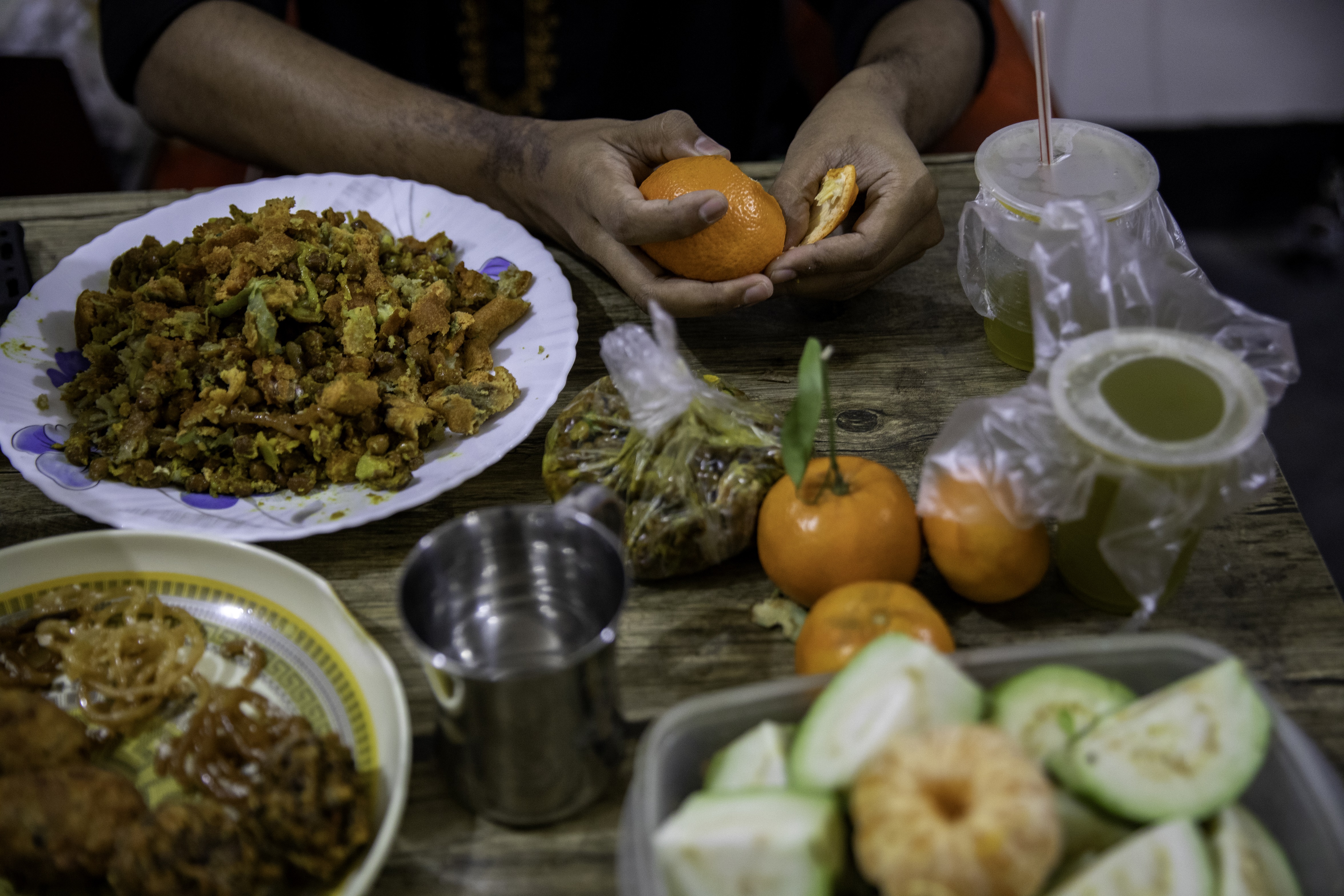
Sanjana Akter, a final-year student at Southeast University, residing with her six friends in a hostel at Tejgaon, has perfected a secret weapon to deal with her house help’s repetitive and uninspired meals: the humble instant noodle masala. "To make the food tasty, we use sachets of instant noodle masala in everything," says Sanjana. "We don't really cook much and usually start preparing iftar after coming back from university."
For Sanjana and her friends, their kitchen is not just a place to eat but also a hub where the day's stress is vented over a plate of iftar. It helps Sanjana turn simple, pre-prepared ingredients into a fun shared meal for everyone every day.
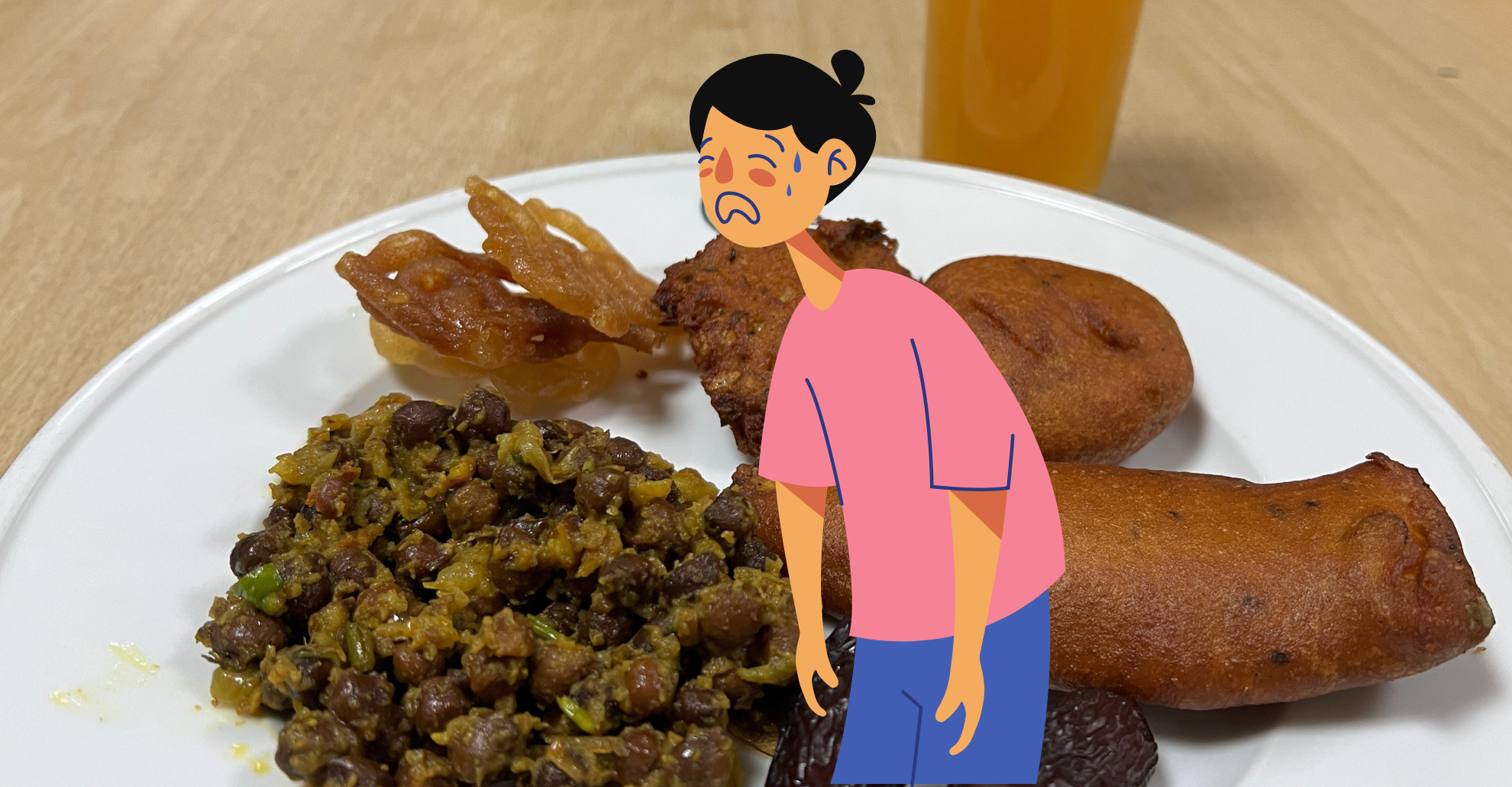
While some battle against their iftar’s monotony with spices and seasoning packets, others try to cut back on oil and choose healthier alternatives. Ahsan Habib Khan, a private university student in his final year, is one of them. Ahsan avoids the glorious, crunchy "oil bombs" most of us crave during iftar. “I try to finish my iftar with raw chickpeas and sour yoghurt as I prefer healthy food," he says.
Of course, like most young people living away from home, Ahsan, too, sometimes gives in to simple cravings and experiments with quick, comfort drinks. “One day, I made a concoction of lemon flavoured, powdered drink mix, and sugar together in a blender. It was very tasty,” he recalls, proving that even in a sodium-fortified apartment, one can still seek small moments of pleasure alongside healthier choices.
When living away from one’s family, one cannot ignore the emotional weight that sits at the edge of every mess table. There is always an empty chair there in our minds for our homes that we have left behind.
Kamal Ahmad, a final-year student of the Bangla department at Southeast University, talks about the homesickness that creeps in during the quiet moments before breaking the fast. “Eating alone feels very bad," Kamal says. "Having Iftar with those in the mess, however, helps a little in allowing you to forget that you are doing this without your family."
The communal plate remains the ultimate healer of FOMO—Fear Of Missing Out—for many students living in messes and dormitories. Mahmudul Hasan Sumon, a public university student residing in his university dormitory, firmly believes that the collective presence of friends makes even the most questionable food items feel like a feast.
“The food may be subpar, but the collective presence and sharing experience make the moment," says Sumon. “Having iftar with everyone is more like a shared cultural experience."
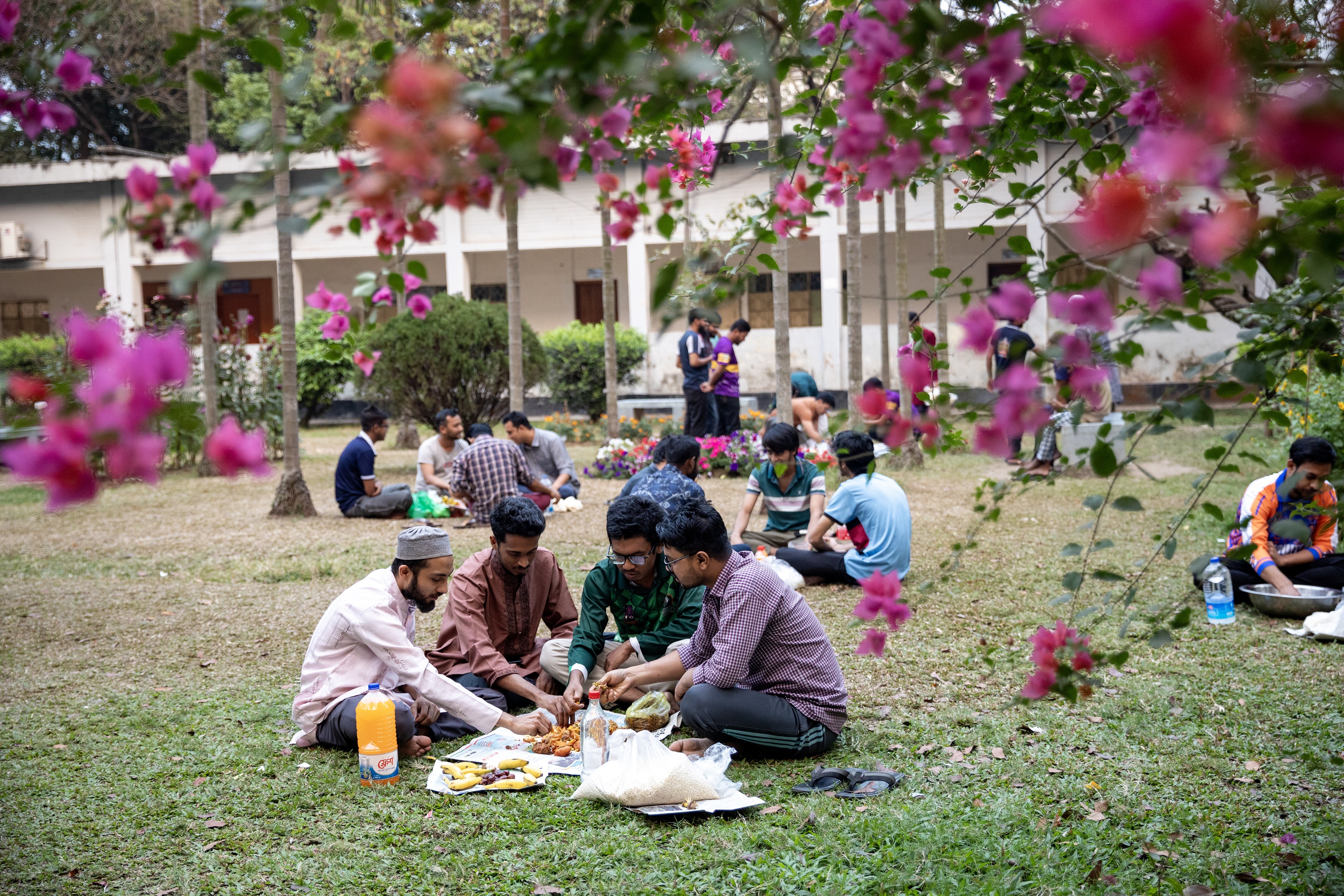
“Any food tastes better when shared together,” says M Farhan Ishmam, a fourth-year student of Dhaka University. “The best part of my fast is to prepare a big bowl of muri-makha and glasses of sharbat.”
Ishmam feels that being part of this chaos is better than having iftar alone. Of course, not every student can find comfort in the communal rush of a mess during iftar. Saiyara Rahman, a second-year student at Chittagong University, defined her experience by a different kind of quiet.
Saiyara lives with four other students in a small rented flat. The families of her roommates live in the city, nearby. Hence, they often visit their families during Ramadan, leaving Saiyara alone.
Elsewhere, Siyam*, a student in his last semester at North South University (NSU), says that though he doesn’t mind doing iftar alone, he struggles to communicate with his parents back home in Narayanganj. Siyam lives near his campus with three other flatmates. For the past four years or so, he has had to spend almost the entirety of Ramadan away from his family.
 For all latest news, follow The Daily Star's Google News channel.
 “Every time ammu calls, before or after iftar, she asks me about the food I am consuming,” he says. “No matter what I was having at the moment, I could always sense a worry in ammu’s tone. To her, nothing I consume is healthy or tasty in any way. All that worried my mother during those conversations was the fact that I wasn’t having any of her homemade meals or my abbu’s muri-makha for iftar.”
Living in a mess or hostel during Ramadan is a life lesson that no textbook can provide. It is a journey that starts with the sadness of missing home but quickly turns into a story of personal growth and deep friendship. While the food might sometimes be too oily or the kitchen too small, the memories made around those crowded tables are the ones that students carry with them long after they graduate. These years of "shared plates" teach us that home isn't just a place with a specific address. It is wherever you find people who will share their last date or their secret sachet of seasoning with you.
*Name has been changed upon request.
Tagabun Taharim Titun is a content executive at The Daily Star.

Books / Unwanted Revenge: Breaking the fantasy of retribution

Press Release / Stamford University Bangladesh launches Summer 2026 admission fair

Press Release / NSU hosts World Cup Quiz Competition 2026
Press Release / IUB launches supply chain management major with industry panel

Press Release / AIUB participated at QS Africa Forum 2026
Student groups hold symbolic coffin procession at DU for July Uprising justice

Opinion / The problem with how we write women
Prof Aynul Islam escorted off Jagannath University campus amid student protest

Skills / A guide to drafting memorials for moot court competitions