


Strong asset quality and a secure portfolio: Pubali Bank maintains NPL at 2.20%
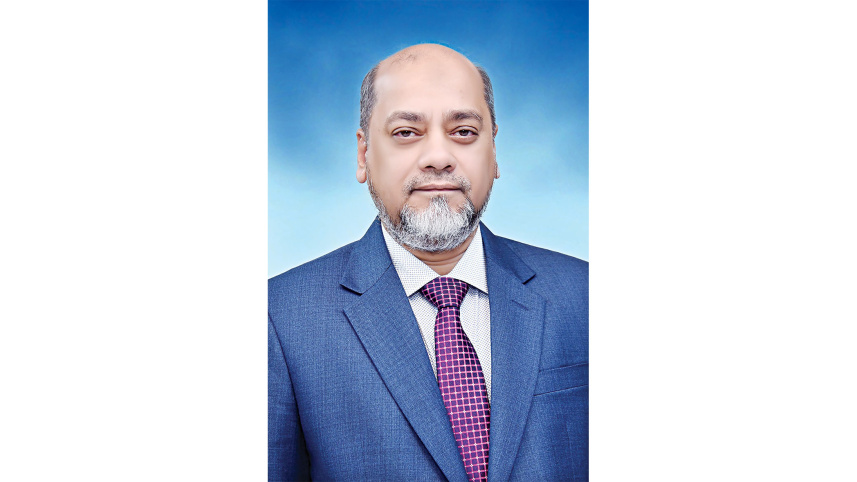
Despite a challenging global and domestic economic environment, Pubali Bank PLC delivered strong performance in 2025, driven by robust financial growth, sound asset quality, technology-driven services and greater financial inclusion.
Speaking at the bank’s 43rd annual general meeting (AGM), Managing Director and CEO Mohammad Ali highlighted its achievements, shareholder value creation and future strategic priorities, according to a press release issued by Pubali Bank PLC.

“Over the past three years, Pubali Bank has not only achieved significant business growth but also created substantial value for its shareholders,” Ali said.
He noted that the bank’s share price, which ranged between Tk 16 and Tk 20 in 2022, has risen to more than Tk 37. Through successive stock dividends, paid-up capital increased by around 56 percent, from nearly Tk 1,000 crore to Tk 1,560 crore.
“As a result, the market value of a long-term investor’s investment has increased more than threefold compared to 2022, underscoring the bank’s financial strength, sound governance, market confidence and sustainable growth,” he added.
Ali thanked shareholders, customers, employees, business partners, media representatives and board members for their continued support.
He said the bank has continued to create value despite economic headwinds through prudent risk management, strong governance and customer-centric innovation.
According to him, Pubali Bank has undertaken a long-term transformation programme focused on technology, digital banking and financial inclusion. By integrating its branch-based banking strengths with modern digital platforms, the bank is building a “Phygital Banking Ecosystem” that enables customers to access services securely and conveniently through their preferred channels.
The bank’s PI Digital Platform reached 528,276 active users by the end of 2025, with 18.6 million transactions completed during the year. Active users increased by 78 percent year-on-year, while transaction volume surged 115 percent, reflecting growing confidence in digital banking services.
Pubali Bank also expanded its digital payment infrastructure. The number of merchant POS terminals reached 25,525, while more than 145,000 Bangla QR codes were deployed nationwide, making cashless transactions more accessible for businesses and customers.
Its physical network remains a key pillar of this transformation. By the end of 2025, the bank operated 517 branches, 274 sub-branches, 22 Islamic Banking Windows and 901 ATM/CRM booths nationwide. Self-service banking and digital onboarding facilities further enhanced customer convenience and service delivery.
The bank maintained a strong financial position during the year. Total assets rose 20.25 percent to Tk 118,013 crore, while deposits reached Tk 89,519 crore and loans and advances increased to Tk 71,140 crore. Consolidated operating profit stood at Tk 2,907 crore and net profit reached Tk 1,079 crore.
Earnings per share (EPS) stood at Tk 8.30, while return on equity (ROE) and return on assets (ROA) were 15.51 percent and 1.00 percent respectively. The capital to risk-weighted assets ratio (CRAR) remained at a strong 15.34 percent, comfortably above the regulatory requirement.
In terms of asset quality, Pubali Bank continued to outperform the industry. Its non-performing loan (NPL) ratio stood at only 2.20 percent at the end of 2025, compared with the industry average of around 30.60 percent. The bank attributed the performance to prudent lending practices, data-driven monitoring and effective recovery mechanisms.
The bank also maintained a strong presence in foreign trade and remittance services. During the year, it handled export business worth Tk 38,664 crore and import business worth Tk 47,314 crore, while inward remittances rose to Tk 11,362 crore.
Alongside its digital transformation, Pubali Bank continued to advance its ESG and sustainability agenda. Nearly 30 percent of its loan portfolio qualified as sustainable finance by the end of 2025.
The bank expanded solar power use across 411 branches and 453 ATM/CRM booths, financed 37 LEED-certified factories, adopted IFRS sustainability standards and implemented a decarbonisation policy aligned with its Net-Zero 2050 vision.
Under its Strategic Plan 2026-2028, the bank plans to launch a year-long “Cashless Banking Campaign in 2026” and further expand financial inclusion through its branch network, digital platforms and Bangla QR infrastructure.
 For all latest news, follow The Daily Star's Google News channel.
Comments