


Bangladesh remains key sourcing market: H&M

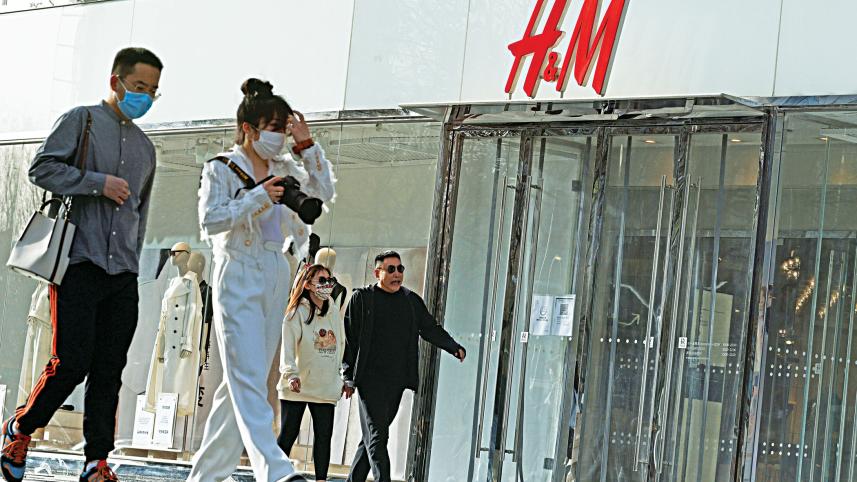
Swedish retail giant H&M has said Bangladesh remains “a very important sourcing market”, amid media reports suggesting it may reduce purchases from the country.
H&M is currently the largest garment buyer in Bangladesh, sourcing apparel from nearly 300 local factories worth about $5 billion a year.

When The Daily Star asked H&M’s media relations department whether the retailer has reduced, or plans to reduce, sourcing from Bangladesh, the company did not respond directly.
Instead, H&M said, “We cannot share production volumes or the share of orders per market, as this is commercially sensitive information.
“What we can share is that we have been sourcing from Bangladesh since the early 1980s, establishing relationships with strong manufacturing partners and building long-term partnerships through our local presence and on-the-ground teams. Bangladesh continues to be a very important sourcing market for us.”
On its website, H&M said it works with over 554 commercial product suppliers who manufacture products for its brands in more than 969 tier 1 factories across Europe, Asia, and North America. China and Bangladesh are its largest clothing production markets.
H&M has not made any official statement about reducing its sourcing from Bangladesh, said Mahmud Hasan Khan, president of the Bangladesh Garment Manufacturers and Exporters Association (BGMEA).
“However, decisions to increase or reduce work orders are part of a company’s sourcing strategy and planning,” he added.
Mohammad Hatem, president of the Bangladesh Knitwear Manufacturers and Exporters Association (BKMEA), said he held an informal meeting with H&M officials in Dhaka, where they said that work orders in Bangladesh were lower this year compared to last year.
However, he said the officials did not specify the extent of the decline.
“This is also true that, due to the volatile global situation, overall demand in the apparel supply chain has fallen, and this may be a major reason for lower order volumes from major retailers and brands like H&M this year,” Hatem said.
He also said that during the meeting, H&M officials referred to India’s free trade agreement with the European Union and Bangladesh’s expected loss of preferential market access to the EU and other major markets after it graduates from least developed country (LDC) status to a developing nation in November this year.
Hatem added that India is offering several incentives to its textile and garment sector, including support for land, factory setup, bank loans, and worker benefits, to make it more competitive in the global apparel trade.
The BGMEA also held an emergency board meeting on Monday and identified several reasons behind the fall in garment exports over the past year, including global economic volatility, US reciprocal tariffs, the energy crisis, high bank interest rates, poor port operations and issues linked to LDC graduation.
Over the past year, weak global demand has slowed garment orders worldwide, as Western retailers and brands continue to hold unsold inventory, affecting sourcing decisions, said Mahmud Hasan Khan.
Apart from falling demand, US reciprocal tariffs have also hurt exports, as buyers remained uncertain about the final tariff rate after repeated changes in US President Trump’s tariff policy, he added.
The US-Israel war on Iran also disrupted shipments from Bangladesh, leading to rerouting of goods, higher airfreight costs, longer lead times and fewer buyer visits due to the disruption.
Different studies suggest Bangladesh could lose up to $17.5 billion in exports, particularly garments, annually due to LDC graduation, as around 73 percent of the country’s exports are LDC-related.
 For all latest news, follow The Daily Star's Google News channel.
Comments