


US moving from ineffective aid to fairer trade with Bangladesh: US envoy
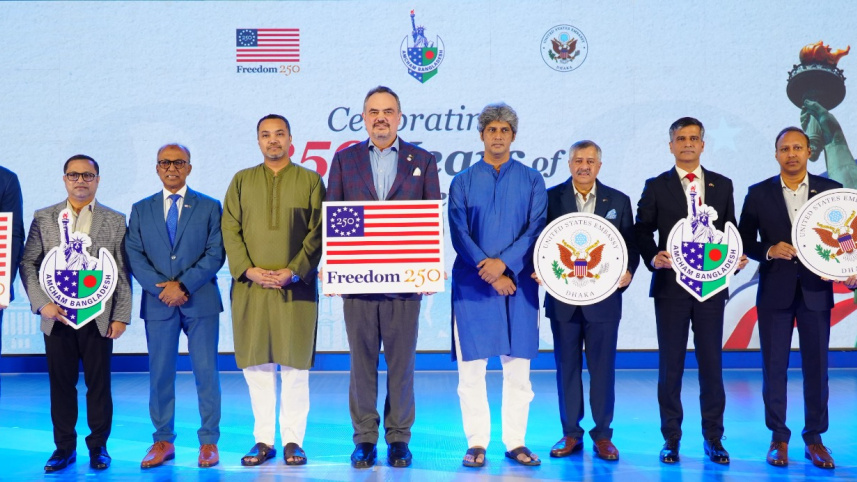
Washington is seeking to move away from unilateral trade preferences and ineffective aid toward a fairer and more reciprocal economic relationship with Dhaka centred on trade, investment and long-term cooperation, US Ambassador Brent Christensen said today.
"As I've said before, America First does not mean America alone," he said, adding that the US values partnerships that advance mutual interests and benefits. “We want a genuine partnership, one that creates opportunities for Americans and Bangladeshis alike.”

Bangladesh has the potential to become an increasingly important economic hub due to its dynamic private sector and young workforce, he said at an event marking 250 years of American independence, jointly organised by the US embassy and the American Chamber of Commerce in Bangladesh (AmCham) at Sheraton Dhaka.
He described the US-Bangladesh agreement on reciprocal trade and investment as an important step towards expanding economic cooperation, boosting investment, creating jobs and facilitating skills transfer.
The ambassador said Bangladesh's economic potential can be further unlocked through reducing bureaucracy, tackling corruption, encouraging competition and creating a more business-friendly environment.
He also emphasised growing cooperation in energy and said there is significant potential for collaboration in technology, the digital economy, healthcare, defence, security and investment.
Mahdi Amin, adviser to Prime Minister Tarique Rahman, said the BNP-led government is committed to creating a more attractive environment for foreign direct investment (FDI), pledging policy support, deregulation, and a level playing field for international investors.
Foreign investment, Amin said, plays a critical role in generating employment, boosting revenue collection and accelerating growth through technology transfer and innovation.
The adviser cited Bangladesh's large youth population and expanding domestic market as key draws for investors, and pointed to profit repatriation, tax incentives, economic zones and high-tech parks as measures the "pro-business" administration has taken to attract capital.
He called for stronger Bangladesh-US trade and investment ties and urged more American companies to explore opportunities in the country.
Syed Mohammad Kamal, AmCham president, said the chamber has contributed significantly to Bangladesh's economic growth over the past three decades, supporting investment and knowledge transfer in sectors including telecommunications, the digital economy, garments, medical equipment and aviation.
"AmCham has always tried to be the first point of contact for US investment coming to Bangladesh, and we will continue doing that," he said, adding that the inclusion of the embassy's commercial adviser on AmCham's executive committee would help generate new initiatives to expand business engagement.
Kamal said the chamber remains committed to creating a conducive environment for investment and facilitating stronger connections between US businesses and Bangladesh's private sector.
Muhammad Ala Uddin Ahmad, vice-president of the AmCham, said the chamber would continue to serve as a bridge between the two countries while promoting a competitive and future-ready Bangladesh.
As the US marks the 250th anniversary of its independence, he said, both nations should look ahead with confidence to a new chapter of partnership, friendship, and shared success.
 For all latest news, follow The Daily Star's Google News channel.
Comments