


The new gold of Sundarbans coast

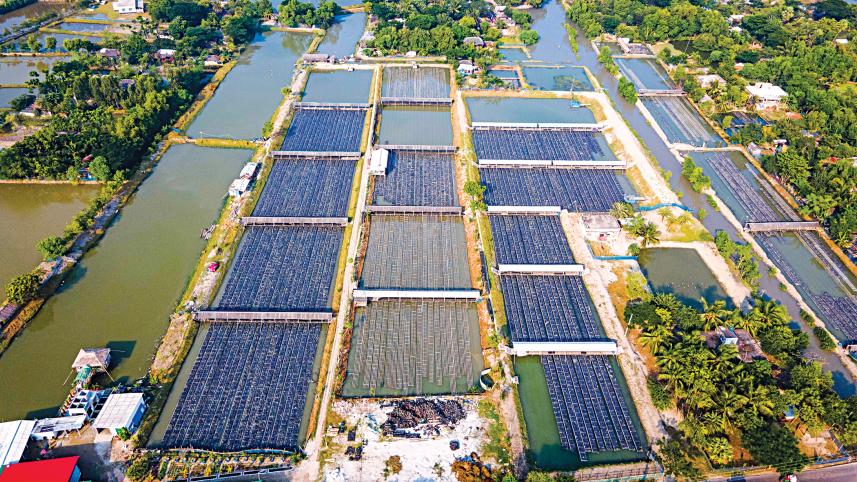
For generations, coastal families living near the Sundarbans have depended on shrimp farming, fishing, timber cutting, and honey collection to survive. Work has always been dangerous. People risk attacks by tigers and pirates, face floods and storms, and must follow strict forest rules. Seasonal fishing bans often leave families with no income for months, making daily survival difficult.
But over the past decade, a new livelihood - soft-shell crab farming - has brought new hope to these communities. The intensive, export-oriented form of aquaculture has expanded rapidly along the south-western coast, offering a steadier income than traditional fishing or shrimp cultivation.

In Satkhira district, particularly in Shyamnagar upazila, the industry has grown into a major source of employment and foreign exchange. It has also created a new set of environmental and regulatory challenges that now threaten its long-term sustainability.
HOW SOFT-SHELL CRAB FARMING WORKS
Up until a decade ago, black tiger shrimp (bagda) - once known as “white gold” - dominated coastal aquaculture. That boom has faded. Disease outbreaks, repeated natural disasters, falling international demand and volatile prices have eroded profitability. Many farmers have shifted to crabs, often farming them alongside shrimp in the same brackish-water ponds.
Crab farming requires less land, involves lower production risks and delivers quicker returns.
“Exporting naturally collected crabs is transforming lives here. It is creating small entrepreneurs and generating employment for many,” said Rajib Joyaddar, owner of Rohan Agro Crab Fisheries in Shyamnagar.
Joyaddar’s farm produces roughly 9,000 to 10,000 kilogrammes of crabs each month. The work is still vulnerable to storms and saline intrusion, but income is more predictable than before.
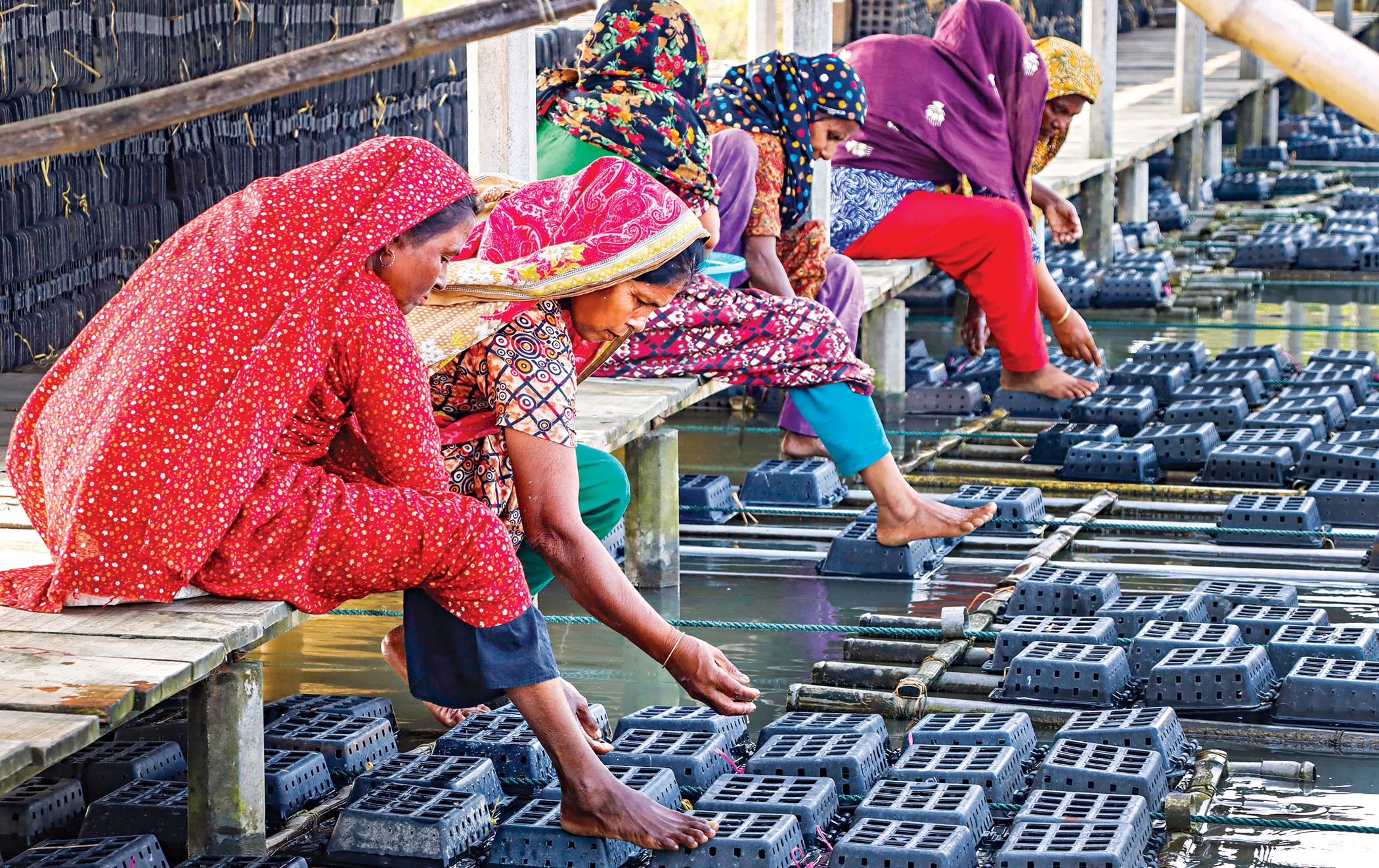
Women at a Shyamnagar soft-shell crab farm carefully tend individual crabs in floating cages, managing water and feeding to ensure healthy moulting, forming a vital part of the workforce. The photo was taken recently.
Soft-shell crab farming is highly specialised. Crabs are harvested during a brief period immediately after moulting, when their hard exoskeleton has not yet reformed. That window lasts only a few hours.
Farmers collect crab seed, mostly juveniles or sub-adults, from rivers, canals and mangrove creeks around the Sundarbans. Hatchery production remains negligible, forcing the industry to rely on wild stocks. Sub-adult crabs are preferred because they moult faster and survive better in captivity.
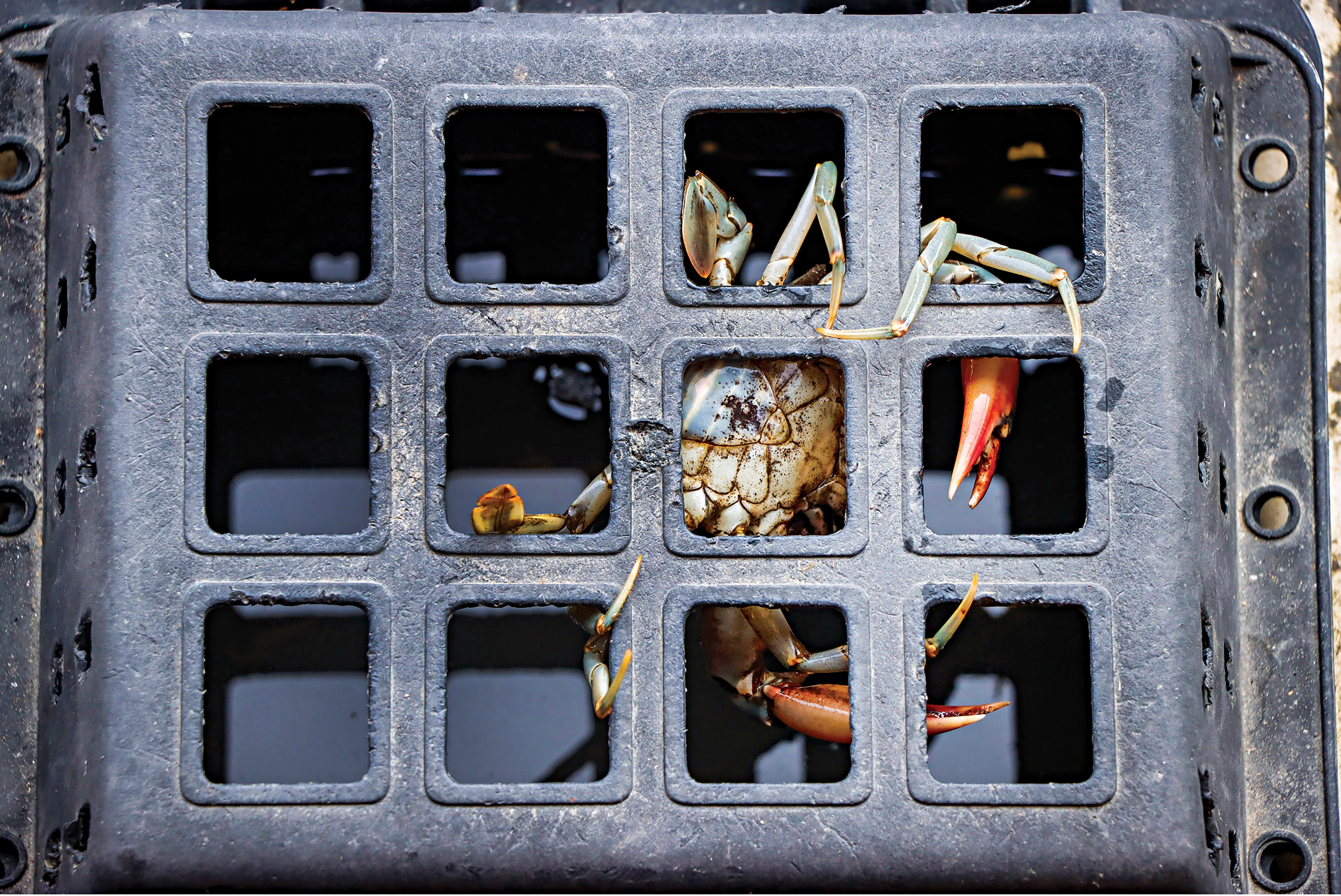
Each crab is kept separately in a small plastic box or cage suspended in shallow brackish water. Farmers carefully control salinity, water depth and cleanliness to reduce stress and prevent cannibalism. Crabs are fed small quantities of trash fish or snails every one or two days. Any delay in moulting, often caused by poor water quality, can result in death or loss of value.
When moulting begins, the clock starts. Crabs must be collected immediately, washed and placed in clean or chilled water before the shell hardens again. They are then graded, frozen or processed for export.
An alternative system, crab fattening, has also expanded. Hard-shell crabs bought from local markets are kept in cages for about three weeks, during which they can double in weight.
This method is cheaper, faster and less prone to disease, making it increasingly popular.
DOMINANCE AND SCARCITY OF ROCK CRABS
Bangladesh has around 15 crab species across freshwater and saline ecosystems, but commercial farming relies almost entirely on the rock crab. It moults up to 16 times during its life and remains soft for longer than most species, making it commercially viable.
Global demand for soft-shell crabs has grown steadily, particularly in Europe and North America. Supply has not kept pace. Crab seed shortages have become the industry’s central constraint.
Crab collection from the Sunderbans remains halted for about half a year due to seasonal bans imposed for conservation. High larval mortality further reduces availability. As a result, seed prices have risen sharply.
Farmers report paying three to four times more than they did just a few years ago, squeezing margins even as export prices fluctuate amid a global economic slowdown.
 For all latest news, follow The Daily Star's Google News channel.
 They say it is vital to reduce dependence on the Sundarbans by developing alternative, low-cost seed supply systems and ensuring fair prices.
RISE OF AN INDUSTRY
Commercial soft-shell crab farming began along Bangladesh’s coast in 2014. Early growth was slow, constrained by limited technical knowledge and access to capital.
Non-governmental organisations later provided training and small-scale financial support, accelerating expansion.
Today, at least 30,000 people depend directly on crab farming in Satkhira. Shyamnagar has emerged as the national hub. The number of commercial enclosures there has risen from just 10 in 2014 to about 870 today, spread across roughly 220 hectares.
Villages such as Datinakhali, Arpangasia, Burigoalini and Munshiganj are now lined with floating plastic cages.
The labour demand is substantial. Women make up a large share of the workforce, particularly in harvesting, cleaning and processing. Many young people, previously unemployed, have invested small amounts of capital and entered the sector.
Biswanath Mondol, who runs Bhai Bhai Agro Crab Fisheries near the Sundarbans, started soft-shell crab farming in 2017 on 20 bighas of land. He now operates about 55,000 cages. “Everything is manageable,” he said, “except the shortage of crab seed.”
He explained that crabs weighing about 100 grams are collected locally and fattened for 18 to 20 days using small pieces of tilapia fish. “After moulting, when each crab reaches about 150 grams, they are sold to nearby exporter Farid Nine Star Agro BD Limited,” he added.
His farm employs about 25 full-time workers who check the cages six times a day. “Preparing 1,000 boxes requires an investment of around Tk 2 lakh for pond excavation, lime, boxes, pipes, ropes, and bamboo.”
He added that crabs weighing 51 grams to 79 grams sell for Tk 800 per kg, while crabs weighing 91 grams to 150 grams sell for Tk 1,300 per kg.
“Tilapia is the sole feed. We buy it at Tk 80 to Tk 90 per kg, cut it into small pieces, and feed the crabs before 2 pm, three days a week,” he said.
Farmer Abdullah Al Kayum Abu from the same area pointed to rising seed costs as a major problem. “Earlier, seeds cost Tk 100 per kg. Now it has increased to Tk 300-400,” he said.
He explained the soft-shell process in simple terms. “Hard-shell crabs are prepared by cutting their limbs and placing them in saline water. Within three hours, they moult and become soft-shell crabs. If they are not collected within that window, they harden again,” he said.
“Hard-shell crabs sell for Tk 250 to Tk 350 per kg, while soft-shell crabs fetch Tk 800 to Tk 1,000 per kg,” he added.
PROCESSING AND EXPORTS
After harvesting, crabs are supplied to private processing plants clustered in Shyamnagar. Six factories operate in Burigoalini union alone. Crabs are cleaned using chlorine-treated water and oxygen systems, processed to international standards and stored under refrigeration.
Suzit Kumar Mondal, a farmer from Harinagar village in Munshiganj union, said, “During the rainy months, we can harvest 40 kg to 50 kg of soft-shell crabs daily. Production drops noticeably in winter.”
The Satkhira Fisheries Office reported crab farming on 420 hectares in Shyamnagar, Kaliganj, and Assasuni, with a production target of 3,800 tonnes.
According to the Shyamnagar Upazila Fisheries Office, crab farming operates in 1,195 enclosures in the upazila. Soft-shell crab farming alone covers 870 enclosures across 220 hectares. Last year, total production reached 1,680 tonnes.
Md Touhid Hasan, senior upazila fisheries officer, said soft-shell crab farming has “huge commercial potential” and is unique to Satkhira, with Shyamnagar contributing about 90 percent of national production.
Datnakhali-based Farid Nine Star Agro BD Limited, one of the largest exporters, has shipped soft-shell crabs to Europe and the United States since 2015. The company exports 300 to 350 tonnes a year.
“The sector has immense potential and could contribute significantly to the national economy with government support and a reliable seed supply,” Amir Hossain, manager of the company, said.
Official data underscores the sector’s growth. In the fiscal year 2019–20 (FY20), Satkhira exported 567 tonnes of crab worth $6.7 million. Exports peaked at over 800 tonnes in FY22 before falling to 622 tonnes worth $8.7 million the next year amid global market uncertainty.
“After shrimp, crabs are our second-largest export product,” said GM Salim, Satkhira’s district fisheries officer. “Soft-shell crabs have strong international demand. With structured support from government, NGOs and banks, the sector could grow much further.”
SUNDARBANS’ ECOSYSTEM PAYS THE PRICE
That growth comes with risks. Nearly all crab seeds still come from the Sundarbans, placing increasing pressure on the mangrove ecosystem.
Gouranga Nandy, chairperson of the Centre for Environment and Participatory Research, warned that unplanned crab harvesting is disrupting the forest’s natural balance.
Crabs play a critical role in mangrove ecology: they decompose leaf litter, aerate soil through burrowing and help circulate nutrients essential for forest regeneration.
“Large-scale removal of crabs weakens soil structure and reduces mangrove productivity,” he said. “Crabs are ecosystem engineers. Their decline directly affects biodiversity and the resilience of the Sundarbans.”
The impact extends up the food chain. “Fewer crabs mean less food for fish, birds and reptiles. The harvesting of egg-bearing females during breeding seasons accelerates population decline.”
Destructive collection methods also damage mangrove roots and riverbanks, increasing erosion and weakening natural defences against cyclones and climate change, he added.
Comments