


FY27 budget abandons contractionary frame
The proposed national budget for fiscal year 2026-27 signals an important shift in the government’s macroeconomic strategy. The fiscal vision embodied in the budget appears to have moved away from the contractionary frame that shaped policy over the past two years and towards a more expansionary architecture aimed at reviving growth.
However, this change in strategy must be viewed with caution. Bangladesh’s current macroeconomic conditions remain fragile. Inflation is still close to 10 percent, export growth remains weak, and global political and economic uncertainty persists. The banking sector is under severe stress, non-performing loans are at alarming levels, and the fiscal position is constrained by a tax-to-GDP ratio of barely 7 percent.
 For all latest news, follow The Daily Star's Google News channel.
 In such an environment, a decisive shift towards expansionary fiscal and monetary policy can carry significant risks. Higher public spending, if not backed by stronger revenue mobilisation and productivity gains, may intensify inflationary pressures. It can also create renewed pressure on the exchange rate by widening import demand and weakening confidence in the external account. At the same time, greater reliance on borrowing to finance expansionary commitments could further increase the debt burden on the treasury, leaving less fiscal space for future development and social protection needs.
The concern, therefore, is not with the government’s ambition itself but with the policy route chosen to achieve it. If the budget seeks to accelerate growth mainly through demand-side stimulus, it risks undermining the macroeconomic stability that has been painstakingly restored over the past two years.
A more prudent approach would be to anchor the budget in productivity-enhancing reforms, including deregulation, improvements to the investment climate, banking sector repair, reform and possible privatisation of state-owned enterprises, and critical investment in power, energy and logistics.
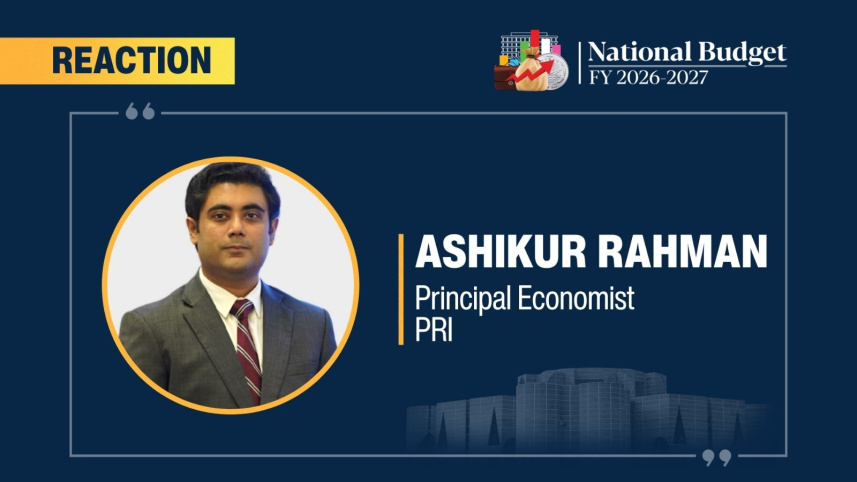
The writer is the principal economist at the Policy Research Institute of Bangladesh (PRI).
Comments