


Exports demand-driven, no overcapacity
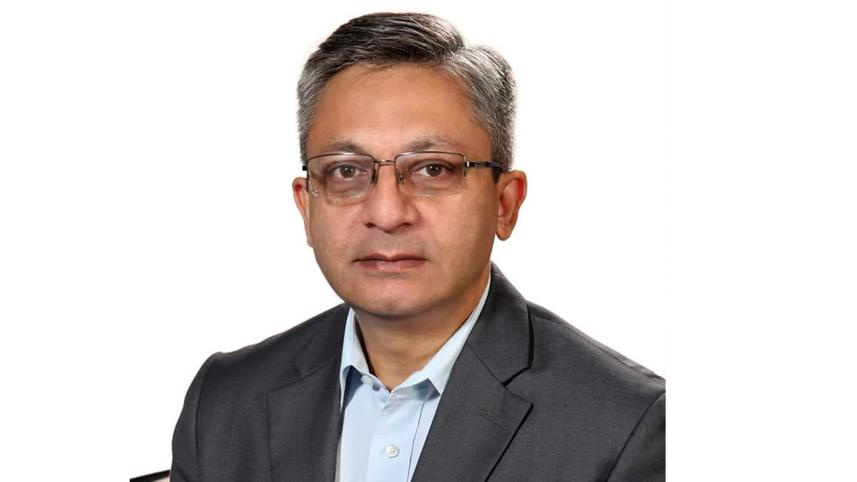
Bangladesh’s exports are order-based and free of overcapacity, Commerce Minister Khandakar Abdul Muktadir said yesterday amid an ongoing US investigation into forced labour and surplus production across 60 countries, including Bangladesh.
Speaking at a luncheon meeting on US-Bangladesh partnership hosted by the American Chamber of Commerce (AmCham) at the Sheraton in Dhaka, he also said Bangladesh has made substantial progress regarding labour rights.

The minister said Bangladesh’s exports are driven by demand. Particularly, the garment industry produces strictly against international orders. “This is indicative of global demand, rather than excess capacity.”
He pointed out that many factories are currently running below capacity due to energy and infrastructure constraints.
On forced labour, the minister mentioned that Bangladesh has enacted reforms in workplace safety and labour rights in partnership with the International Labour Organization (ILO) and other partners, establishing one of the most rigorously regulated and secure garment sectors in the world.
Stating that Bangladesh is committed to maintaining international labour standards, he said the government believes that the most constructive course of action to that end is continuing engagement and collaboration.
On partnership with the US, the minister said the government is confident that the bilateral relationship will continue to grow through trade, increased investment, technology collaboration, and continued dialogue.
He said the government is diversifying its export base by incorporating sectors such as pharmaceuticals, leather, agro-products, and light engineering, in addition to a booming ICT sector.
The minister stated that improving market access is imperative as the country is set to graduate from the least developed country status. “We look forward to continued US assistance to guarantee a seamless transition and maintain our global competitiveness.”
He noted that although Bangladesh has established robust manufacturing capabilities and exports pharmaceuticals to more than 150 countries, the entry into the US market is still restricted by the intricate, expensive, and time-consuming regulatory processes.
“We are of the opinion that there is potential to improve the coordination between pertinent authorities, expedite the approval process, and simplify procedures,” he said.
Also speaking at the event, AmCham President Syed Ershad Ahmed said in today’s shifting global economic environment, the Bangladesh–US partnership remains vital for both growth and resilience.
The partnership plays a strategic role in sustaining export competitiveness, ensuring essential imports, and strengthening broader economic and industrial development, he added.
Bangladesh exported roughly $9.5 billion in goods to the US in 2025, with the garment sector alone accounting for $8.2 billion, capturing over 10 percent of the US apparel market, he said.
During the same period, the country imported about $2.3 billion from the US, primarily cotton and agricultural products.
Muktadir, meanwhile, stated that US foreign direct investment in Bangladesh rose from $193 million in fiscal year 2019-20 (FY20) to $426 million in FY22, before falling sharply to $89 million in FY24 and partially recovering to $132 million in FY25.
On a separate matter, he informed that the government may recruit foreign companies for loading and unloading at the Chattogram port to increase efficiency.
The minister also said for easing the business, the government will launch provisional permission for launching a business. Currently, it takes many months and more than 25 signatures to obtain the permission for the business entrepreneurs to start a business in Bangladesh.
Once an entrepreneur starts with the provisional permission, he can manage the original permission gradually in one to two months, he added.
 For all latest news, follow The Daily Star's Google News channel.
Comments