


30pc of expected skills unavailable
Bangladesh's labour market overall lacks 30 per cent of skills expected by employers and the gap is increasing with technological advancements, according to a survey by the Bangladesh Institute of Development Studies (BIDS).
The lacking is higher for professionals and senior-level technical persons, suggesting that technologically sophisticated industries gradually need to hold trainings, it revealed.

Another finding of the study was that female workers are more proficient than their male counterparts in female dominant industries, such as garment manufacturing.
The BIDS was commissioned by the Skills for Employment Investment Program (SEIP), a project of the finance ministry, to conduct the labour market study on skills demand, supply and mismatch.
The BIDS produced research reports on 10 sectors involving 23 economists, 1,138 enterprises and 7,018 workers.
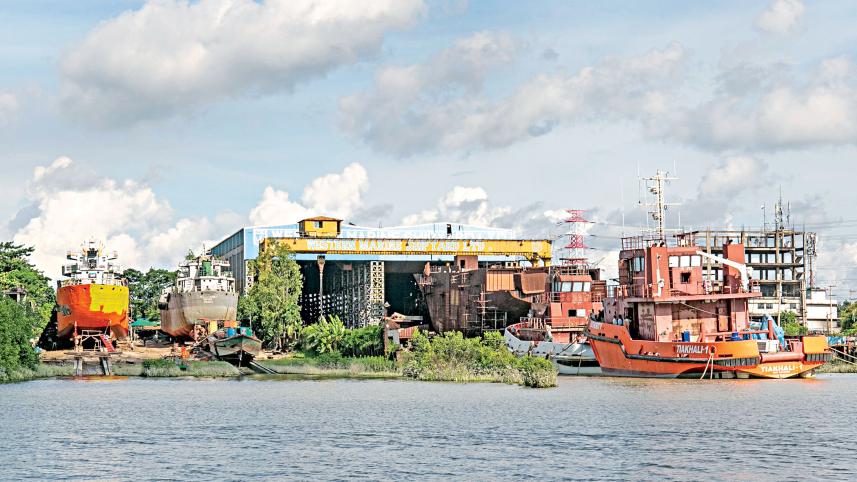
The lack of skills is intense for sectors such as information and communication technology and shipbuilding, said Kazi Iqbal, senior research fellow at the BIDS, while presenting the findings at Lakeshore Hotel in Dhaka yesterday.
It is moderate for agro-processing and garment manufacturing and low for construction, leather and light engineering, he said.
The study also found that in case of skills shortages, white collar jobs, such as that of managers and professionals, are harder to fill.
For blue-collar jobs, most employers do not lay emphasis on educational qualifications or field of study because associated skills can be learned through doing, the study found.
In general, a low amount of training is held and none are arranged by employers, it said. Only 8.28 per cent of the surveyed employees received training in their career.
However, training incidence is high in the construction sector, taking place in around 60 per cent of firms.
"Because it's a low hanging fruit. Since it's easy to train construction workers, all government, private sector, NGOs could be providing training here," said Iqbal, adding that coordination was also needed.
Evidence from service sectors like tourism and hotel industry suggests that soft skills can be taught, so should be a part of trainings, the study said.
Iqbal said massive investments in skills development was required to sustain growth increases.
Binayak Sen, director general of the BID, said the country's labour force was now equipped with moderate skills.
"Despite that, we need to try to achieve more sophisticated skills," he added.
The inflow of foreign direct investment (FDI) is very low and one of the main reasons could be a lack of skills of a very high standard and use of cutting-edge technology, he said.
He said 10 years ago economists had stated that skills were not constraints to economic growth acceleration because at that time Bangladesh had enough scope to grow using low skills in agriculture, garment manufacturing and manual labour abroad.
But in 2022, skills of a very high degree have become necessary for economic growth in the next decade, he added.
Uzma Chowdhury, director at Pran-RFL Group, said, "We must give the trainee a clear understanding of what benefits they will get with this training. Besides, it's also important to train the trainer first."
 For all latest news, follow The Daily Star's Google News channel.
 "If we can't develop trainers properly, the quality of training will remain below standard," she added.
She said the industries have to recruit trainees as an apprentice in accordance with the labour law and many of them switch jobs after a few days of training, at times on not even attaining lessons adequately.
"They jump mainly for a better salary and they have to do it for their livelihood. But, as a private sector, it's not cost-effective for us as we spend money to train them," he added.
The quality of education was one of the most important aspects for human resources and the quality should be enhanced at primary and tertiary education, said Sayema Haque Bidisha, a professor of economics at the University of Dhaka.
"We have to also ensure coordination between educational qualification and supply and demand in the labour market," she said.
"Our labour force is moving ahead to a mid-skill force from a low-skilled one," she said.
"But we are lagging in the high skills and training is important to make a high skilled labor force," she added.
Planning Minister MA Mannan also spoke.
Comments