


Jamaat calls FY27 budget ‘anti-people’, stages protest marches in Dhaka

Bangladesh Jamaat-e-Islami has called the proposed budget for the 2026-27 fiscal year "anti-people", with the party’s Dhaka North and South units bringing out separate protest marches in the capital today.
The Dhaka North unit organised its march from in front of Uttar Badda Kamil Madrasa, while the Dhaka South unit brought out a procession from the north gate of Baitul Mukarram National Mosque.

Addressing the rally at the mosque's north gate, Jamaat Assistant Secretary General Hamidur Rahman Azad said the proposed budget did not reflect the spirit of the July movement and was merely a continuation of previous conventional economic plans.
He alleged that the budget had been designed primarily to protect the interests of the wealthy and would increase the tax burden on ordinary people.
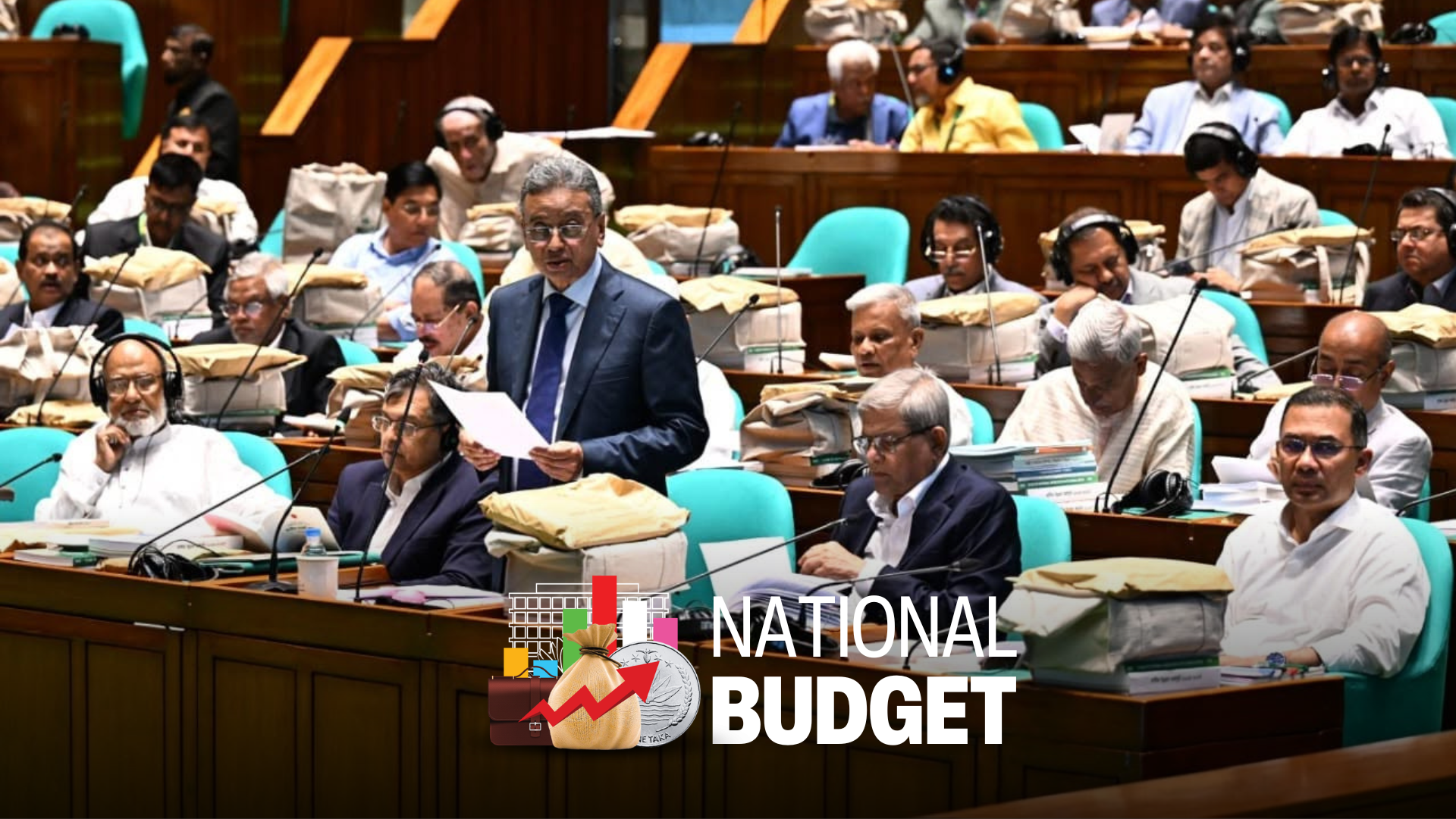
Azad also pointed to what he described as a significant mismatch between the budget's expenditure and revenue projections, arguing that the ambitious revenue target was unrealistic.
He criticised the government's heavy reliance on the National Board of Revenue (NBR) for revenue generation, saying it would create additional pressure.
Claiming that nearly 70 percent of the budget would be spent on operational expenditure, Azad described the structure as ineffective. Such a spending pattern, he said, would reduce development expenditure and further fuel inflationary pressure.
Referring to recent increases in energy prices, he said higher gas and fuel costs would raise the cost of living for ordinary people. He also described the government's employment generation pledges as "unrealistic".
Mentioning Jamaat's alternative budget proposal, Azad said the party had suggested a people-oriented budget with expenditure reduced by around Tk 1 lakh crore, but the government had not taken the proposal into consideration.
He reiterated the party's proposals to raise the tax-free income threshold and revise the fiscal year's schedule.
Azad said street protests would continue unless transparency and accountability were ensured and public interests were adequately addressed.
 For all latest news, follow The Daily Star's Google News channel.
Comments