


Health gets biggest boost

The health sector received the biggest boost in the proposed national budget for the next fiscal year, with a sharp increase in allocation and a package of tax concessions aimed at lowering healthcare costs for ordinary people.
Finance Minister Amir Khosru Mahmud Chowdhury proposed raising the health ministry’s allocation to Tk 62,852 crore, up 50 percent from this year’s original budget and 124 percent from the revised budget.

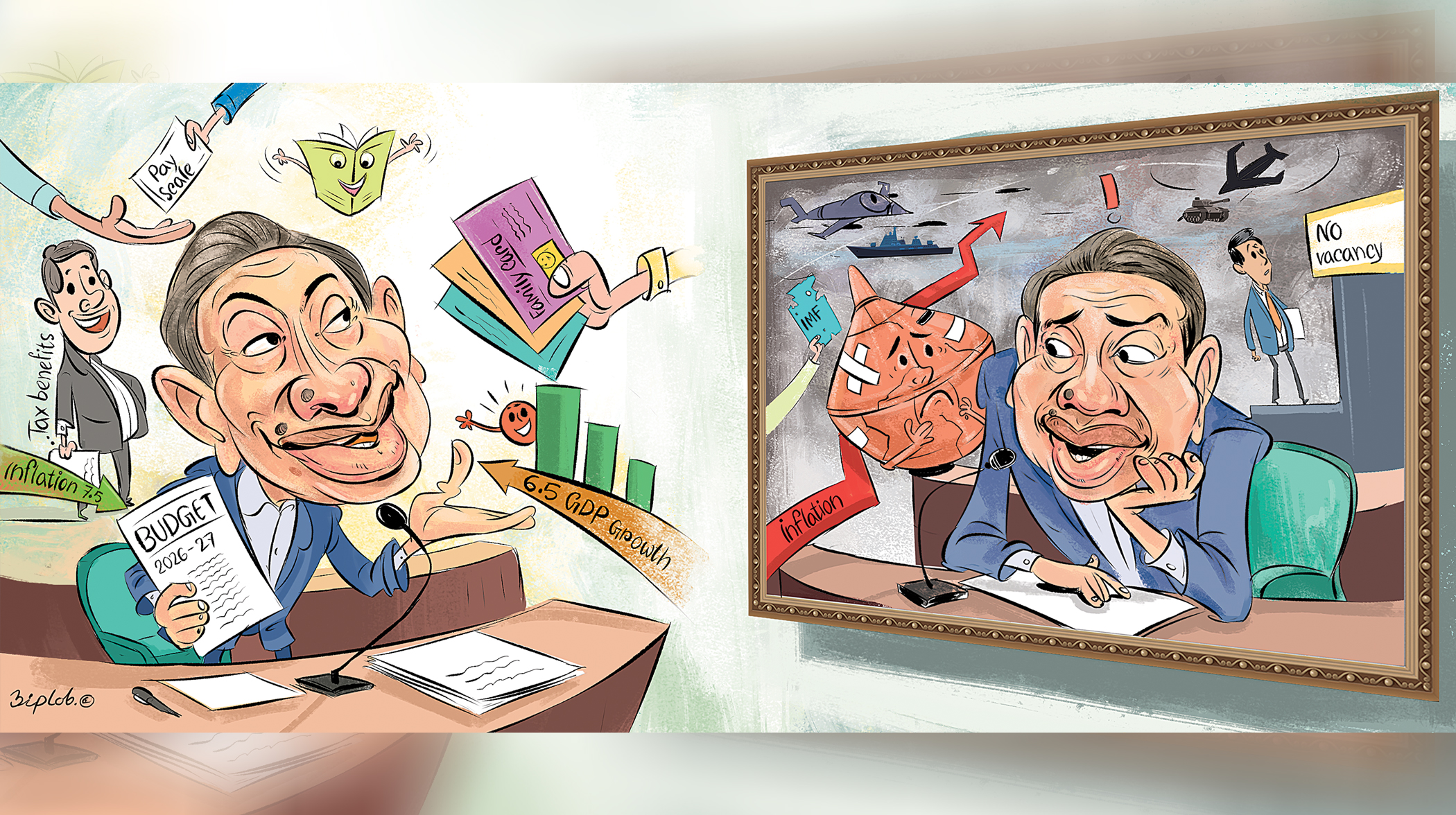
Of the total allocation proposed, Tk 35,026 crore has been earmarked for the development budget and Tk 27,826 crore for the operating budget.
Of the Tk 35,026 crore development allocation, Tk 23,522 crore has been kept as a block allocation, suggesting that the government may undertake new projects to fulfil its election pledges.
Separately, around Tk 6,557 crore has been earmarked for health-related activities under other ministries.
This brings the total health budget to Tk 69,409 crore, which is equivalent to 1.01 percent of GDP -- marking the first time that it has crossed this threshold.
Among all sectors, the health budget recorded the highest year-on-year increase, according to the budget document.
Health economists and sector insiders welcomed the move, saying it signals a stronger policy focus on healthcare after years of relatively low public spending.
The development is in line with the ruling party’s electoral manifesto, where the party promised to increase the health budget to 5 percent of GDP gradually.
Implementing such a large budget would be a major challenge given the health ministry’s poor track record in utilising its development budget, said Shafiun Nahin Shimul, professor and director of the Dhaka University’s Institute of Health Economics.
For instance, in the first 10 months of this fiscal year, the two divisions of the health ministry could not spend one-tenth of their development budget.
Inefficiency, corruption and bureaucratic hurdles often delay project implementation, and the new government would need to overcome these obstacles to ensure that the allocated funds are spent effectively, he said.
“Otherwise, people will not benefit from the substantial increase in the health budget,” Shimul added.
The eventual benefit to citizens of the big block allocation will depend on how quickly and effectively projects are selected, approved and implemented, analysts said.
The budget also proposes several tax benefits for imported medicine raw materials, medical equipment and healthcare-related products, which would help reduce out-of-pocket expenditure, the main source to fund healthcare in Bangladesh.
The tax concessions have the potential to reduce the cost of medicines, diagnostic tests and healthcare services for patients.
But the benefits will reach consumers only if manufacturers, importers and healthcare providers pass on the reduced costs, supported by effective monitoring from the health authorities, sector insiders said.
A complete withdrawal of the existing 15 percent VAT and 5 percent advance income tax on imported dialysis filters has been proposed. The measure is expected to reduce the cost of each dialysis session by around Tk 800 for kidney patients.
The finance minister also proposed a full exemption from the 10 percent supplier-level VAT on imported cardiac stents and intraocular lenses used in eye surgeries. As a result, the price of each cardiac stent could fall by up to Tk 20,000, while the cost of each intraocular lens may decrease by around Tk 5,000.
 For all latest news, follow The Daily Star's Google News channel.
 In another relief measure for kidney patients, the government proposed waiving the 7.5 percent advance tax on imports of blood tubing sets used in haemodialysis, which is expected to further reduce dialysis costs.
To support the domestic pharmaceutical industry, the budget proposes duty- and VAT-free imports of nine additional raw materials used in the production of cancer medicines.
The government also proposed removing import duties on 51 new raw materials used to manufacture active pharmaceutical ingredients (APIs) locally and granting zero-duty facilities for 17 additional pharmaceutical raw materials to help sustain export growth.
The budget further proposes concessional duty facilities for manufacturers of medical equipment and components.
Shimul welcomed the initiatives but said past experience suggests that only a small portion of the benefits reach consumers.
“The government lacks the capacity to accurately assess how much benefit producers receive from tax rebates and how much of that benefit should be passed on to consumers -- the government has to ensure that people actually benefit from these initiatives.”
Comments