


My encounter with Satyajit Ray

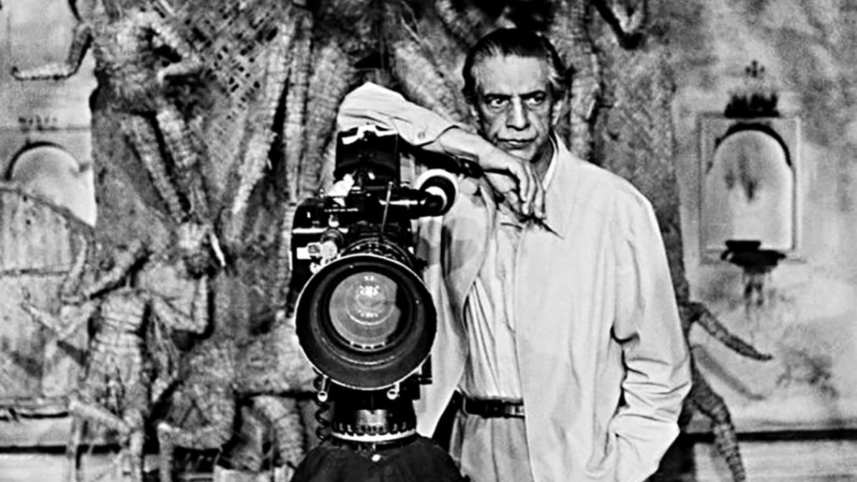
I remember my nanabhai, a man I had never seen without his Santa Claus-esque beard, insisting I sit through films I had absolutely no intention of liking. Where, I wondered, was the upbeat music, the comforting plot, the sort you can follow even while mentally elsewhere? He seemed genuinely crestfallen at my indifference to something he held in such high regard. The film was Sabar Uparey, directed by Agradoot – a name that, as it turns out, carries a story of its own.
But then, why am I dwelling on a film that has nothing, at least on the surface, to do with Satyajit on his death anniversary?

I must go back to being 14, which is to say, an age when one is insufferably certain about everything. I was watching Nayak, featuring the same hero as Sabar Uparey, and—miracle of miracles—I was completely captivated. This was a few years after the small tragedy of disappointing my nanabhai, and I suppose this was my redemption arc, though no one was handing out awards. I didn’t care in the slightest about direction or cinematography (terms I would later deploy with much confidence), but the plot had me hooked enough to investigate the man behind it. Enter Satyajit Ray. I admired him immediately, partly for having the excellent sense to cast Uttam Kumar and partly because his film made me feel that I might, in fact, make amends with my nanabhai.
During my teen years, I relished Satyajit Ray’s incredibly well-made films, Teen Kanya, Pather Panchali, Aparajito, Apur Sansar, Hirak Rajar Deshe, and Goopy Gyne Bagha Byne. Pradosh Chandra Mitter and Professor Trilokeshwar Shonku left a lasting imprint on many of us, yet I find myself more drawn to his films and autobiographical works, Jokhon Chhoto Chhilam (1982) and My Years with Apu (1994).
In those formative years, I learnt that not only did he make films, but he was also an impeccable visual artist. There’s no distinct style to his illustrations, but one look and you know it’s his work. His multimodal mastery is no surprise, given the environment he was brought up in. His grandfather, Upendrakishore Ray Chowdhury, published Sandesh, the first Indian children’s magazine. And then there’s his father, Sukumar Ray, whose sketches and nonsense verse are so delightful they make you deconstruct your ideas of poems. Naturally, Ray carried the family tradition forward, as if it were the most casual thing in the world, and added his own rather intimidating genius to the mix.
Then I started university and correlated the ideas of Jantar-Mantar with Louis Althusser’s ideological state apparatuses and had the slightly dizzying realisation that Satyajit Ray had already thought through so much of it; only he had to make it accessible to the rest of us. From there, I wandered into his more austere worlds—Aranyer Din Ratri, Pratidwandi, Seemabaddha, Jana Aranya, Mahanagar, Agantuk, Ganashatru, and Shakha Proshakha—films that felt as if Ray made them knowing that the viewers of Goopy Gyne Bagha Byne were growing up.
Somewhere along the way, I realised he had shaped not only my childhood but my adulthood as well. I suppose that is a rather large thing to owe someone, but I do feel indebted, because through his work I was gently led to the other pillars of Bangla cinema, as if he were introducing me, one by one, to a world I didn’t yet know how to name.
On the death anniversary of Satyajit Ray, I find myself suffused with both emotion and gratitude. It is no small thing that my childhood was painted in such vivid hues by his imagination and that my socio-political sentience was, in equal measure, constructed and deconstructed by his work. My conclusion, if I may render it with some simplicity, is twofold: first, that my nanabhai possessed a better understanding of me than I did of myself. And second, the media we encounter in childhood leave an indelible imprint on who we become, so be it with Satyajit Ray.
 For all latest news, follow The Daily Star's Google News channel.
Comments