


Are we bad at money management or is everything just really expensive?
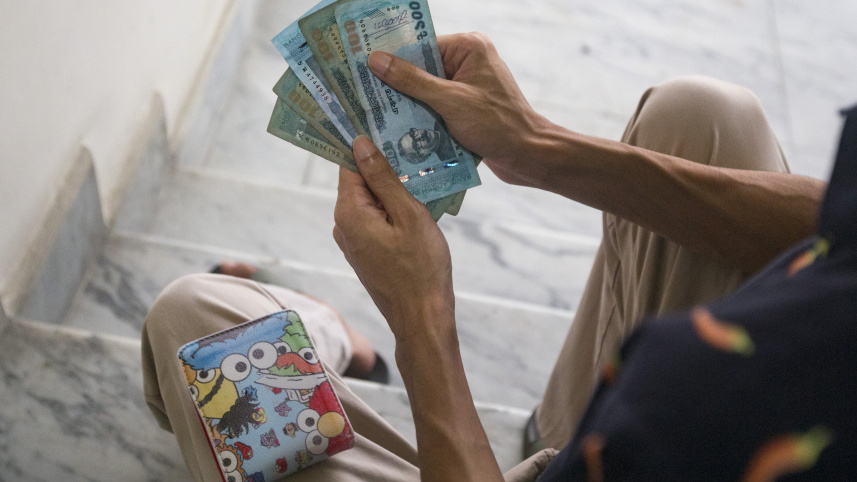
It’s a summer day. You are contemplating spending money on a rickshaw ride or a drink, but decide to indulge yourself and get both. Soon enough, you get a call from your friend, urging you to go to a concert set to take place later in the week. The two of you argue for a while, but in the end, you give in. Thus, you buy the tickets, accompany your friends, get dinner after, and simply have a wonderful time. On the day of the event, your heart is full from the music. The following day, however, you realise just how much money you’ve spent.
Nowadays it almost feels like you can’t really do any activity or go anywhere without spending a significant amount, which has seemingly lost its value. Though it is expected due to inflation and global issues affecting the price of normal goods, a gnawing feeling still arises when BDT 500 leaves your hands so quickly.

To be fair, there’s a version of this story where you could have skipped the rickshaw ride or the drink and skipped the event. It becomes a classic lesson of “You should have stayed home to save money”. This is especially the case in Dhaka, where everything is already more expensive than the rest of the country. As students with limited income sources, it feels daunting.
For a lot of students, a large fraction of their money – often the biggest amount – is spent on commuting. Any other charges are an addition to this. This doesn't mean that you shouldn't enjoy these experiences whenever they arise. However, if you are expected to pay exorbitant prices for almost every single activity you do around the city, frustration tends to build up.
As for the narrative outside Dhaka, Kazi Mansur Ahmed, a residential student at Chittagong University (CU), shares his experience: "For us, we usually stay on campus, so there isn't much need for transport, as rickshaw fares aren't that high and we usually share rides. As for food or activities, it doesn't really cross 300 Taka. But on days we decide to splurge or go into the city for air-conditioned restaurants, the bill tends to rise to around 600 taka per person."
On the other hand, Sadman Mubarak Mahi, a local student at Shahjalal University of Science and Technology (SUST), says: "We don't usually go out for hangouts. We mostly socialise over online games or at a friend's house, so the main expense on those days is the rickshaw, which we split. Although there are some franchise eateries here, we much prefer local spots, as they're more budget-friendly. My expenses never exceed 500 taka."
No city starts off expensive. The cost of living builds up gradually over time, and you often get to witness it firsthand. Tasnia Ipsita offers her perspective from Rajshahi: "When we were in middle school and high school, Rajshahi only had local food spots. By the time we got to college, some franchise stores had started opening, and with that, our expenditure rose as well."
Having moved to Dhaka from Rajshahi for her undergraduate journey at the Islamic University of Technology (IUT), she discusses contrasts between the two cities: "Dhaka is really expensive compared to Rajshahi, but thankfully it's not too costly to get around within my university's campus. So, for Rajshahi, I'd say the cost (for hanging out) comes to around 500 taka. For Dhaka, it's around 700 taka."
There's another layer to this, of course: the sense that we're being nudged into spending an amount we never quite decided on ourselves. When you look back at how much you’ve spent, you may notice that some of the expenses you made were beyond your control. These expenditures may be attributed to the purchase of necessary products, social obligations, or even the fear of missing out.
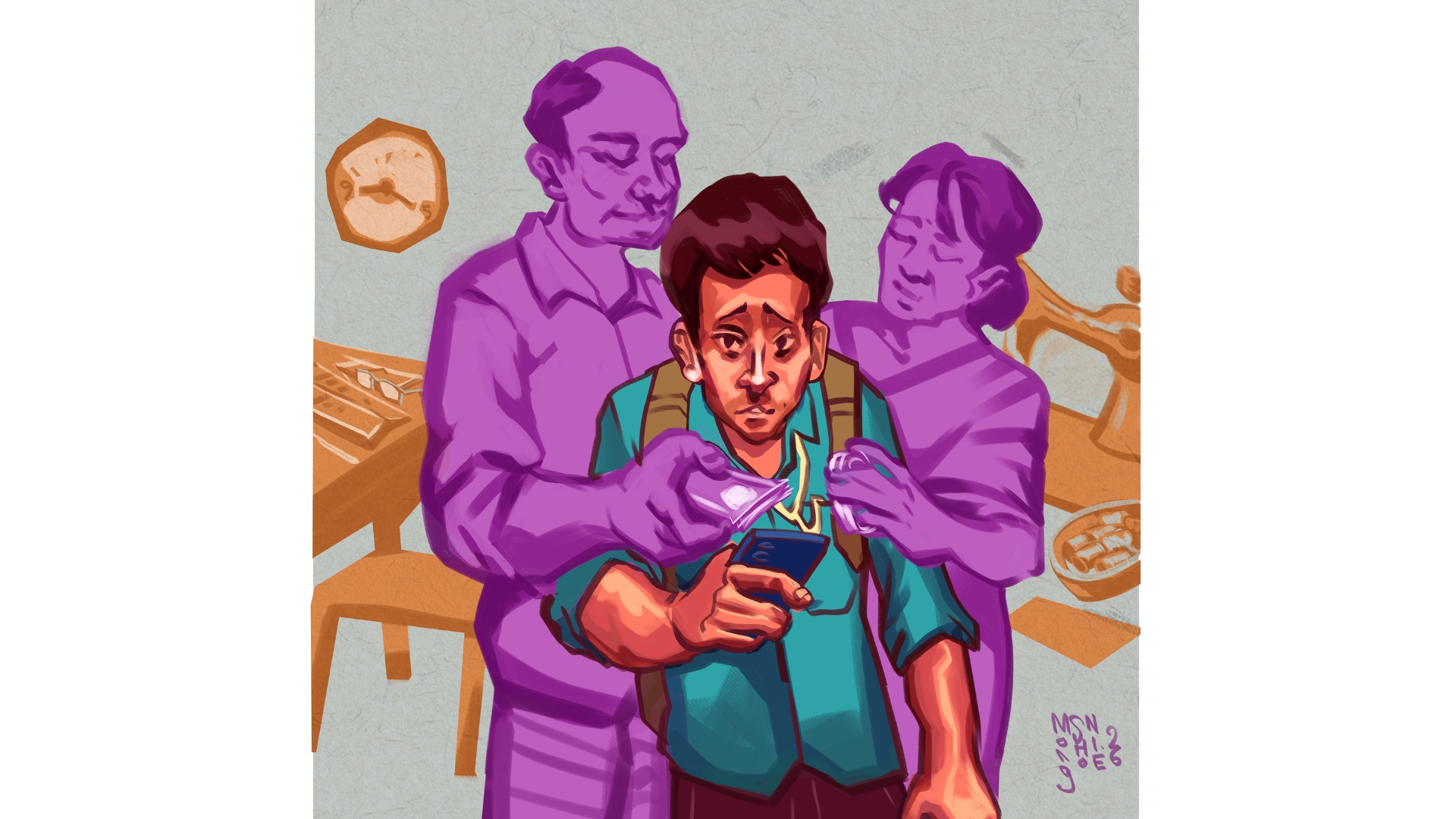
As such, saving becomes difficult. The gravity of the situation starts to become clearer as you realise that you have very little or maybe even nothing to save. Young professionals and students who have only just started earning also struggle to discuss finances with their elders, as money can be a difficult subject to talk about. Budgeting itself takes considerable discipline, but no matter how carefully you budget, it can still be derailed by one unavoidable expenditure.
Rising costs across the country remain a pressing issue. The latest monthly average rate of inflation, according to the Bangladesh Bureau of Statistics (BBS), is 8.68 percent. This should compel us to realise that what we perceive to be compulsive spending might not be a personal failing at all. Average prices of commodities do not adhere to average incomes.
For women, the problems are even more pronounced. We have to pay a premium for our safety in everyday activities. While our male friends can simply take a public bus back home, we may have to pay at least five times as much to do the same. Even then, safety is not guaranteed. Regardless of gender, though, transportation is merely the tip of the iceberg for students.
The forces that carve our pockets empty are far-reaching. The market responds by charging prices that fail to accommodate people’s spending habits, imposing a safety tax on women, and giving way to a precarious financial reality, especially for students. Against this backdrop, the notion of sensibly managing our expenses becomes a difficult, near-impossible task. The real question then becomes: can we even afford to manage our money if we are left with nothing?
Fabiha is convinced that her life is parodying a Shakespearean commedia dell arte and is fighting to change the genre. Inspire her to make better life choices at: s.fabiha.amreen@gmail.com
 For all latest news, follow The Daily Star's Google News channel.
Comments