


Nuke deal: Iran talks tough
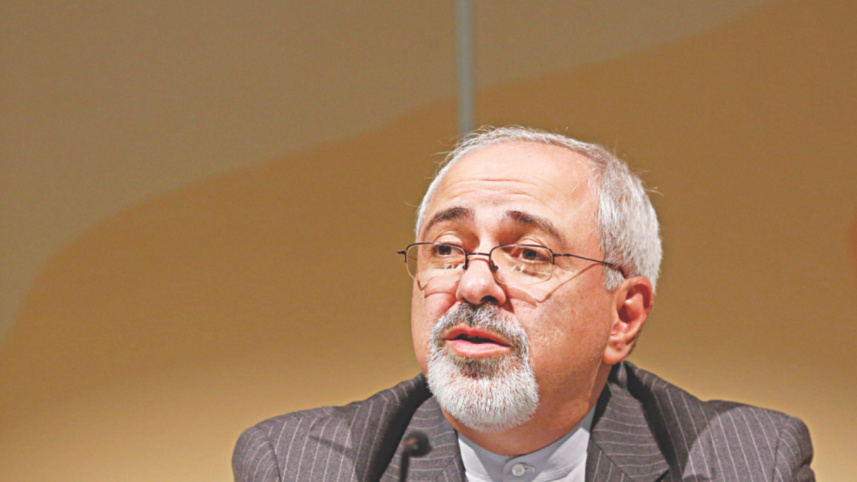
Iran's foreign minister said that Tehran would be able to return to its nuclear activities if the West withdraws from a pact that is to be finalised in June.
Foreign minister Mohammad Javad Zarif, interviewed on a talk show on state-run TV, yesterday said, Iran has the power to take "corresponding action" and "will be able to return" its nuclear programme to the same level if the other side fails to honour the agreement.

"All parties to the agreement can stop their actions in case of violation of the agreement by the other party," Zarif said.
Zarif, Iran's chief nuclear negotiator, said the framework nuclear deal announced by Iran and six world powers on Thursday in Switzerland was not binding until a final agreement is worked out by a June 30 deadline.
His remarks appear aimed at reassuring hardliners who strongly oppose the framework agreement as a good deal for the West and disaster for Iran.
Zarif said Iran is "committed" to implementing its part of any final agreement providing Western countries fulfill their promises.
Despite the criticism by hardliners, the deal has been overwhelmingly backed by Iran's establishment, including President Hassan Rohani who pledged in a speech to the nation on Friday that Iran will abide by its commitments under the nuclear deal.
Meanwhile, Israeli Prime Minister Benjamin Netanyahu yesterday urged the United States to seek a better deal to curb Iran's nuclear program and said he would press American lawmakers not give Tehran "a free path to the bomb."
Netanyahu, in the first of several appearances on US Sunday news programs, said he has spoken with both Democrats and Republicans in Congress - nearly two thirds of House of Representatives members and a similar number in the US Senate - about the Iran nuclear issue.
"This is not a partisan issue. This is not solely an Israeli issue," Netanyahu said on CNN's "State of the Union" program.
"This is a world issue because everyone is going to be threatened by the pre-eminent terrorist state of our time, keeping the infrastructure to produce not one nuclear bomb but many, many nuclear bombs down the line."
US President Barack Obama called the agreement reached in Lausanne, Switzerland, a "historic understanding" and told Netanyahu in a telephone call soon afterward that the deal represented progress toward a lasting solution that cuts off Iran's path to a nuclear weapon.
Netanyahu said he had an hourlong conversation with the U.S. president, with whom he has had strained relations.
Asked on CNN if he trusted Obama, Netanyahu said he was sure the US president was doing what he thought best for his country, but they disagreed on what the best Iran policy should be.
 For all latest news, follow The Daily Star's Google News channel.
Comments