


EU eyes 'military Schengen zone'
The EU yesterday launched plans to make it easier to move troops and equipment around the bloc as Europe seeks to boost its defences in the face of the growing threat from Russia.
Officials want to create a "military Schengen zone" similar to the EU's civilian passport-free travel area by simplifying customs checks and bureaucracy that currently cause hold-ups for Nato forces and vehicles trying to cross borders.

Top Nato commanders say the changes are essential if Europe is to have a serious deterrent to potential Russian aggression, warning that cumbersome checks are hampering their ability to move resources quickly.
Working with EU member states, over the next year the European Commission, the bloc's executive arm, will carry out an assessment of existing bureaucratic hurdles and transport infrastructure to see where and how improvements can be made.Dedicated EU funding could be devoted to projects that can be used for both civilian and military purposes.
The EU plans do not mention Russia specifically but tensions with Moscow have been high since the Ukraine crisis and Kremlin's annexation of Crimea in 2014 -- and the current diplomatic spat over the nerve agent attack on a former Russian spy in Britain has done nothing to calm matters.
The Baltic states of Estonia, Latvia and Lithuania have already created a military mini-Schengen among themselves, Elisabeth Braw of the Atlantic Council think tank said.
Nato has deployed around 4,000 troops along with tanks and artillery in Poland and the Baltic countries -- the biggest reinforcement in Eastern Europe since the end of the Cold War -- both as a sign of determination and to be ready in the event a crisis erupts.
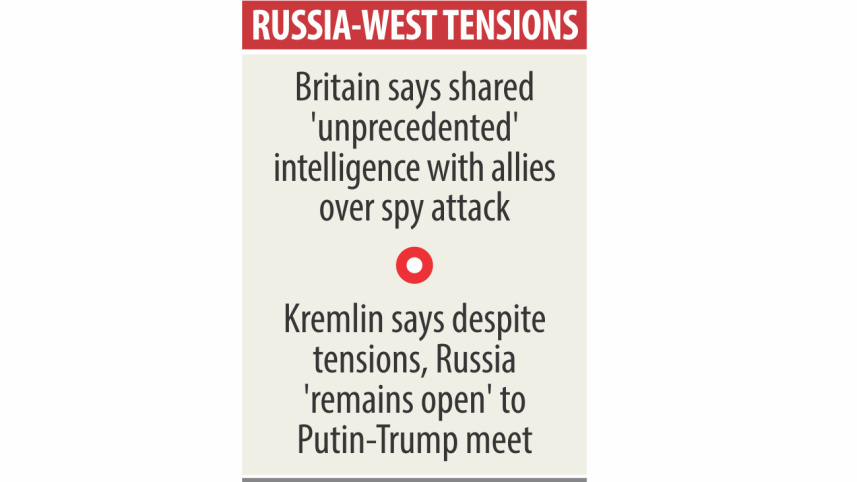
Meanwhile, Britain has said that it shared "unprecedented levels" of intelligence about a spy poisoning it blamed on Moscow, which has led at least 25 countries to expel Russian diplomats.
This week's coordinated expulsions have echoed Britain's action in response to the March 4 attack on former Russian double agent Sergei Skripal and his daughter in the English city of Salisbury.
British Foreign Secretary Boris Johnson said the mass expulsions were "a blow from which Russian intelligence will need many years to recover".
It "could become a turning point", he wrote in The Times newspaper, adding: "The Western alliance took decisive action and Britain's partners came together against the Kremlin's reckless ambitions."
Moscow has fiercely denied any involvement in his attempted murder, instead pointing the finger at London.
The Kremlin yesterday said that President Vladimir Putin was still ready to hold a summit with US counterpart Donald Trump despite the crisis.
"This depends on the American side, but the Russian side remains open," Putin's spokesman Dmitry Peskov told reporters.
 For all latest news, follow The Daily Star's Google News channel.
Comments