Rethinking school-level financing in Bangladesh :From reimbursement to real autonomy

Bangladesh's primary education system is, on paper, one of the more improbable success stories of the developing world. In three decades, the country pushed net enrolment in primary school to near-universal levels, closed the gender gap in classrooms years ahead of many of its South Asian neighbours, and did so while remaining one of the poorest countries in the region by per capita income. International agencies routinely cite Bangladesh alongside Ethiopia and Rwanda as proof that access can be engineered even where fiscal space is thin. Yet ask any parent in Kurigram or Bandarban whether their child can read a short paragraph in Bangla by the end of Grade 3, or perform a two-digit subtraction, and the confidence evaporates. The country has built the schoolhouse; it has not yet built the learning inside it.

This is not a uniquely Bangladeshi predicament. Development economists have a name for it: the "schooling versus learning" gap, most starkly documented in the World Bank's Learning Poverty metric and in two decades of household-level assessments across South Asia, including the ASER surveys pioneered by the Indian NGO Pratham. What is distinctive about the Bangladesh case is the specific policy instrument that was designed, more than a decade ago, to close that gap at the level where it is ultimately determined: the individual school. That instrument is the School Level Improvement Plan, or SLIP, introduced under the third Primary Education Development Program (PEDP3) as a mechanism to decentralise a small but meaningful slice of financial decision-making down to headteachers, School Management Committees (SMCs) and the communities they serve.
The newly released policy brief from the Power and Participation Research Centre (PPRC), drawing on its 2025–26 SLIP Effectiveness Study, supported by UNICEF and DPE, covering 100 schools across 42 upazilas in all eight divisions, and triangulating over 3,500 interviews, focus group discussions and survey responses, offers the most granular independent assessment of SLIP's performance to date. Its conclusion is unambiguous: SLIP has not failed, but it has drastically underperformed its own design potential, and the single largest reason is not a lack of funds, training, or goodwill, but the mundane plumbing of public financial management, specifically the fact that SLIP still operates on a reimbursement basis. As Bangladesh prepares to launch the fifth iteration of its flagship primary education programme, PEDP5, in mid-2026, the PPRC findings arrive at a genuinely consequential moment. Whether the country repeats or breaks a two-decade pattern of decentralisation promised but not delivered will depend substantially on what happens to instruments exactly like SLIP.
Two decades of an unfinished experiment
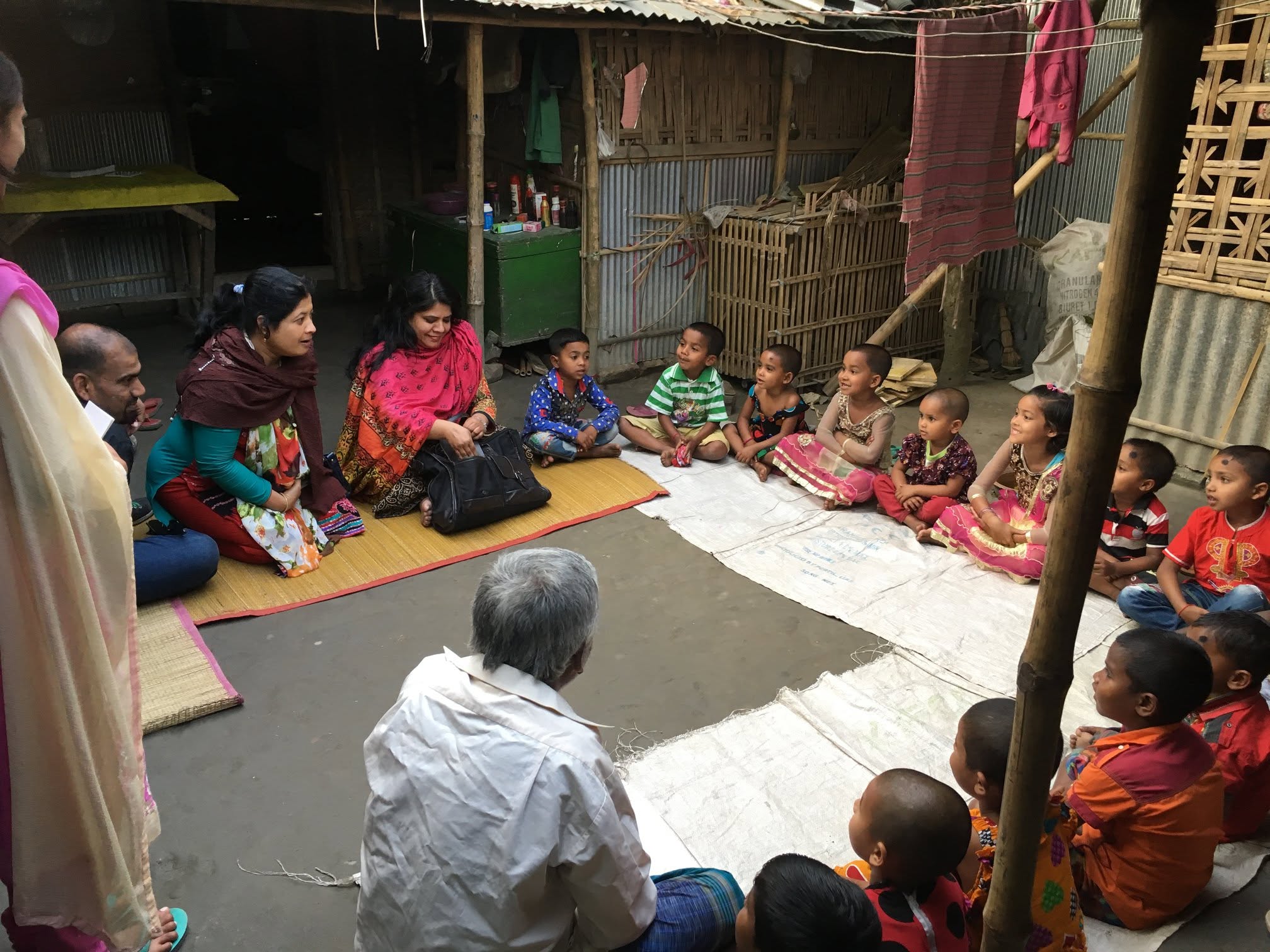
SLIP was never intended to be a marginal instrument. Conceived under PEDP3 in the early 2010s, it was Bangladesh's answer to a question that had already been asked and answered in different ways across the developing world: if learning outcomes are ultimately produced inside a specific classroom by a specific teacher working with a specific set of children, why should the financial and planning authority to address that classroom's particular constraints sit several administrative layers away, in a district or divisional office that may never have visited the school? The logic of school-based financing is that headteachers, School Management Committees and Parent-Teacher Associations (PTAs) possess local knowledge about a leaking roof, an unmotivated teacher, or a group of adolescent girls at risk of dropping out that a centralised bureaucracy structurally cannot possess, and that channelling discretionary funds to the school level, accompanied by a lightweight planning and reporting framework, should allow that knowledge to be acted upon quickly.
An evaluation of SLIP conducted in 2015 already flagged that implementation fell well short of potential, even as it recorded some positive effects on learning. A decade on, the PPRC Effectiveness Study finds the same underlying pathology, now more precisely diagnosed. The problem is not that SMCs lack enthusiasm, or that headteachers are indifferent to the plan's objectives. Across Head Teachers' Conclaves, multi-stakeholder consultations and a national learning workshop convened as part of the study, the qualitative record shows visible commitment from educators and communities alike. What undermines that commitment is a set of interlocking, self-reinforcing constraints, each compounding the others, producing a governance system that is decentralised in name but centralised in practice.
Why financing design determines governance outcomes
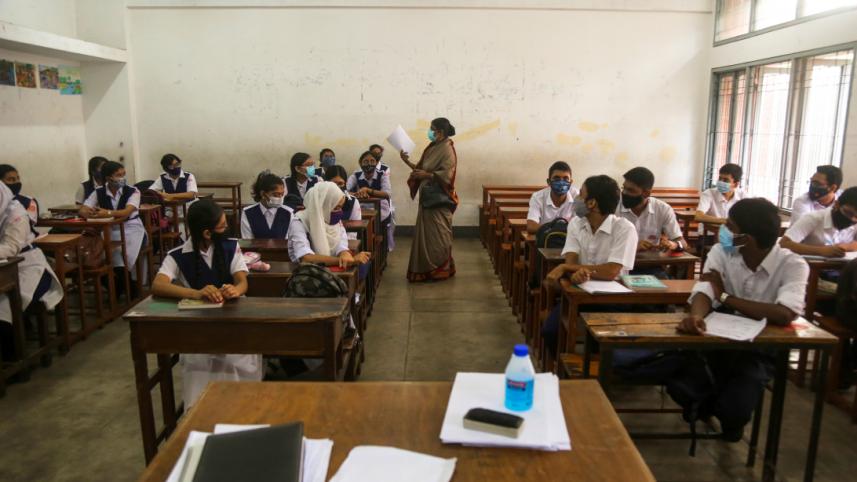
To understand why a seemingly technical detail, reimbursement versus advance payment, can determine whether an entire decentralisation reform succeeds or fails, it helps to step back into the theoretical literature on public service accountability. The most influential framework remains the one set out in the World Bank's 2004 World Development Report, Making Services Work for Poor People. The report's central device, the accountability triangle, distinguishes between a "long route" of accountability, in which citizens influence policymakers through elections and voice, who in turn are meant to discipline frontline providers through budgets, oversight and regulation, and a "short route", in which citizens as clients exert direct pressure on the provider, bypassing the political and bureaucratic chain altogether. School-based management, participatory budgeting and grievance mechanisms are all short-route interventions in this framework; they work, when they work, by shortening the distance between the beneficiary and the person controlling the resource.
Students, for their part, articulate a strikingly consistent set of priorities: expanded libraries, better sanitation infrastructure, and formal channels, such as school councils or committees, through which to participate in decisions about their own school's improvement, alongside enthusiasm for practical, hands-on learning and extracurricular activity.
SLIP was explicitly conceived as a short-route reform: put money and planning authority in the hands of the SMC and headteacher and let community monitoring do the rest. But a body of subsequent research has shown that, where the underlying problem is one of institutional or "governance failure", the short route is rarely as short as it appears because it remains nested inside a long chain of financial rules, approval hierarchies and audit requirements set by the very same centralised bureaucracy the reform was meant to route around.
This is precisely the pathology the PPRC study documents in SLIP: a multi-layered approval system and joint-signatory bank accounts were built in the name of financial accountability, yet the practical effect, given reimbursement-based release, has been to reproduce central control under a decentralised label. In the language of decentralisation theory developed by the American public administration scholar Dennis Rondinelli in the 1980s, this is the difference between deconcentration, where authority nominally moves outward but decision rights and fiscal control remain centralised, and genuine devolution, where subordinate units gain real, enforceable discretion. Bangladesh's PNFECC consultation committee, appointed by the Ministry of Primary and Mass Education in October 2024 to chart reform priorities for PEDP5, used almost identical language, describing the SLIP experience as evidence that Bangladesh's primary education system remains "deconcentrated" rather than decentralised.
A second, complementary body of theory concerns what happens once resources do reach the local level and are placed under some form of community oversight. Here the picture is more sobering than SLIP's original designers may have anticipated. In an influential randomised evaluation of school committees in Uttar Pradesh and Madhya Pradesh, economists Abhijit Banerjee and colleagues found that simply informing parents of their rights and responsibilities on Village Education Committees, without a more structured intervention, produced almost no change in community involvement or learning outcomes. Community bodies, it turns out, do not automatically activate simply because they are legally empowered to act; social hierarchies, information asymmetries and the routine capture of participatory space by locally powerful actors all blunt the mechanism. The PPRC study's own findings echo this almost exactly: financially stable families and local elites are more actively engaged in SLIP committees, PTA formation remains informal, and marginalised parents require deliberate, structured encouragement rather than passive invitation to participate meaningfully. Elinor Ostrom's work on the governance of collective resources offers a related insight: successful local institutions require clearly defined boundaries of authority, mechanisms for monitoring that are visible and low-cost to the community itself, and graduated, credible consequences for non-compliance.
Taken together, this literature suggests two propositions directly relevant to SLIP reform. First, decentralisation reforms fail less often because communities are indifferent and more often because the financing architecture surrounding them quietly re-centralises control, exactly the reimbursement trap the PPRC study identifies. Second, community oversight is not self-executing; it requires investment in capability, information and structured facilitation, not simply the creation of a committee.
Anatomy of a bottleneck: The reimbursement trap
The PPRC study is emphatic that the reimbursement model is the single most consequential design flaw in SLIP's current architecture. Under the existing system, schools are expected to fund improvement activities upfront, often out of the headteacher's own pocket or through informal borrowing, and are reimbursed only after expenditure has occurred and been documented to the satisfaction of upazila and district-level finance offices. In interviews conducted for the study, headteachers describe this as an unfair transfer of financial risk from the state, which is meant to fund school improvement, to individual educators, who are not compensated for bearing that risk and frequently lack the personal liquidity to do so comfortably. The mechanics compound the problem. The return process between finance offices and education offices lacks real-time tracking, generating repetitive follow-ups that consume headteachers' time that would otherwise go towards instructional leadership. Manual documentation, in the absence of integrated digital systems, slows disbursement further. The consequence, as Head Teachers' Conclaves convened for the study make clear, is that SLIP's transformative potential is real but is being systematically eroded by the mismatch between the fiscal year, the school calendar and the pace of bureaucratic processing.

This is not a uniquely Bangladeshi pathology. It is, in fact, one of the best-documented failure modes in the international public financial management literature on decentralised service delivery: cash-flow risk transferred downward to the weakest fiscal actor in the chain, with predictable effects on both efficiency and morale. What makes the Bangladesh case notable is how precisely it has been diagnosed, and how directly actionable the fix appears to be. The PPRC Policy Brief's headline recommendation—moving from reimbursement to advance payment, supported by phased release, audit safeguards and tracking through the Integrated Primary Education Management Information System (IPEMIS)—is, in the report's own framing, a "high-impact, low-risk reform" precisely because it addresses the binding constraint without requiring the kind of deep institutional restructuring that slower, systemic reforms would need.
A second constraint compounds the first: even when SLIP funds are eventually released, their real value to the school is substantially smaller than the nominal allocation suggests. VAT, income tax deductions and transport costs incurred in procurement all reduce the 'usable budget'. This produces a specific form of institutional friction that goes beyond simple underfunding. Because the gap between the nominal grant and the usable grant is not transparent or standardised, different schools face different effective deduction rates depending on procurement choices and local tax administration practices. The study's synthesis of the learning workshop with national and field-level administrators is direct on this point: standardising VAT rates and clarifying "net usable fund" rules within the SLIP guideline itself, rather than leaving this to ad hoc negotiation at the point of disbursement, should be treated as a near-term, low-cost fix.
The third structural constraint identified by the study is the least visible but arguably the most consequential over the long run: rigid central templates, fixed budget ceilings and centralised approval requirements that dilute the very decentralisation SLIP was designed to deliver. This gap between formal and effective autonomy is what the PPRC study highlights, namely that SLIP today functions closer to "deconcentration" than genuine decentralisation. This conclusion is a precise diagnostic term, not rhetorical flourish, and it is one shared independently by the government's own PNFECC consultation committee in its assessment of the broader primary education governance landscape ahead of PEDP5.
What the numbers show: Four years of SLIP expenditure patterns
Beyond the qualitative diagnosis, the PPRC study's financial data analysis, covering fund utilisation from FY2021–22 through FY2023–24, adds an important quantitative dimension. Teaching-learning materials, health and environmental development, and sports and cultural activities consistently rank as the three largest expenditure categories, with governance and public awareness, office equipment, and examination-related costs also claiming a meaningful share.
Two patterns stand out from this trend analysis. First, there has been a discernible shift in spending priorities away from pre-primary education and environmental health activities and towards examination-related costs and governance-related spending, a shift the report reads as evidence of a system gradually reorienting itself towards a performance-oriented posture of compliance and assessment rather than the foundational, upstream investments (early learning, health and disaster preparedness) that determine whether a child is in a position to learn at all. Second, a decline in disaster-management and furniture-related spending raises equity concerns, since these categories disproportionately affect underserved and climate-vulnerable schools, a finding with particular resonance in a country as exposed to cyclones, riverine flooding and salinity intrusion as Bangladesh.
The convergence of diverse stakeholder views
One of the more striking features of the PPRC study is how consistently its different stakeholder groups converge on the same underlying diagnosis, even though each group experiences the problem from a different vantage point. Officials at DPE frame the challenge in institutional terms: the effectiveness of SLIP depends on a transparent, need-based budgeting system integrated with real-time expenditure tracking, alongside a shift from passive attendance monitoring towards proactive, data-driven engagement with at-risk students, particularly in the post-pandemic recovery period. Upazila and Assistant Upazila Education Officers, who sit closest to the point of implementation, describe the standardisation of SLIP proposal formats as a constraint on their own ability to exercise judgement, alongside the now-familiar complaint about the reimbursement-driven financial burden falling on headteachers. Development partners emphasise procedural complexity around advance payments, VAT registration and procurement protocols, and notably argue that positive incentives, such as public recognition for well-managed schools, could do more to improve compliance than punitive oversight alone.
At the school level, SMCs flag the erosion of the usable budget through VAT and transport costs; Social Audit Committee members report that new members receive no meaningful induction, and that frequent turnover displaces exactly the experienced members whose institutional memory would otherwise offset weak formal training. PTAs and parents describe persistently informal formation processes and severe knowledge gaps about SLIP's own guidelines, alongside heavy reliance on private tutoring that itself signals gaps in classroom delivery. Students, for their part, articulate a strikingly consistent set of priorities: expanded libraries, better sanitation infrastructure, and formal channels, such as school councils or committees, through which to participate in decisions about their own school's improvement, alongside enthusiasm for practical, hands-on learning and extracurricular activity.
The convergence across these otherwise quite different vantage points is itself a finding. It suggests that SLIP's underperformance is not a case of miscommunication between levels of the system, where each actor blames a different, poorly understood culprit. It is a case of a shared, accurately perceived structural problem: reimbursement-based financing layered onto rigid, centrally determined rules that every actor in the chain can see clearly from where they sit, but that no single actor has the authority to fix.
Bangladesh's own reform moment
The PPRC study's timing is not incidental. PEDP4 is drawing to a close, and PEDP5, a five-year programme expected to begin in mid-2026 with support from the World Bank and other development partners, is being designed explicitly around foundational literacy and numeracy, structured pedagogy, and a stronger focus on equity for out-of-school children and children with disabilities. The proposed national budget for FY2026–27 allocates over Tk 46,700 crore to the Ministry of Primary and Mass Education, alongside continued commitments to the school feeding programme and student stipends, signalling that fiscal space for a reformed SLIP is not, in principle, the binding constraint. Taken together, these signals suggest that the institutional and political conditions for a serious SLIP reform, rather than another round of incremental tinkering, may be more favourable heading into PEDP5 than at any point since the instrument's creation. The Decision Matrix in the PPRC report, organised across short-, medium- and long-term horizons, offers a disciplined way to think about sequencing this reform.
Conclusion
The PPRC Effectiveness Study on SLIP arrives at a conclusion that should be, in one sense, reassuring: after more than a decade of implementation, Bangladesh does not need to abandon school-level financing, nor does it need to design an entirely new instrument for PEDP5. It needs, first and most urgently, to fix the plumbing, moving from a reimbursement model that transfers financial risk onto the country's least-resourced actors, headteachers, to an advance payment model with credible safeguards. Comparative experience from Indonesia to Uganda to Kenya suggests this single change, properly financed and properly monitored, would likely do more for SLIP's effectiveness than any other single intervention available to policymakers.
As Bangladesh mulls the launch of PEDP5, more than any grand redesign, the mundane, unglamorous work of rewriting a disbursement guideline, standardising a VAT deduction rule, building a functioning digital tracking system, and shifting from a reimbursement principle to one of advance payment is what now stands between Bangladesh's primary schools and the learning outcomes its enrolment statistics have long promised but not yet delivered.
Hossain Zillur Rahman is Executive Chairman of the Power and Participation Research Centre (PPRC). Musa Miah is a development professional.
Send your articles for Slow Reads to slowreads@thedailystar.net. Check out our submission guidelines for details.
What the water knows: The unmaking of Bangladesh's haors

Who writes the history of the July Uprising?

How violence against women is normalised in Bangladesh's chars
Why Bangladesh must invest in community-led early childhood education

The moral architecture of Bangladesh’s parliament

Why Bangladesh innovates but rarely builds global companies
Beyond groundwater: Rethinking Barind's water crisis

The gods that we build: AI and the future of moral authority

Remembering Mahbub ul Haq: A pioneer of human development ideas