


Panam city where history still whispers

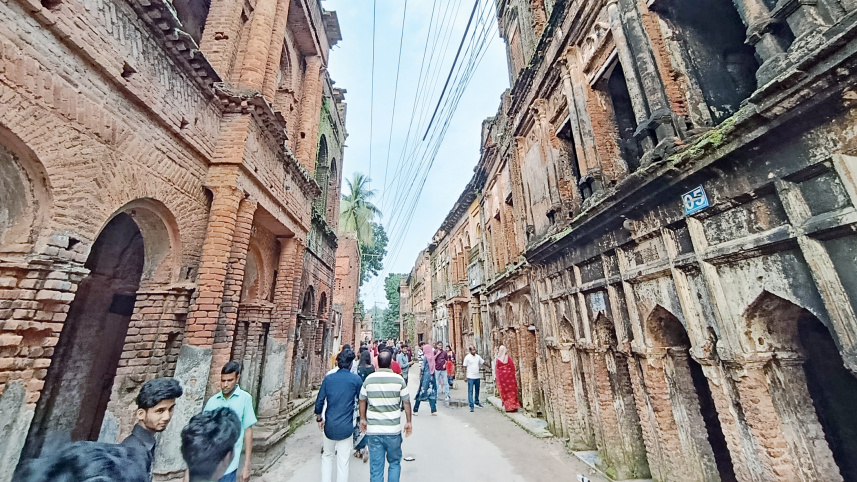
On the way to Sonargaon in Narayanganj, time seems to move backwards.
Leaving behind the bustle of the modern city, traffic congestion, and hurried lives, visitors suddenly find themselves in a quiet settlement where rows of old buildings, moss-covered walls, crumbling balconies, and shuttered windows make it feel as though history has stopped.

This is Panam City.
Once, horse-drawn carriages carrying wealthy merchants raced along its streets. Today, tourists walk those same roads through an abandoned town. The broken doors and windows of century-old buildings seem to wait for people who will never return.
Sonargaon was one of medieval Bengal’s most important commercial centres. Carrying that legacy, Panam City emerged during the 19th and early 20th centuries. Affluent Hindu merchants built their residences here, blending European colonial architecture with traditional Bangalee design.
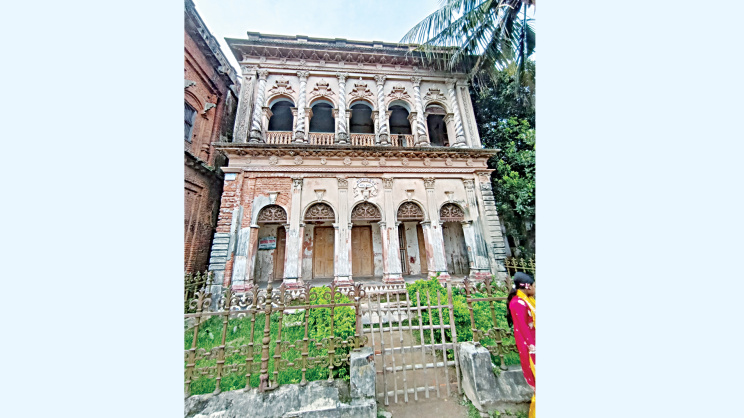
Elegant arches, intricate ornamentation, wrought-iron balconies, and decorative windows made every mansion a marker of prosperity.
Perhaps the most striking feature of Panam City is its silence. Standing here, it feels as though even the wind speaks. Sunlight filters through cracks in old walls, weeds grow on broken staircases, and birds perch along weathered cornices, as if narrating stories from another era.
But Panam’s story is not only one of wealth. It is also a story of separation.
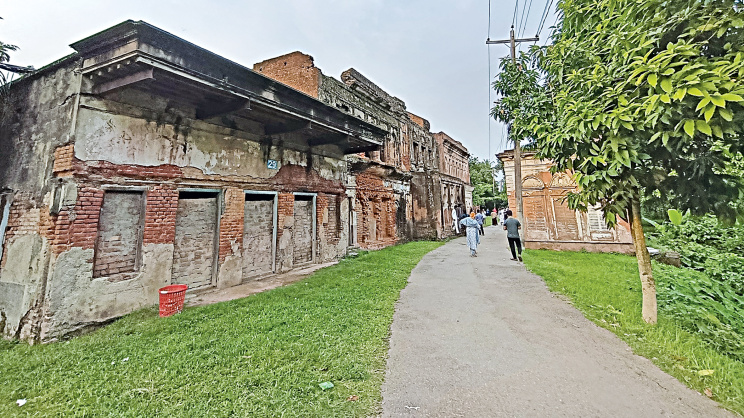
Following the Partition of India in 1947, residents gradually began leaving the town. After the Indo-Pakistan War of 1965, the migration of Hindu families left Panam largely deserted.
The houses that once echoed with celebrations, guests, and thriving business activities were abandoned. Over time, nature began to reclaim the city. Rainwater, tree roots, and decades of neglect have left visible scars on almost every structure.
Panam City’s main street is relatively short, yet the buildings lining both sides preserve centuries of architectural heritage. Each structure reflects a fusion of European colonial design, Mughal influences, and traditional Bengali craftsmanship.
According to Banglapedia, after the Mughals took control of Sonargaon in 1611, roads and bridges were built to connect the Panam area directly with the capital. Three brick bridges from the Mughal era still survive today: Panam Bridge, Dalalpur Bridge, and Panamnagar Bridge.
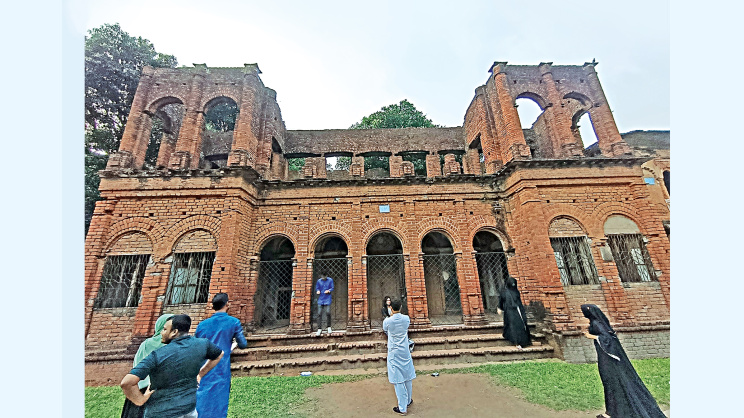
Their locations, along with the canals surrounding Panam on three sides, suggest that the area once served as a suburb of a medieval city.
Modern Panam City developed largely through the commercial activities of the British East India Company and the Permanent Settlement introduced during British rule. Sonargaon became a major trading centre for cotton textiles, particularly English “thaan” cloth, giving rise to the new urban settlement of Panam.
During the 19th century, several wealthy Hindu landlords and merchants chose the area as their residence. The brick buildings that still stand today were their homes, with the earliest structures believed to have been built in the early 19th century and later ones in the late 19th and early 20th centuries.
Panam continued to expand and flourish until around the end of the Second World War.
Architecturally, the residential buildings in Panam can be classified into three main types: those centred on a grand hall, those built around an open courtyard, and hybrid designs.
Hall-centred houses featured lavish decorative elements, making the central hall the architectural focal point. Courtyard houses had rooms arranged around an open, paved courtyard surrounded by verandas with arched entrances. Most single-storey houses belonged to the third category, lacking both a central hall and a courtyard.
Today, the first thing visitors notice upon entering Panam City is its extraordinary tranquility. There is no urban noise, only birdsong and the gentle rustling of leaves. That silence has become Panam’s greatest charm.
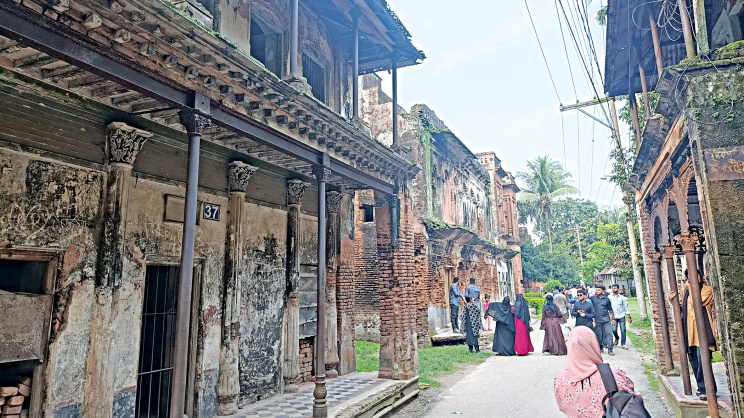
Last Friday, this correspondent spoke to a number of visitors at Panam City.
 For all latest news, follow The Daily Star's Google News channel.
 Md Anisuzzaman, a young visitor from Dhaka, said, “I’ve seen countless photographs of Panam City, but standing here is an entirely different experience. It feels like walking through history.”
Sushmita Roy, who travelled from Bandar in Narayanganj, said, “Many people don’t realise that Bangladesh has such magnificent historical sites. Coming here made me appreciate how rich our heritage truly is.”
Fazlur Rahman, who visited from Dhaka with his wife, said, “People travel abroad to explore historic cities, yet we have such an extraordinary place in our own country. If it were preserved more effectively, it could become a major attraction for international tourists.”
Local visitor Habibur Rahman, from Narayanganj, added, “I come here quite often, and every visit feels different. However, better cleanliness, more information boards, and trained guides would help visitors understand the site’s history much better.”
For many visitors, Panam City is more than a picturesque location for photography. It offers a rare chance to experience history firsthand. The weathered walls, broken wooden windows, and banyan trees growing from rooftops remind visitors that nature never leaves emptiness untouched.
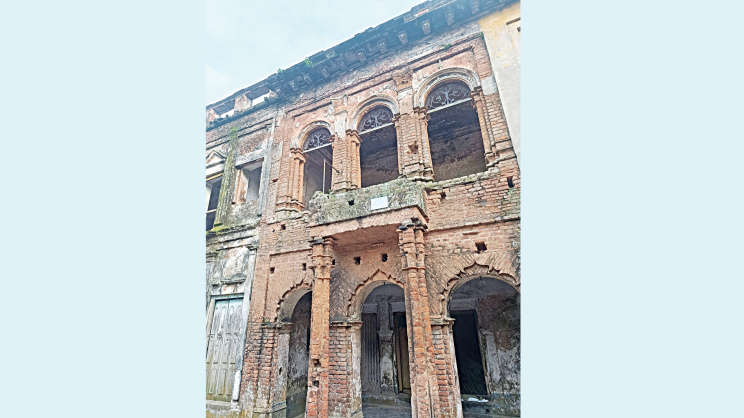
The Department of Archaeology is now responsible for preserving and maintaining Panam City. Still, many visitors believe restoring the buildings alone is not enough. They said regular maintenance, scientific conservation, wider research, and improved tourist-friendly infrastructure are equally essential.
Otherwise, they fear, this historic town may continue to deteriorate.
Amirul Islam Rajib, another visitor from Dhaka, said, “There are not enough resting areas, the number of guides is limited, and there is a lack of modern digital displays or audio guides explaining the site’s history. If Panam City could be integrated with local culture, traditional cuisine, and folk arts, it could become a complete tourism destination.”
Speaking to The Daily Star, Afroza Khan Mita, Regional Director of the Department of Archaeology, said, “We have undertaken a major project to make Panam City more visitor-friendly. Once the project receives approval, we expect to introduce a range of new facilities for tourists, which will significantly increase visitor numbers.”
As plans for the site’s future are discussed, the setting sun bathes the old buildings in golden light. In those final moments of the afternoon, Panam City becomes even more mysterious.
The warm glow on the weathered brickwork creates an unforgettable atmosphere. One cannot help but imagine that, a century ago, a merchant may have returned home under this very light, children may have played along these streets, or someone may have waited for a loved one from the balcony of one of these now-silent homes.
Comments