


A night of dance, music and devotion

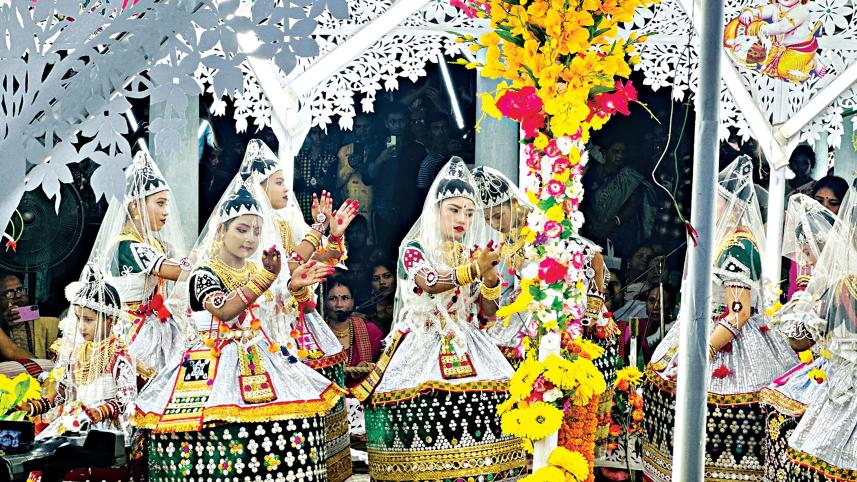
As the full moon of Agrahayan rises, the Manipuri community in greater Sylhet prepares to celebrate its most cherished festival -- Maharas Leela, or Ras Utsab. What began centuries ago as a spiritual observance has evolved into one of Bangladesh's most vibrant cultural events, drawing thousands of devotees and tourists from across the country and abroad.
For 183 years, the Ras Utsab has been celebrated with grandeur at Joramandap in Shibbazar, Madhabpur of Kamalganj upazila, and for nearly four decades in Tetaigaon, Adampur.

Rooted in devotion and dance, the festival revolves around the divine love story of Lord Krishna and Radha, brought to life through enchanting Manipuri dance, accompanied by the rhythmic beats of drums, cymbals, and conch shells.
Each year, the festival transforms Madhabpur and Adampur into vibrant fairgrounds -- alive with music, light, and celebration. Thousands of men, women, and children, along with artists, writers, officials, and foreign visitors, gather to witness the night-long Maharas Leela, a spectacular fusion of faith, art, and heritage.
The origins of Ras Leela date back to 1759 AD, when Pamheiba (Maharaja Bhagyachandra) of Manipur introduced the Maharas Leela on the full moon night of Agrahayan.
According to Maibam Sadhan, a writer from the Manipuri community, the king had a dream in which Lord Krishna appeared to him in the form of a jackfruit tree on Bhanumukh Hill. Following this divine vision, he discovered the tree, had an idol carved from its wood, and inaugurated the first Ras Leela festival to mark its installation.
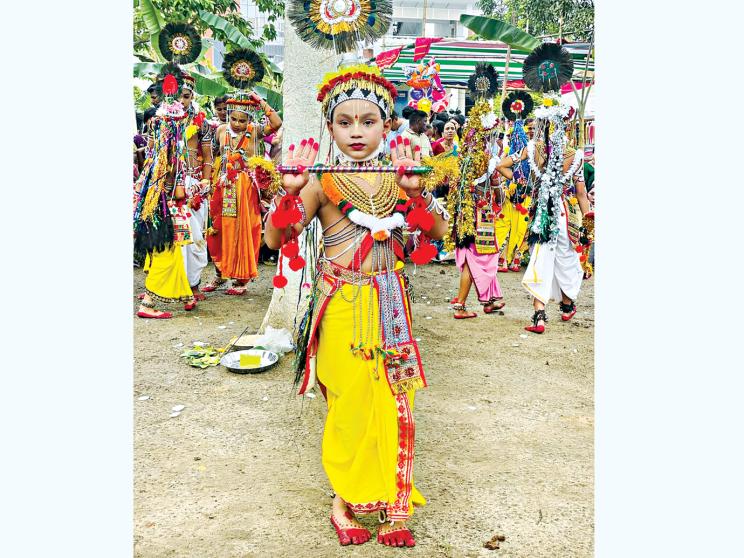
Bhagyachandra also established four classical Ras traditions -- Maharasa, Vasantarasa, Kunjarasa, and Bhangiparenga -- which continue to define Manipuri cultural identity today.
Sadhan said Manipuri settlers brought the Ras Leela tradition to the Sylhet region in the early 18th century. It quickly took deep root in Moulvibazar, Habiganj, and Sunamganj.
The first recorded Ras Leela in present-day Bangladesh was held in 1842 (1289 Bangla year) at Madhabpur's Joramandap, organised by the Bishnupriya Manipuri community with support from the Meitei Manipuris.
In later years, the two communities began holding separate celebrations: the Bishnupriya Manipuris at Madhabpur and the Meitei Manipuris at the Sana Thakur Mandap in Adampur since 1986. Despite this division, both groups continue to uphold the same spiritual and cultural essence that defines Ras Utsab.
This festival unites people from all walks of life, irrespective of caste or religion, said Shyam Singh, general secretary of the Manipuri Maharas Leela Seba Sangha. "It's not just a ritual, it's a celebration of art, devotion, and harmony."
This year marks the 183rd Ras Festival at Madhabpur Joramandap, organised by the Manipuri Maharas Leela Seba Sangha. The Bishnupriya Manipuris staged Gosthali or Rakhal Nritya at the Shibbazar open stage, while the Meitei Manipuris hosted their parallel celebration in Adampur's Manipuri Cultural Complex.
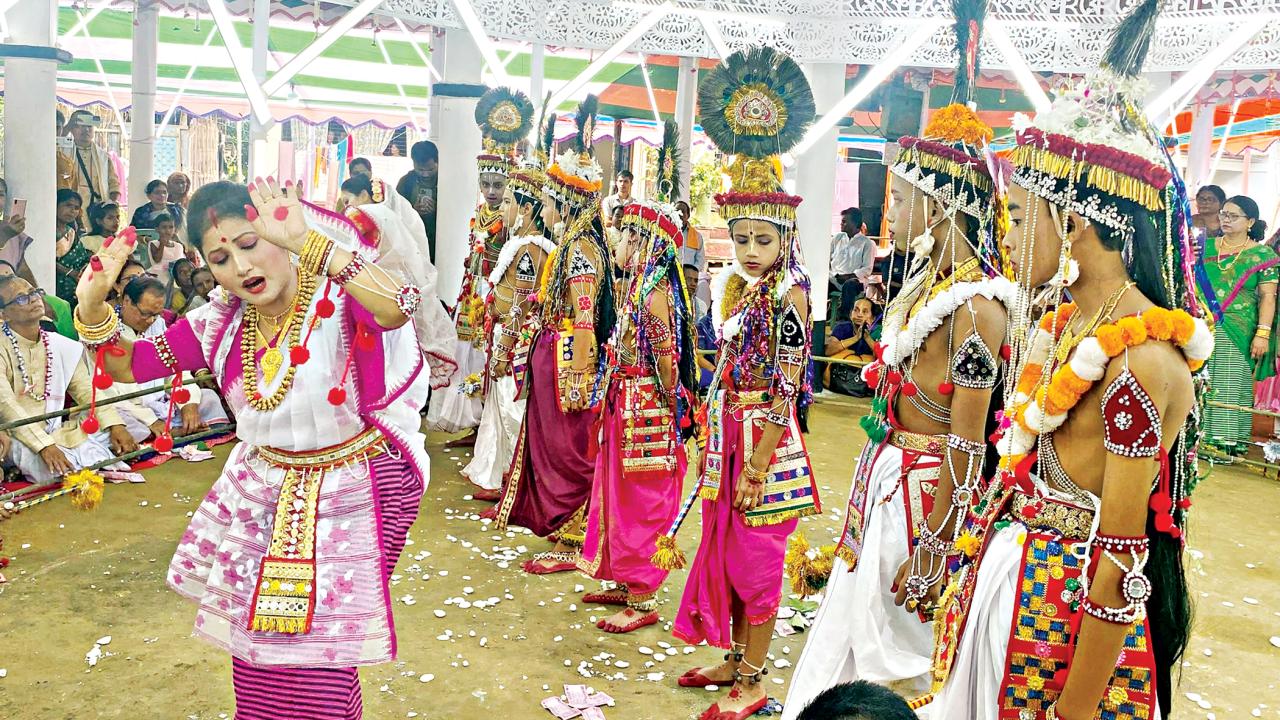
The festival unfolds in two phases: Rakhal Ras during the day and Maharas Leela through the night. Rakhal Ras depicts Krishna's pastoral childhood, his adventures with companions, and his affectionate bond with his mother. Known as Gosthali Nritya, the daytime performances are filled with expressive dance, soulful music, and spiritual symbolism.
"As night falls, the Maharas Leela begins -- the retelling of the divine love between Krishna and Radha," said Dhirendra Kumar Singh, a Manipuri dance teacher. From 11:00pm until dawn, dancers perform intricate sequences to Raslila songs inspired by Vaishnaa poets like Jayadeba, Bidyapati, and Chandidas.
Traditional costumes remain central to the performance's visual splendour. The Gopis wear white veils (Meikum) and long necklaces (Thareng), while their silk blouses and anklets (nupura) add to the grace and rhythm of the dance. Though steeped in ancient customs, modern influences -- from electric lighting to occasional gold ornaments -- have subtly enhanced the spectacle.
Local resident and journalist Salahuddin Shuvo said, "We have been celebrating the Ras festival since our childhood. During this time, our family and friends all gather together. Many distant relatives also return home, and the whole house becomes lively with guests and relatives."
The Maharas Leela, the main religious celebration of the Manipuri community, begins with the traditional Rakhal dance. Sadhan added that the Ras festival of the Manipuri people is not just a community event -- it is an essential part of Bangladesh's rich cultural diversity.
 For all latest news, follow The Daily Star's Google News channel.
 Tourists and locals alike were mesmerised by the performances, said Sajjad Hossain, a visitor from Dhaka.
"I've heard stories about the Ras dance since my childhood -- from my grandparents and elders who used to describe its beauty -- but seeing it unfold before my eyes was truly magical. The moment the dancers entered the arena, dressed in vibrant traditional Manipuri costumes adorned with shimmering ornaments, the entire atmosphere changed."
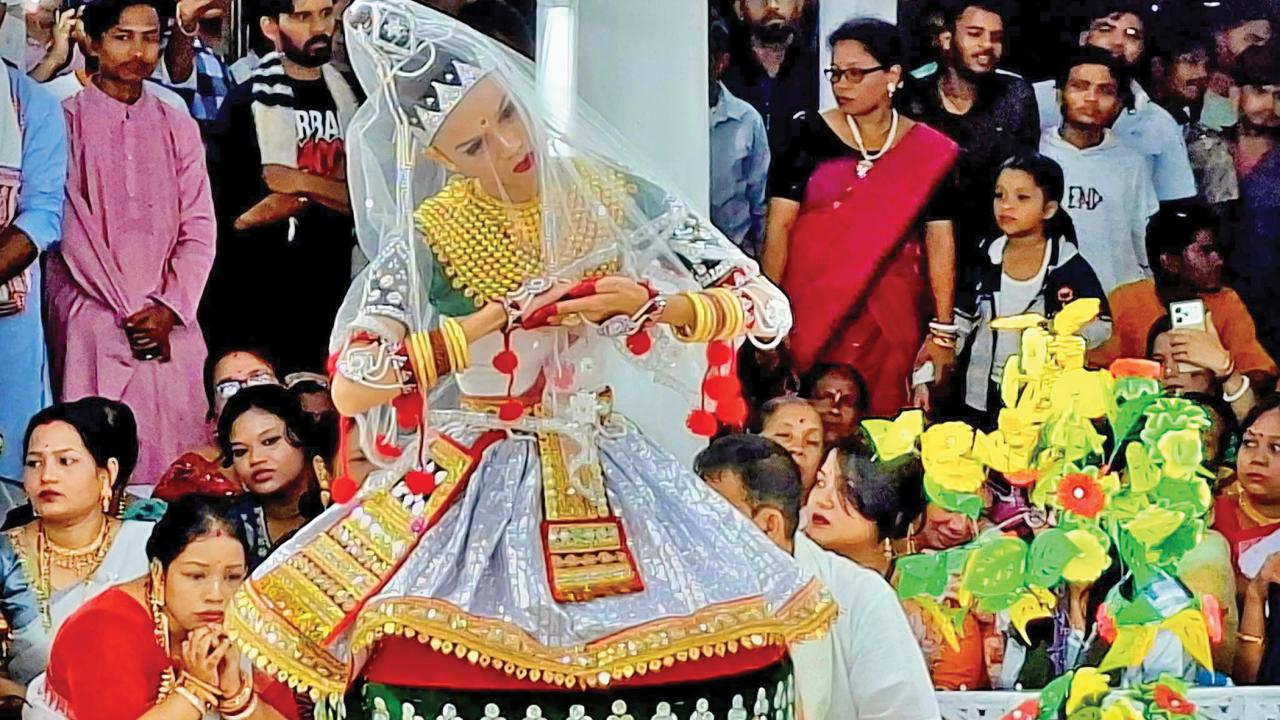
"The rhythmic sound of the pung (Manipuri drum) and the gentle chime of anklets created a sacred harmony that seemed to pull everyone into a different world. Each movement of the dancers -- graceful yet full of devotion -- reflected centuries of tradition and spiritual depth. It felt as if time itself had paused, allowing us to witness a living piece of history."
Makhan Chandra Sutradhar, upazila nirbahi officer of Kamalganj upazila, said, "For this year's event, comprehensive safety measures were implemented, with personnel from the Army, police, Rab, and BGB deployed to maintain law and order throughout the celebrations."
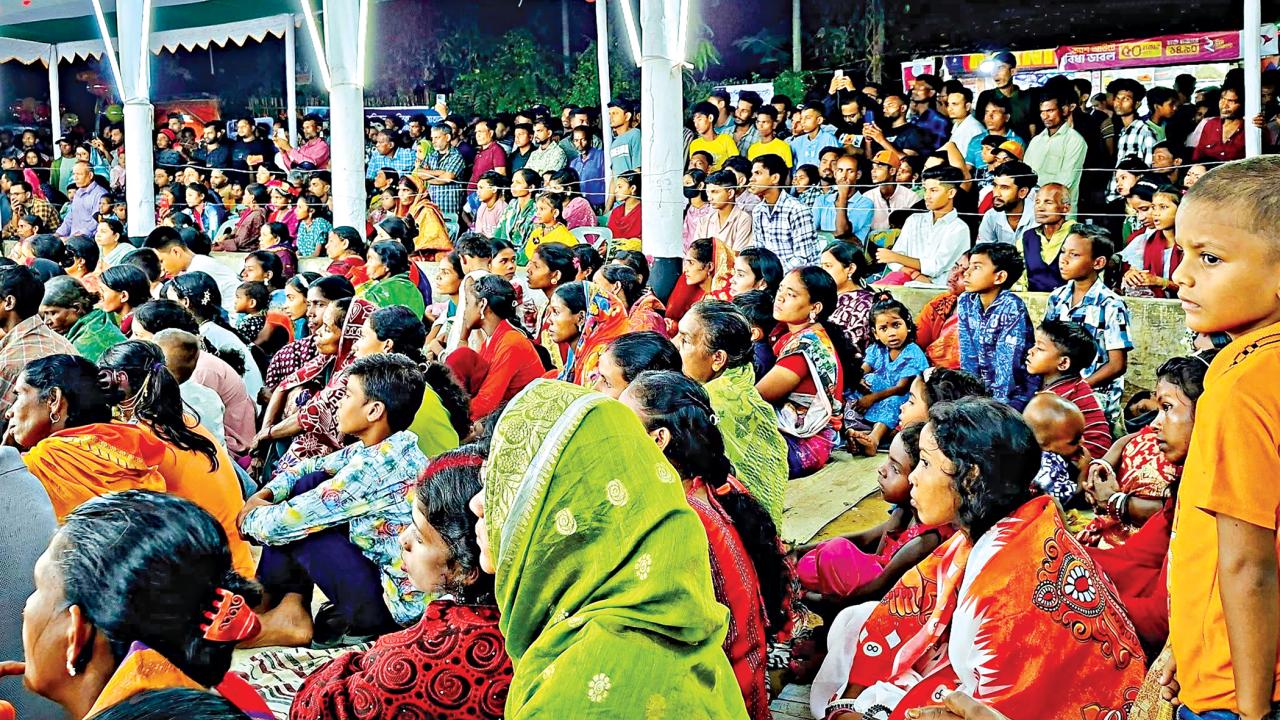
During the festival, which started Wednesday morning and ended Thursday morning, a special discussion meeting was also held, where the Moulvibazar Deputy Commissioner Mohd Israil Hossain attended as the chief guest. "The main focus of the discussion was on the spirit of contemporary Bangladesh -- its heritage, harmony, and cultural resilience," he said.
As the moonlight slowly fades over the festival grounds and the final drumbeats echo through the early dawn, Ras Utsab leaves behind a lingering melody -- a bridge between art, faith, and tradition. It's not just a festival; it's a reminder of how culture keeps our hearts connected to our ancestors.
Comments