The fading echo of Chalan Beel

The Chalan Beel was once no less than a natural wonder -- a vast expanse of water where fishermen thrived, kingfishers and egrets hunted, and life moved with the rhythms of ebb and tide.
That vibrant environment today is a mere shadow of its past. The echo of life that once resonated across the wetland is fading.

Over the past century, Chalan Beel’s environmental balance and biodiversity have been gradually endangered in the name of development.
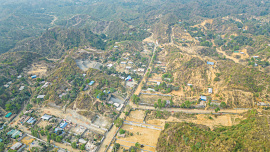
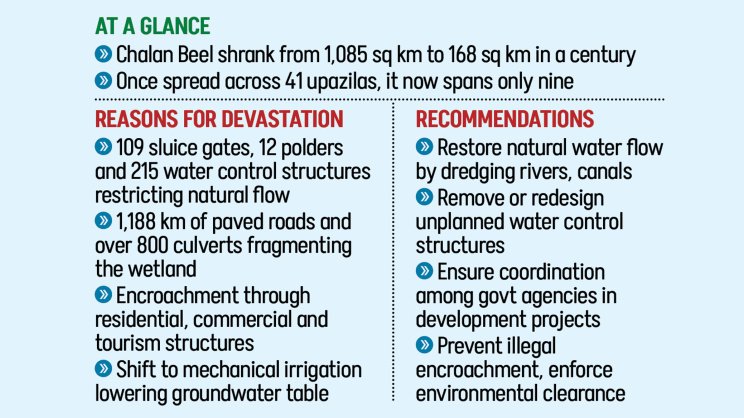
According to a recent survey by the Center for Environmental and Geographic Information Services (CEGIS), the wetland’s area shrank by 85 percent, from approximately 1,085 square kilometres in 1914 to about 168 square kilometres during monsoon at present, and merely 52–78 square kilometres during winter.
Historically, Chalan Beel comprised 163 smaller waterbodies connected by 47 rivers and over 90 canals, spanning 41 upazilas across six districts.
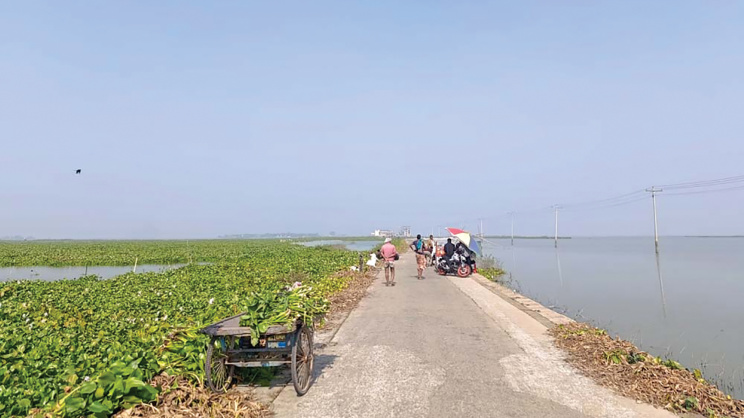
Currently, it spans only nine upazilas across Pabna, Natore and Sirajganj.
The CEGIS survey found that 109 sluice gates, 12 polders and 215 water control structures installed around Chalan Beel over the years have severely restricted natural water flow. Most connecting rivers and canals have dried up, shrinking the wetland and gravely affecting the livelihoods of those who depend on it.
Abdus Salam, 60, a farmer from Sarara village in Pabna’s Chatmohar upazila, said the changing landscape has brought financial ruin.
Salam cultivates mustard after monsoon waters recede each year, followed by paddy. This year, waterlogging made mustard cultivation impossible.
“Monsoon water from the beel earlier used to drain naturally into the Boral river via the Betuapara canal,” Salam said. “Today, that canal has virtually disappeared due to years of encroachment. As such, the water remains stagnant on cropland, making it impossible to cultivate.”
During a recent visit to the Betuapara canal, this correspondent observed several structures over a narrow trench with no visible flow, hardly resembling the waterway it once was.
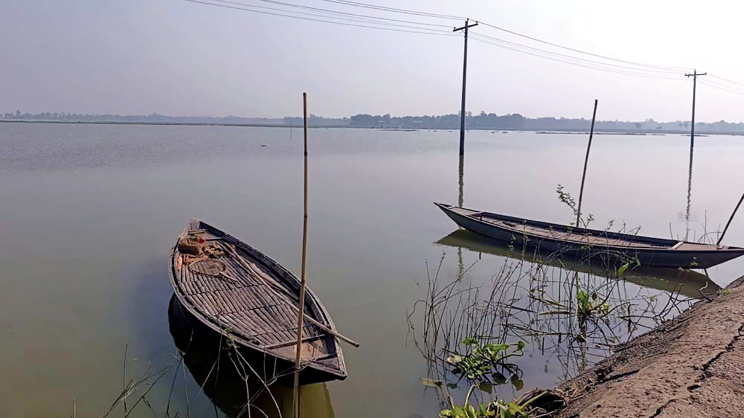
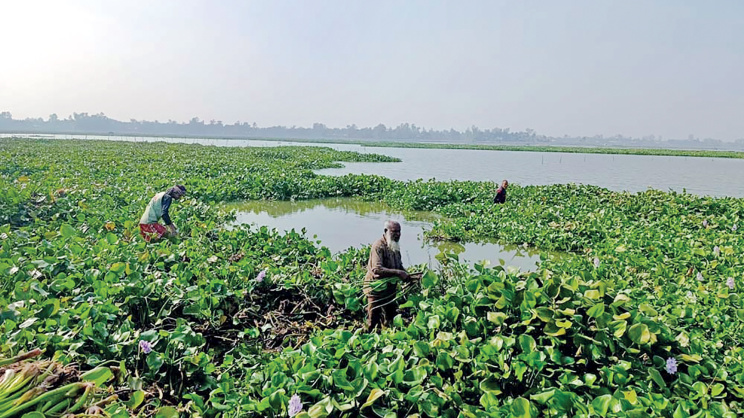
In Natore’s Singra upazila, while the soil remains rich, cultivation is often limited to a single crop due to severe waterlogging and rapid growth of water hyacinth.
“Clearing one bigha of land for post-monsoon cultivation requires 10–12 labourers and costs Tk 6,000–7,000, raising the cost of cultivation significantly,” said farmer Ashraful Islam from Shatpukuria village.
“Decades ago, natural water flow in the canals would carry the hyacinth away. Now, with the canals’ flow choked by unplanned structures, the weeds stay trapped in our fields,” he added.
Environmental degradation has forced a shift from the use of free surface water to expensive mechanical irrigation.
Saidur Rahman, a farmer in Chatmohar, recalled that his grandfather cultivated Boro paddy relying entirely on the Kinushardarer Jola canal.
“Now, the canal runs dry during the Boro season, so we depend on diesel-powered shallow machines to pump water for irrigation, raising the cost by Tk 3,000–4,000 per bigha,” Rahman said.
“The falling water table is another growing concern. Even two decades back, there was water at 20 feet depth. Last year the table was at 32 feet, and this year I had to reset my pump to 35 feet depth.”
Local farmers said if the canals could be restored or electricity made available, irrigation costs could be halved.
Chalan Beel’s decline began in 1914 with the development of the Ishwardi-Sirajganj railway link.
 For all latest news, follow The Daily Star's Google News channel.
 More aggressive damage occurred later.
In the 1980s, the Bangladesh Water Development Board built a three-gate sluice at Charghat and the Baghabari-Tarash embankment, disrupting the flow of the Boral river, the wetland’s primary lifeline.
Between 1995 and 2010, about 1,188 kilometres of paved roads and over 800 culverts were constructed within Chalan Beel, further disrupting its ecological balance.
In 2003, the construction of the Hatikumrul-Bonpara highway through the heart of the wetland caused major obstructions to water flow.
Several other roads, including the one from Chatmohar Notun Bazar to Mannannagar, have further split the waterbody over the last decade.
New threats continue to emerge.
There is a plan to establish a university campus at Buripotazia in Sirajganj’s Shahzadpur upazila, which threatens a vital water discharging point.
“If the university is built there, the existing waterbody will suffer irreversible damage,” said SM Mizanur Rahman, founder of “Save Boral Movement” and “Save Chalan Beel Movement”.
Illegal encroachment by influential local individuals through unplanned residential and commercial structures has further exacerbated the situation.
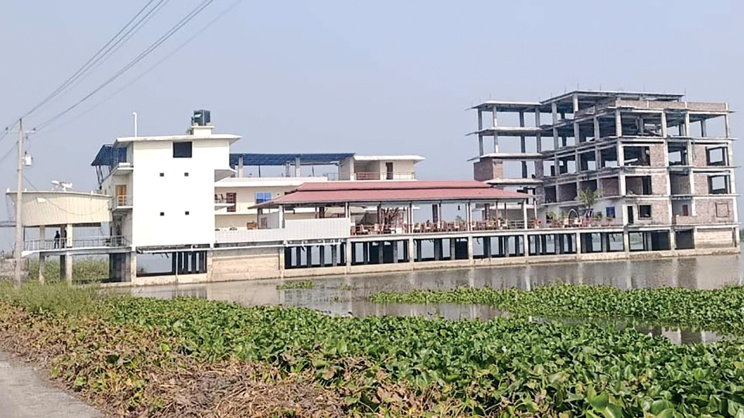
In 2014, a tourist park was built within the wetland in Singra upazila. The owner, Md Kabir Hossain, claimed he had followed proper procedures and that the park does not hinder natural flow.
A seven-storey resort was recently built within Patul Beel in Naldanga of Natore.
Md Rafikul Islam, assistant director of the Department of Environment in Natore, confirmed that neither the park nor the resort obtained the required clearance from the department.
The gradual destruction of the wetland has devastated fish stocks.
According to CEGIS, 81 fish varieties were once found in Chalan Beel. Currently, only 27 remain, of which 10 are endangered and five critically vulnerable.
Annual natural fish production dropped from over 25,000 tonnes before 1982 to 12,217 tonnes in 2007.
Despite environmental degradation, the region remains vital to national food security.
It produces 1.98 million tonnes of paddy annually, meeting 5 percent of national rice demand, 29 percent of the nation’s garlic demand, 14 percent of mustard and 8 percent of lentils. Annual agricultural production in Chalan Beel is valued at over Tk 15,000 crore.
SM Mizanur Rahman said no financial gain can compensate for the environmental damage sustained.
“We are deliberately killing this natural wetland for increasing production and bringing communication comfort at the cost of environmental assets,” he said.
The government has recently launched a feasibility study to save the wetland.
The Department of Bangladesh Haor and Wetland Development began the study in August last year. It is expected to conclude in February 2027.
Md Tanvirul Haque, the project director, said, “We will identify the real problems and find a solution to restore the wetland.”
Md Mokhlesur Rahman, BWDB’s Rajshahi divisional engineer, noted a lack of coordination among government agencies.
“Different authorities conduct different projects, and in most cases, development leads to destruction because of a lack of coordination,” he said.
“We must work together to dredge the rivers and canals to save and restore Chalan Beel.”

The price of convenience

Invisible children of recycling

Panam city where history still whispers

‘Mini Russia’ on the Padma

Football fever grips Dhaka

Strangers at the table: Dhaka’s supper club stories
Chunati Wildlife Sanctuary / Sanctuary in name, settlement in reality
Thirst in the land of water
Inside the perilous world of Sundarbans honey collectors