


How a one-stop service centre in China's Yuxi simplifies life for citizens

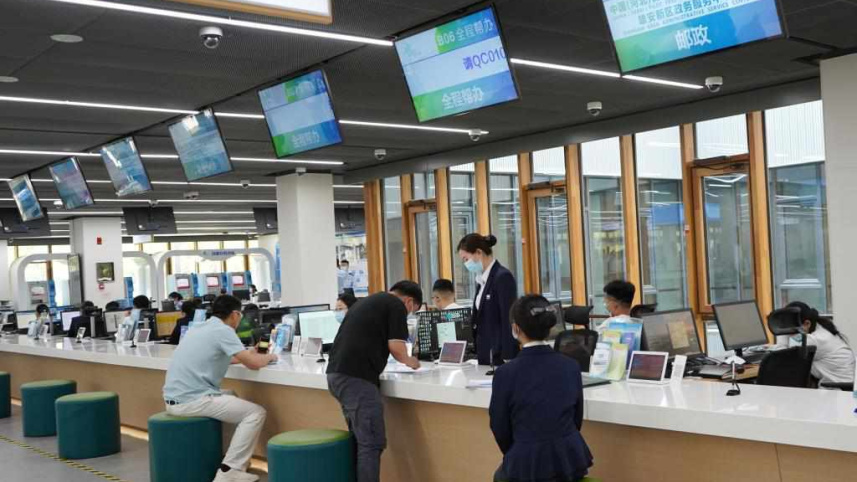
The first thing that struck me was how little it felt like a government office.
On March 6, during a visit to Yuxi City’s Hongta district as part of a South Asia delegation to Yunnan Province and Beijing, I walked into what was officially called a citizen one-stop service centre. But the space itself told a different story. Clean, organised, and quietly efficient, it resembled more a modern business hub than a place where administrative formalities are usually processed.

The visit was part of a broader tour organised at the invitation of the International Department of the Communist Party of China (CPC) Central Committee, aimed at fostering exchanges on governance and development. Yet, among the many places we saw, this centre stood out for its immediacy. It was not a long-term vision or a distant policy. It was something operational, something citizens interacted with daily.
At its core, the Hongta one-stop service centre functions as a centralised hub for a wide range of administrative tasks. Public resource management, administrative approvals, business registration, personal documentation, all brought under one roof. The idea is simple: reduce the need for citizens to navigate multiple offices and layers of bureaucracy.
In practice, it goes further.
Officials explained that more than 70 percent of services can be processed within a single location. For many tasks, physical presence is not even necessary. Residents can access services remotely through official Hongta Government social media channels, reflecting a broader push towards digital governance. Electronic certificates, integrated databases, and paperless processes allow applications to move without the traditional burden of documents and repeated submissions.
For individuals, this means services tied to key life events can be handled in one place. Newborn registration, marriage procedures, employment-related documentation, assistance for those facing hardship, and even retirement processing are brought into a single administrative flow. For businesses, the same principle applies. Starting a company, securing operational permits, recruiting employees, or managing property registration can all be done without moving from one office to another.
As we moved through the centre, officials showed us a presentation outlining its structure and goals. The emphasis was clear: speed, accessibility, and digitisation. Processing times are being reduced, and systems are continuously being updated to make services more responsive.
But beyond the presentation, it was the atmosphere that lingered.
There were no long queues stretching into corridors, no visible signs of confusion or urgency. Staff moved between counters with a sense of routine efficiency. Visitors appeared to know where to go, what to do, and how long it would take. It is a small detail, but in places where administrative delays are common, predictability itself becomes a form of service.
One of the officials guiding us described the centre as part of a wider reform effort being implemented across China. Similar facilities have been established in major cities and emerging administrative zones, designed to standardise service delivery and improve citizen experience.
What this reflects is not just administrative convenience, but a shift in how governance is delivered. Efficiency is no longer treated as an internal goal. It is visible, measurable, and expected.
During a question-and-answer session, one member of our delegation raised concerns about data security. The official responded by emphasising continuous efforts to strengthen systems and prevent breaches. It was a reminder that digitisation brings its own challenges, requiring constant adaptation.
When I asked about their main difficulties, the answer was more grounded. Adequate manpower, they said, remains an issue. Even with advanced systems in place, the human element continues to matter. Technology can streamline processes, but it still depends on people to operate, manage, and improve it.
That admission, in some ways, made the system feel more real. It is not flawless, but it is evolving.
Standing inside the centre, it was difficult not to draw comparisons.
In Bangladesh, accessing government services often involves a different experience. Multiple offices, repeated paperwork, unclear procedures, and long waiting times are part of a familiar pattern. For many citizens, especially those outside major urban centres, even simple administrative tasks can take days, sometimes longer.
The contrast is not just about infrastructure or technology. It is about approach.
A system like the one reduces friction. It acknowledges that citizens’ time has value. It attempts to simplify processes that are often unnecessarily complex. And most importantly, it builds a structure where services are organised around people, rather than the other way around.
Of course, replicating such a model in Bangladesh would not be straightforward. Differences in administrative capacity, budget constraints, and institutional frameworks would all play a role. Yet the principle remains relevant.
 For all latest news, follow The Daily Star's Google News channel.
 Centralisation of services, digital integration, and a clear focus on reducing processing time are not ideas tied to a single country. They are administrative choices.
As the visit came to an end, I paused for a moment near the entrance, watching people move in and out of the building. Some arrived with documents in hand, others left having completed their tasks. There was a quiet rhythm to it, one that did not demand attention, yet suggested order.
Outside, the city moved on as usual. Traffic flowed, people went about their day, and the centre continued its work without spectacle.
On the drive back, a thought lingered.
What would it mean for a citizen in Bangladesh to complete essential services in a single visit? To not have to return the next day, or the next week, or wait indefinitely for a file to move? What would it mean to approach a government office without uncertainty?
The Hongta one-stop service centre does not offer all the answers. But it does present a possibility.
A system where governance is not experienced as a burden, but as a service.
And for countries where that remains an aspiration, it is a vision worth considering.
Comments