


China’s ‘river chief system’ and a roadmap for Bangladesh’s rivers

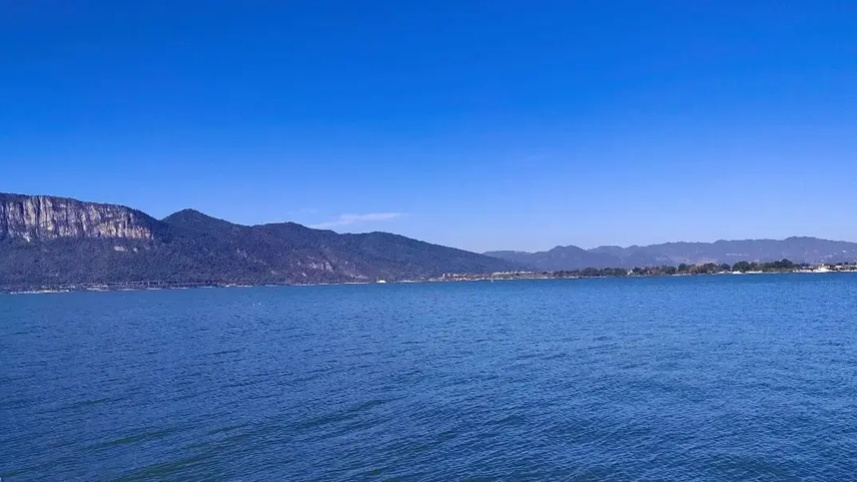
The morning air in Kunming carried a quiet stillness that felt almost unfamiliar. On March 6, as part of a South Asia delegation visiting Yunnan Province and Beijing at the invitation of the International Department of the Communist Party of China (CPC) Central Committee, I found myself standing at the edge of the Xinghai Peninsula Wetland Park. What lay ahead was not just a landscape, but a lesson in how a country chooses to treat its water.
The visit was part of a broader effort to promote exchanges between China and South Asian countries on development paths and modernisation. Our delegation included around 19 representatives from Bangladesh, India, Pakistan, Sri Lanka, Nepal, Bhutan, and the Maldives. But for me, the visit to this wetland park turned into something more reflective, something closer to home.

Set along the shores of Dianchi Lake in Kunming, the Xinghai Peninsula Wetland Park stretches across 154 mu, or roughly 102,667 square metres. Built with an investment of 79 million yuan, it functions both as a recreational space and a crucial ecological barrier for the lake. The numbers are precise, the planning deliberate, but what strikes you first is not the scale. It is the calm.
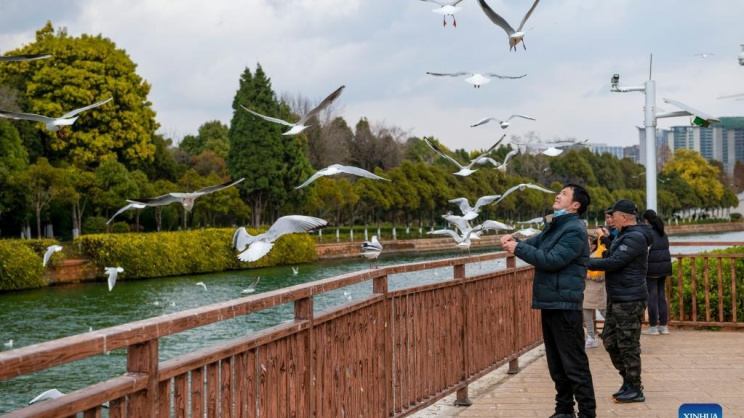
Reeds sway along the water’s edge. Clusters of aquatic plants, including Phragmites australis and Acorus calamus, form a dense green tapestry. A wooden boardwalk winds quietly through this landscape, allowing visitors to move without disturbing it. Lotus blooms dot the still waters, while egrets, magpies and kingfishers appear almost unbothered by human presence.
At one corner of the park, locals stand by the water, feeding migratory birds that travel from as far as Siberia. We joined them, scattering feed into the water, watching ripples spread and birds gather. It was a simple act, but one that spoke of a deeper relationship between people and their environment.
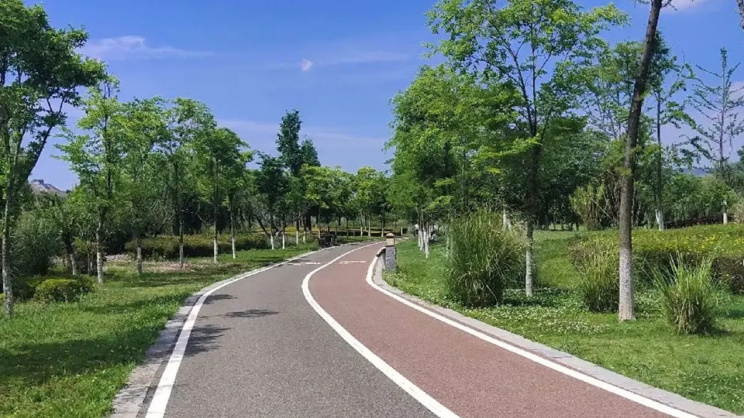
What this wetland represents is not just aesthetic beauty. It is infrastructure. Of the total area, 63 mu is water, 81 mu is green space, and 2,400 square metres is designated for public use. There are clearly defined pathways for vehicles, bicycles and pedestrians. A visitor centre, energy-efficient public restrooms, and supporting facilities have been carefully integrated into the design.
But beyond its design lies a more important function. The park enhances what local officials describe as the “kidney function” of Dianchi Lake’s governance. It filters, protects, restores. It is both a shield and a system.
This was not accidental. Environmental protection here is tied directly to governance. On January 20, 2020, during an inspection tour in Yunnan, Xi Jinping visited this very wetland to observe efforts to protect and manage Dianchi Lake. The message was clear: environmental restoration is a political priority.
It is within this framework that China’s River Chief System operates.
Introduced in 2016 and fully implemented by 2018, the River Chief System assigns specific rivers and lakes to designated officials. These “river chiefs” operate at four levels: provincial, city, county and township. Each is responsible for the health, management and restoration of the water bodies under their jurisdiction.
What sets this system apart is not just administrative clarity, but accountability. Performance in managing rivers is tied directly to an official’s evaluation. Water quality, pollution control, ecological restoration – these are no longer abstract goals. They are measurable responsibilities.
In practice, this means no river is left unattended. Every stretch of water has a name attached to it, an official answerable for its condition. Assessment criteria are set based on local conditions. Public supervision is built into the system through information disclosure platforms. Lists of river chiefs are published, along with their responsibilities, the status of the water bodies, and even contact numbers for public complaints.
The impact has been tangible. Pollutants have been reduced. Water quality has improved. More importantly, the mindset has shifted. Officials are no longer able to prioritise growth at the expense of the environment without consequence. There is, as the system enforces, a form of lifetime accountability.
Walking deeper into the wetland, through a striking Metasequoia forest where tall trees rise directly from the water, the contrast becomes impossible to ignore. The water is clear. The ecosystem is alive. And everything appears to function as it should.

For someone from Bangladesh, this experience is difficult to separate from memory.
We are, after all, a riverine country. Our identity, economy and history are shaped by rivers. Yet the condition of many of these rivers tells a different story. Pollution, encroachment, mismanagement, and a chronic lack of accountability have turned lifelines into liabilities.
The question, then, is not whether Bangladesh needs a system like this. It is why we have not already built one.
The River Chief System offers a framework that could be adapted. Assigning responsibility to specific officials for specific rivers could bring clarity where there is currently fragmentation. Linking environmental performance to career evaluation could create incentives where there is currently indifference. Public disclosure could introduce a level of transparency that is often missing.
Of course, systems do not transplant easily. Bangladesh has its own administrative structure, its own political dynamics. But the principle remains transferable: rivers need guardians, and those guardians must be held accountable.
As the visit drew to a close, I lingered for a moment on the boardwalk, watching the water settle after a passing breeze. It is a small thing, clean water. Yet it carries a quiet power.
 For all latest news, follow The Daily Star's Google News channel.
 On the journey back, another image stayed with me.
Dhaka, a city held within the embrace of four rivers – the Buriganga, the Dhaleshwari, the Sitalakkhya and the Balu. Rivers that once defined its rhythm, now struggling under the weight of neglect.
It is not difficult to imagine them differently. Clear waters reflecting the sky. Banks lined with life, not waste. A system that protects rather than exploits.
The Xinghai Peninsula Wetland Park is not just a destination. It is a reminder of what deliberate governance can achieve. The River Chief System, in that sense, is more than a policy. It is a commitment.
Standing at the edge of Dianchi Lake, that commitment feels visible. Back home, it remains a possibility.
And perhaps, one worth pursuing.
Comments