


Your kitchen needs an audit this season

As we move through the dry window from January to April, the risk to Bangladeshi homes reaches a critical, statistically proven peak. Low humidity and increased electrical demands create a volatile environment where a minor oversight can escalate into a tragedy in seconds.
The latest data from the Fire Service and Civil Defence (FSCD) for 2025 serves as a stark warning. Last year, Bangladesh recorded a staggering 27,059 fire incidents, averaging roughly 75 fires every single day. The human toll was heartbreaking, with 85 lives lost and 267 people injured. Perhaps most concerning is that residential buildings were the hardest hit.

When we look at the causes, the silent warnings of our homes become even more vital to understand. Electrical faults emerged as the leading culprit of these fire incidents. This was followed closely by risks on kitchen stoves, gas cylinder leakages, and supply line leakages.
In this high-risk climate, safety can no longer be a passive habit. With the Fire Service and Civil Defence (FSCD) identifying nearly 4,000 buildings nationwide as "extremely risky" or "risky," the responsibility has shifted from the state to the individual. For the urban resident, this means moving beyond simple caution and into the realm of active engineering. Nowhere is this shift more critical than in the kitchen.
Historically, kitchen safety in Bangladesh has relied mostly on human vigilance. The "sniff test" for gas and a final check of the stove before going out could give the dwellers peace of mind. But as our homes grow vertical and more power-hungry, human memory is not sufficient to tackle the fire hazards. Modern fire prevention has evolved into technical engineering. To truly protect your property, you must move beyond simple habits toward active fail-safes like automated shut-offs and load-mapped wiring, transforming your most vulnerable room into its most secure sanctuary.
The Automated Gas Guard
For most residents, the smell of gas (mercaptan) is the primary warning sign. But by the time you smell it, the concentration may already be at a flashpoint. The modern solution is to move from passive detection to active prevention.
Upgrade to a Solenoid Shut-off Valve and Gas Leak Detector. This 24/7 "digital sentry" monitors the air. Upon leak detection, an electrical pulse triggers the valve to physically cut the gas supply, stopping a disaster before a single spark occurs.
Decoding the Electrical Load
The modern Bengali kitchen has seen a silent revolution, moving from simple stoves to high-wattage air fryers, microwaves, and grinders. Often, this heavy machinery is plugged into wiring designed for 1990s-era load requirements. If your electricity trips when you plug in an air fryer and a grinder together, take it as a warning to check your load capacity. Neglecting this can lead to a "silent fire" behind your walls.
To prevent "silent fires" homeowners should undertake Circuit Mapping. Ensure your kitchen sits on its own dedicated breaker in the Distribution Board (DB). If your refrigerator and microwave share a single line, you are courting an electrical arc.
Listen to your kitchen’s "scent." A faint fishy or bleachy odour near an outlet is actually overheating plastic insulation—a sign of an imminent fire. For final protection, install GFCI (Ground Fault Circuit Interrupter) outlets near sinks. These cut power in milliseconds if water contacts electricity, preventing both shock and fire.
Thinking of retrofitting the kitchen?
In many older Dhaka apartments (15–20 years old), stoves were placed directly under windows for "natural ventilation." From a modern safety perspective, this is a major vulnerability. Mainul Islam, an architect, founder of Sharal Architects, breaks the myth, "Often, a typical kitchen layout includes placing a gas burner next to the window. Some people think it’ll be easy to use without light, and smoke will pass outside easily. But in reality, it is a dangerous practice." For homeowners who want to retrofit their kitchen, Mainul suggests placing the burner away from the window. Using a good kitchen hood rather than only depending on the exhaust fan and integrating the fridge with the main cooking area should be the main priority of any kitchen renovation.
While the "American kitchen" has become a hallmark of modern urban luxury in Bangladesh, it presents a unique challenge: our traditional, oil-intensive cooking style. High-heat, spice-heavy culinary traditions create a "plume" of aerosolised grease and aromatic vapours that, in an open layout, can quickly migrate to the living area, coating expensive upholstery and increasing the fire-load of the entire home. Mainul suggests that homes with full open kitchen, using a glass partition between the burner area and counter area, can be a good solution for those 2-3 hours of heavy cooking time. It ensures openness and interaction for the rest of the time.
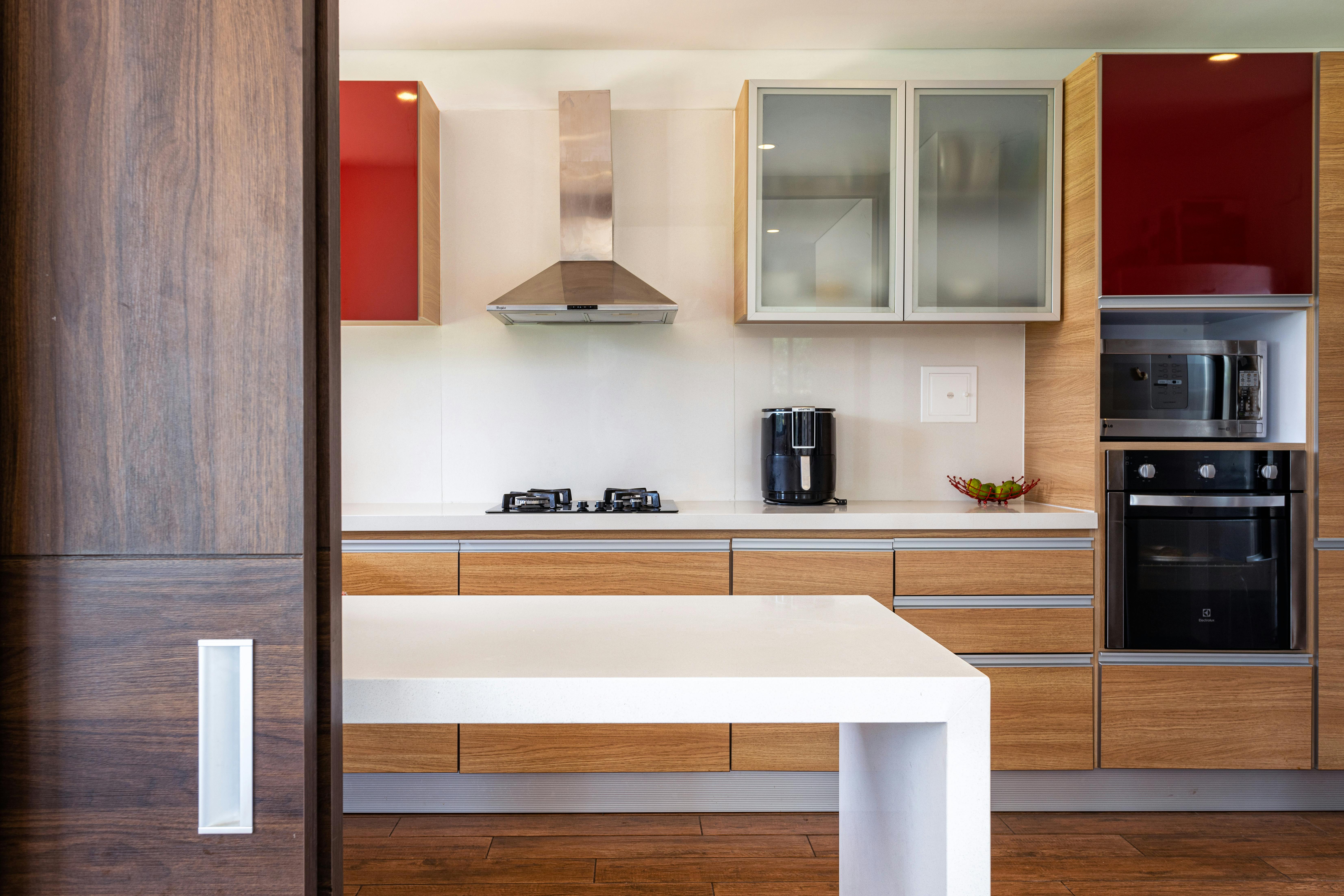
Samiur Rahman Tushar, consultant and freelance architect focuses on the maintenance of an open kitchen. He says, “ Usually, open kitchens are adjacent to the living or dining areas. In case of fire from the stove, it may spread fast through the whole house. But with a good exhaust system, even a general exhaust system or a good kitchen hood, it may help to some extent. But maintenance is a must. The material used in cabinets is also very important. There are materials like which catch fire more easily than others.” For Countertop Sintered Stone, Quartz, Granite, Stainless steel; for cabinetry Aluminium, Fire- Retardant (FR) plywood, Powder coated aluminium, Ceramic veneers; for flooring vitrified tiles, polished concrete; and for backsplash tempered glass, ceramic tiles, stainless sheets. Previously, we didn't have many options with materials to choose from in the construction of kitchen cabinets and storage spaces. Now we can modernise them with newer material/boards which are less prone to catching fire and help spread them, Samiur comments.
Invest in a modern safety toolkit
While the red fire extinguisher is a familiar sight, it is often the wrong tool for a domestic kitchen. Standard ABC dry-powder extinguishers can cause high-pressure splashing in an oil fire, spreading the flames further.
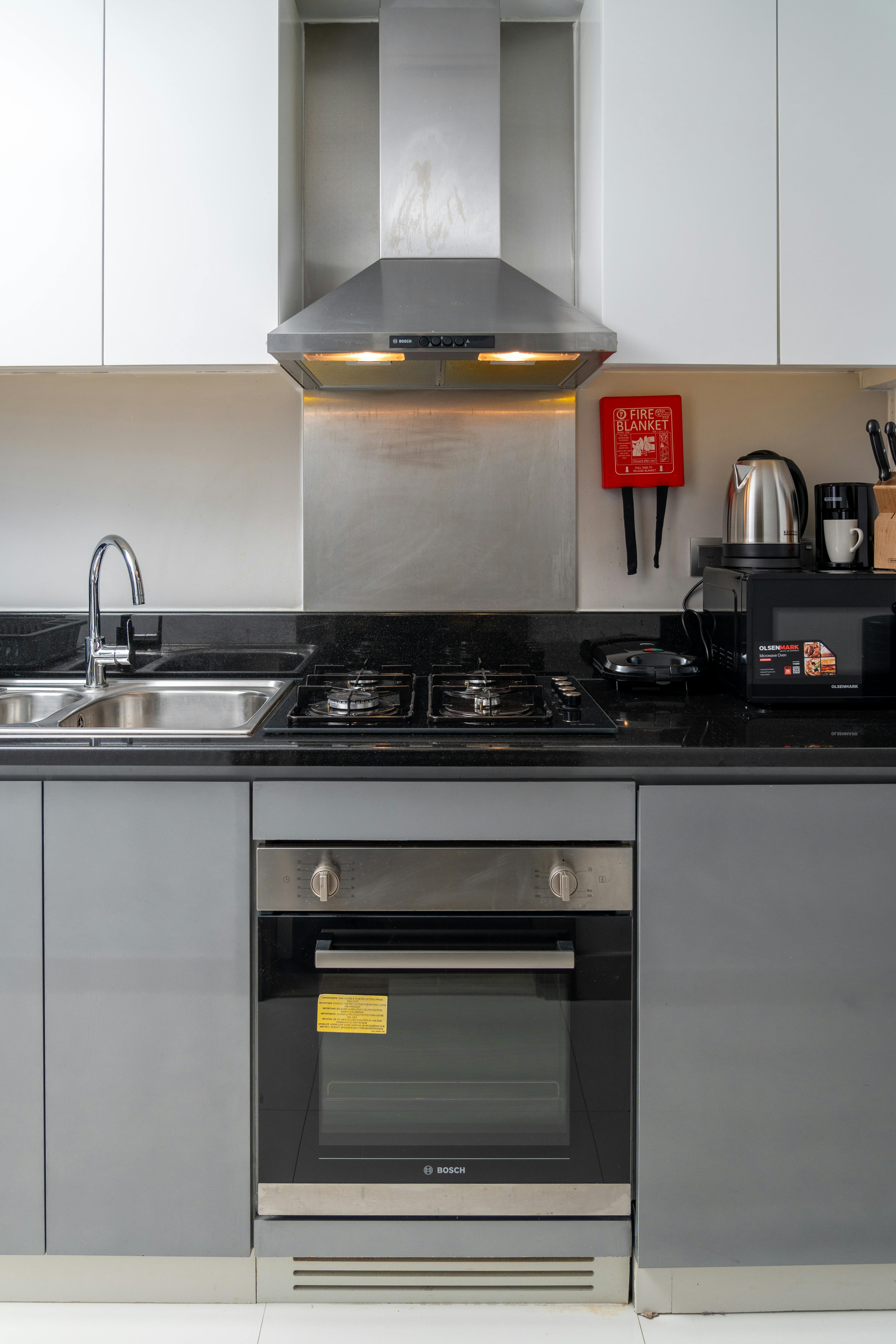
The sophisticated kitchen uses a Fire Blanket. Stored in a slim, quick-release pouch, a fibreglass blanket is the most effective way for anyone. If you must use an extinguisher, invest in a Class K (Wet Chemical) unit. Specifically designed for high-temperature cooking oils, it cools the oil and forms a soapy layer that prevents re-ignition.
Finally, consider the ultimate safety upgrade: the Induction Hob. By removing the open flame and the gas line entirely, you eliminate the two primary sources of kitchen fires. An all-electric, induction-based kitchen isn't just a safety choice; it is a high-value asset that increases the modern appeal and ROI of your property.
 For all latest news, follow The Daily Star's Google News channel.
Comments