


Wooden houses of Munshigonj: History and pride

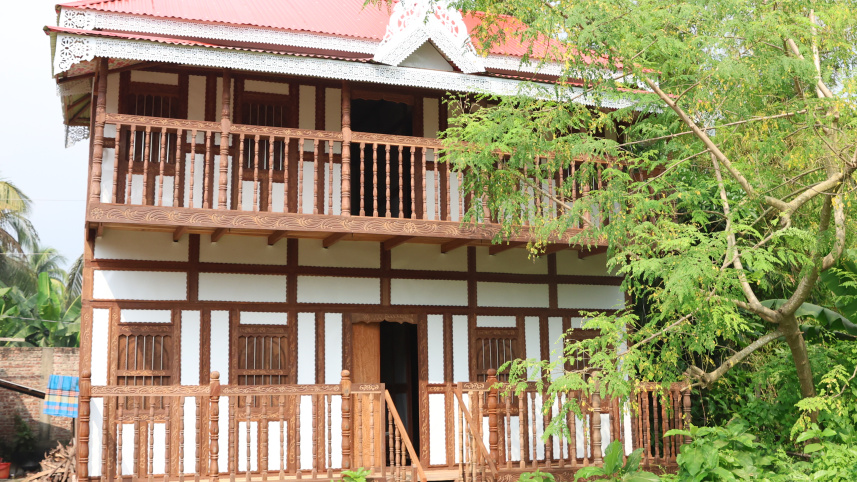
People usually dream of having a fantastic living house, and most of their thinking is centred on building a concrete house. Residents from Munshiganj think otherwise. Wooden homes remain immensely popular among dwellers of the district, and their popularity is growing among many districts nowadays.
If you travel from village to village in Munshiganj, you will see countless eye-catching houses made of tin and wood. The houses in this region are famous across the country for their beautiful designs.

Local appeal and lifestyle
Even wealthy people now prefer building elegant wooden houses instead of concrete structures, because these homes are part of Munshiganj’s heritage. Their wooden duplex houses have everything—beautiful kitchens, modern bathrooms, bathtubs, and chandeliers.
Sajjadur Rahman Ador is a banker. He lives in Dhaka, but he is building a holiday home in Sreenagar, Munshiganj. He is spending around Tk 20 lakh to build this wooden house. “I could have built a concrete building with this money if I wanted,” he said. “But I chose to build a wooden house to preserve Munshiganj’s tradition,” Sajjadur says. “The charm that a wooden house has cannot be found in a concrete one. Besides, I already live in a modern building in Dhaka, so this wooden house will give me a different experience and childhood memories.”
NO one can tell precisely when the wooden houses became popular in the Munshiganj area, but people have seen these types of crafted houses being built in the area since their childhood. They learn that their parents and grandparents also saw in their childhood that these types of houses were popular in the area. “I have lived in such houses all my life. I saw my parents and grandparents living in these homes. These houses are a passion,” Sajjadur added.
Distinctive designs
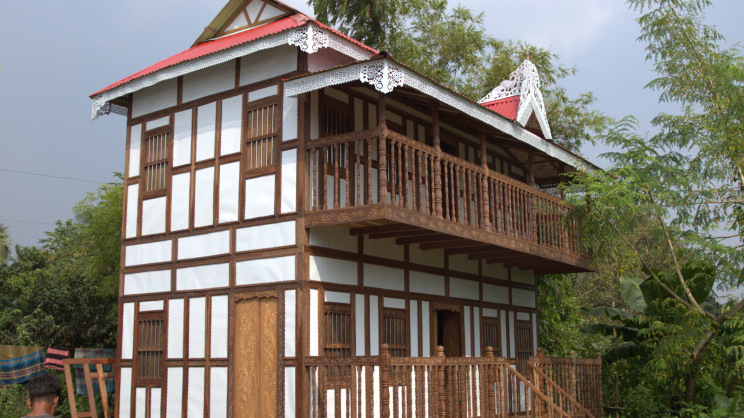
The people here are incredibly sophisticated—something easily understood from the stunning tin-and-wood houses scattered across the region. For years, do-chala (two-sided roof), tin-chala (three-sided roof), chou-chala (four-sided roof), and shat-chala (seven-sided) houses have been constructed in various parts of the district.
Although wooden houses exist in many parts of Bangladesh, the aesthetic beauty of the homes in Munshiganj is truly eye-soothing and marvellous. The craftsmanship of carpenters makes this tradition even more attractive.
Meanwhile, the beauty of these tin-and-wood houses has begun attracting people from other districts as well. As a result, people from outside Munshiganj have started hiring local carpenters to build similar homes in their own areas.
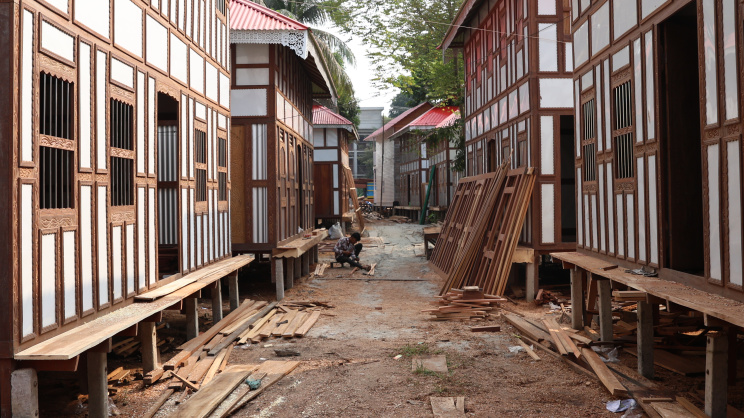
In this situation, locals have come up with a new business idea: they have started making transferable houses. In Louhajang, Munshiganj, ready-made wooden and tin houses are produced. These houses can be sent to any part of Bangladesh.
So, if someone visits the area, chooses a house design they like, the builders can dismantle it and install it on their land elsewhere.
Skilled labour and reach
Both local craftsmen and workers from various districts work in this cottage industry. But carpenters from Gopalganj are especially skilled in this type of construction—so much so that more than 200 carpenters from Gopalganj are currently employed in this trade in Munshiganj. When someone from outside the district buys a house, these carpenters travel to the buyer’s location and install it.
These houses are now being taken to different parts of the country, including the Chittagong Hill Tracts. From the northern to the southern regions—everywhere—they are being transported. Some buyers use trucks, others use trawlers. The price is relatively affordable, and the houses are visually appealing, which has increased demand. They are especially popular in tourist spots.
Practical advantages and the market
Local businessmen say that houses built with quality wood and tin ensure plenty of natural light and air. They cool down and heat up quickly according to the weather. Parts of the houses can be dismantled and moved from one location to another—and sold again if needed. They are particularly useful in river erosion–prone areas.
In earlier years, these houses were made with Burmese ironwood, sal wood, and tin. Nowadays, most houses are built using Nigerian ironwood. Homes made with this wood typically last 50 years or even longer. Ready-made houses are also made with local wood, though these tend to be less durable.
A single-storey house takes 5–7 workers around 8–10 days to build. Prices range from Tk 2 lakh to Tk 8 lakh, though some cost much more—up to Tk 50 lakh. Prices depend on the type of wood used, the size of the house, the thickness of the wood, interior features, the fittings installed inside, and the design. Designs vary from small single-storey homes to duplex-style builds. Some come with verandas, attached bathrooms or kitchens.
Business owners say sales were once higher, but over the past year, demand has declined slightly because people are under pressure due to high inflation. These structures appeal to people who want to avoid the hassle of collecting materials, supervising masons and dealing with rising and unpredictable construction costs.
 For all latest news, follow The Daily Star's Google News channel.
Comments